
Aprilaire Air Duct Cleaning in Salt Lake City: A Homeowner’s Guide
An Aprilaire 700 humidifier mounted on a duct system carrying five years of accumulated debris is misting moisture over a layer of organic material. That’s not the outcome anyone bought it for. Aprilaire humidifiers, purifiers, and ventilators are built to perform at spec when the air reaching them is clean and the ducts carrying it are sealed. In Salt Lake City, where mineral dust and wildfire ash load up return systems faster than most homeowners expect, that spec gets compromised quietly. This guide covers what Aprilaire owners specifically need to know.
If you’d rather have a technician assess the whole system than climb into the attic yourself, call (866) 937-7589.
How does duct cleanliness affect Aprilaire humidifier performance?
Aprilaire bypass humidifiers – the 400, 500, and 700 series most common in Salt Lake City homes – pull air through a water panel and push moisture back into the supply duct. That panel stays wet almost constantly during heating season. If the bypass duct and the surrounding supply trunk carry debris, the humidifier draws that debris across the wet evaporator pad, and the pad becomes a capture surface for whatever’s in the airstream. The unit keeps running, but efficiency drops and the pad fouls faster than the manufacturer’s replacement interval.
Bypass dampers are the most overlooked component. On a bypass unit, the damper opens when the furnace fan runs. If debris has packed the bypass collar or the damper blade is seized from mineral scale, the humidifier either starves for airflow or pushes moisture unevenly. Either way, the system underperforms and the homeowner assumes the humidifier is failing. In most cases we inspect, it isn’t the humidifier.
What Aprilaire humidifier owners in Salt Lake City should have checked during any cleaning visit:
- The bypass collar and damper for debris loading and free movement.
- The water panel for scale accumulation – Utah’s water hardness accelerates this.
- The solenoid valve and drain line for mineral clogging.
- The supply and return plenum connections where the humidifier ties into the duct.
- The humidistat and outdoor temperature sensor wiring for loose connections.
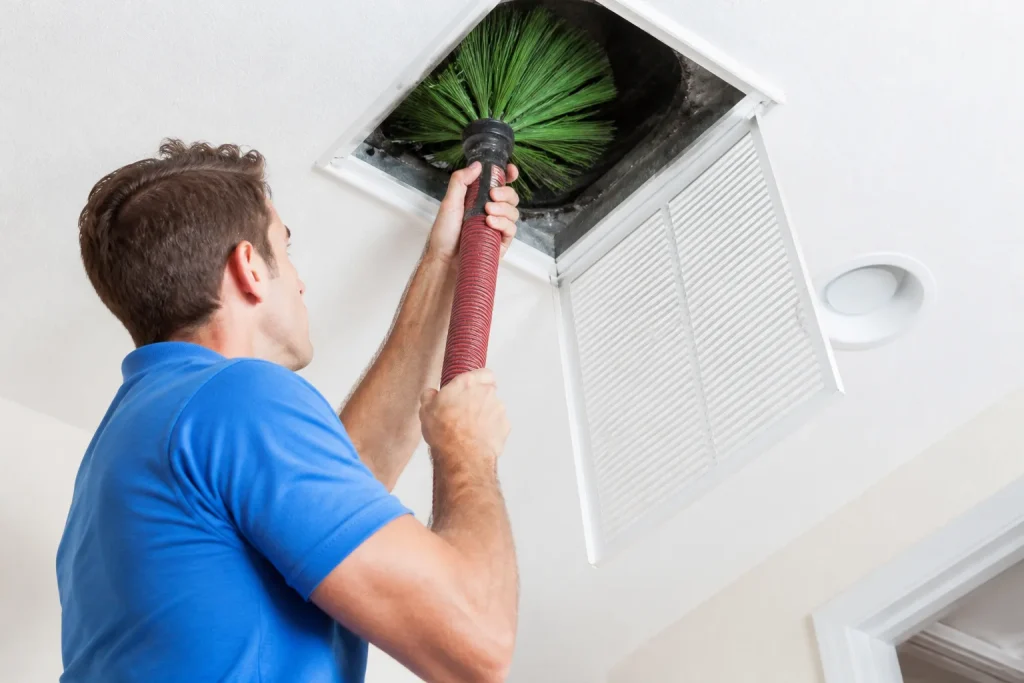
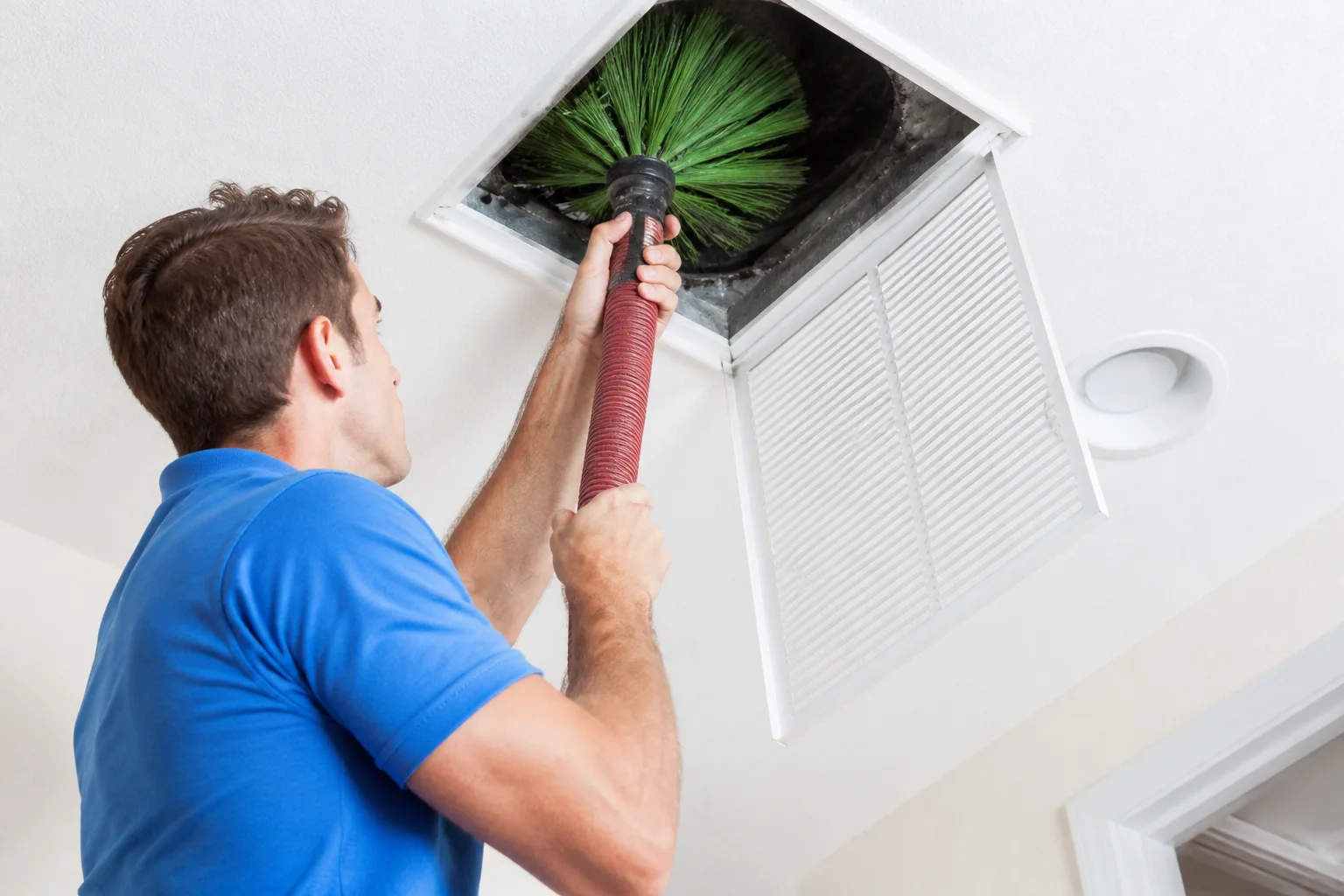
If your system has a powered humidifier (the 800 series), the fan assembly also pulls duct air, so upstream debris affects it the same way. Once the ducts are mechanically cleaned with a tool like the Rotobrush rotary-brush system, the humidifier gets clean air and the wet pad stops acting as a secondary filter.
Aprilaire media cabinet filters vs. standard 1-inch filters: what changes on a cleaning visit?
Aprilaire media cabinets (the 1210, 1410, and 2410 series are common in Salt Lake City) hold a 4- to 5-inch pleated media filter – far more surface area than a 1-inch filter. That’s the point: lower static pressure, longer service life, better filtration. But the media cabinet is only as good as the duct upstream of it. When return ducts carry heavy debris, the media filter loads from the edges first, because that’s where the airflow concentrates when the duct cross-section is partially blocked. Instead of reaching its rated life, the filter clogs prematurely and the HVAC blower works harder.
Here’s the protocol difference from a standard 1-inch filter setup:
- Pull the media filter before cleaning starts. A media cabinet is a direct access point for the return trunk. Cleaning without removing it pushes debris into the filter face.
- Clean the return trunk and the filter slot itself. The cabinet interior accumulates dust that never reaches the filter media. We vacuum and brush the cabinet and the slot lip.
- Inspect the cabinet gasket and door seal. A media cabinet with a torn gasket leaks unfiltered air around the filter, which defeats the whole point.
- Replace the media after cleaning, not before. Installing a new filter before mechanical cleaning just loads it with the debris you’re about to dislodge.
- Check static pressure if accessible. A clean system with a correctly sized media filter should run at lower static than the same system with a loaded 1-inch filter. If it doesn’t, the problem is duct restriction, not filtration.
For homeowners who haven’t upgraded to a media cabinet, a professional air duct cleaning visit is also the right moment to talk about whether one makes sense for their system, since the return duct is being opened anyway.
Why should Aprilaire ventilators and ERV/HRV cores be inspected during duct cleaning in Salt Lake City?
Aprilaire’s ventilator and ERV/HRV lines move outside air into the home and stale air out. In Salt Lake City’s climate, that outside air carries two loads that matter: mineral dust kicked up from the valley floor and surrounding benches, and wildfire ash during smoke season. Both get pulled directly into the ventilator’s intake hood and core.
The ERV/HRV core is a stack of small-diameter channels. Once mineral dust and ash accumulate in those channels, the unit loses its ability to transfer heat and moisture efficiently. It doesn’t fail dramatically – it just works less well each season. Homeowners often notice the problem as stale indoor air or higher heating bills before they connect it to the ventilator.
During a duct cleaning visit on an Aprilaire-equipped Salt Lake City home, the ventilator should get its own inspection pass:
- Intake and exhaust hoods checked for debris and insect screens cleared.
- Core removed and inspected for ash and mineral buildup in the channels.
- Filters on the ventilator (if equipped) checked and replaced if loaded.
- Duct run from the ventilator to the main trunk checked for disconnected sections or crushed flex.
- Damper operation verified – the unit should open and close cleanly.
A core that’s packed with ash should be cleaned or replaced depending on condition. In our experience with Salt Lake City homes near the bench areas and along the foothills, ventilator cores load faster than homeowners expect. The wildfire seasons of recent years have made this more noticeable.
What should a technician check on Aprilaire equipment and duct takeoffs after cleaning?
Mechanical cleaning involves brushes, air whips, and negative pressure. The process is effective, but it also stresses every seal, tape joint, and takeoff connection the equipment passes by. Aprilaire equipment connections get particular attention because they’re often the smallest and most fragile tapoffs on the system.
After the cleaning tools come out, the technician should walk the Aprilaire tie-ins specifically:
- Humidifier bypass duct connections. These are typically short runs of flex or sheet metal between the supply and return plenums. Verify the flex isn’t torn, the collars are tight, and the tape or mastic hasn’t been dislodged.
- Bypass damper linkage. Confirm the damper still opens and closes freely after the cleaning tools pass through the plenum.
- Media cabinet door seal. The gasket and latch should hold the door tight. A media cabinet door left loose after cleaning leaks more than any filter would catch.
- Ventilator duct takeoffs at the main trunk. Verify the takeoff collar hasn’t been knocked loose. A small gap here pulls attic or crawlspace air into the living space.
- Aprilaire purifier (if installed) connection at the supply plenum. The unit should be reseated and its seal intact.
- Duct sealant check. Where old duct tape or mastic has cracked, the right moment to address it is right after cleaning, not months later when the visible dust has returned.
This is why duct repair and sealing belongs in the same visit as cleaning. We clear it, we seal it, and we sanitize it – and on Aprilaire systems, we also verify the equipment connections that depend on the duct being sound. A sanitizing pass after mechanical cleaning resets the system’s baseline without trapping dust behind a new seal.
For a Salt Lake City home that’s also due for furnace and coil cleaning, combining that with the duct work in one appointment avoids opening the system twice. Full HVAC cleaning covers the air handler and coil components that feed the duct system, and those are the same components your Aprilaire equipment sits downstream of.
Can you combine Aprilaire equipment service with a duct cleaning visit?
Yes, and it’s the smarter approach. A duct cleaning on its own tells you the ducts are clean. A duct cleaning plus an Aprilaire system checkup tells you the whole indoor air quality picture: duct condition, filter setup, humidifier function, ventilator performance, and whether the equipment is actually delivering what it was spec’d for. That’s a full IAQ baseline rather than two disconnected service calls months apart.
What a combined visit covers:
- Mechanical cleaning of the supply, return, and main trunk with professional-grade equipment – Rotobrush rotary-brush extraction and Nikro HEPA-rated vacuum capture, plus Abatement Technologies air scrubbing to contain dislodged debris in the work area.
- Aprilaire humidifier, purifier, ventilator, and media cabinet inspection and connection verification.
- Filter assessment – media cabinet vs. 1-inch, condition, and correct sizing for the system.
- Duct repair and sealing at any failed joints found during cleaning.
- Sanitizing pass on the cleaned duct interior.
For Salt Lake City homeowners dealing with allergy season, recent renovation dust, or a pest issue that left contamination in the system, a Salt Lake City air duct cleaning pros visit that includes the IAQ equipment checkup is a more useful baseline than a duct-only cleaning. We can also supply and install Aprilaire and Honeywell IAQ products as part of the same service scope, so a filter upgrade or a media cabinet addition doesn’t need a separate contractor.
Dryer vents matter too. A dryer vent that’s clogged with lint is a fire risk and a separate airflow problem from the duct system. Dryer vent cleaning is included in our service lineup, so one call covers ducts, dryer vent, HVAC, and the Aprilaire checkup together.
When to call a pro
Some duct work is inspection-level, and some isn’t. Call a professional if:
- You see visible dust streaking from supply registers after a filter change.
- Your Aprilaire humidifier isn’t keeping humidity up even with a fresh water panel.
- Your ventilator’s core looked gray or gritty the last time you pulled it.
- You’ve had a renovation, pest issue, or moisture problem that affected the duct system.
- Someone in the household has allergies or asthma that worsen in the house.
- You haven’t had the system cleaned since moving in and don’t know its history.
Homeowners who’d rather not try to diagnose a bypass damper from the attic stairs should hand it to a trained technician. Our technicians have up to 11 years of experience with duct systems and IAQ equipment, and they get on the system, not just around it. The local pro is licensed and insured as their state requires.
The Bottom Line
Aprilaire equipment performs at spec only when the duct system it’s attached to is mechanically clean and properly sealed. Bypass humidifiers foul their water panels faster when duct debris loads the airstream. Media cabinet filters clog prematurely when return ducts are restricted. Ventilator cores in Utah’s climate collect mineral dust and wildfire ash and quietly lose efficiency. And the connections that tie all of it to the duct system are the first things to check after any cleaning tools have gone through.
A combined visit – cleaning plus Aprilaire checkup – gives Salt Lake City homeowners a full IAQ baseline, not two separate service calls with an unanswered question between them. One flat price per system is agreed before work starts, and you get before-and-after photos of your own ducts so you know the cleaning happened the way it was described.
If you’re in Salt Lake City and need help, Salt Lake City Air Duct Cleaning Pros offers free estimates. Call (866) 937-7589. We answer 24/7. Fast dispatch from 7am to 7pm, Sunday through Friday.
Frequently Asked Questions
Most whole-home duct cleanings in Salt Lake City run in a few-hundred-dollar range per system, with the final price set by the written estimate after the technician sees the system size, duct layout, and Aprilaire equipment attached. We don’t quote per-vent prices because they don’t reflect what the job actually involves. Call (866) 937-7589 for an exact quote – estimates are free.
No, when the technician removes the media filter and inspects the Aprilaire connections before cleaning starts. The riskiest step is brushing near a bypass duct or ventilator takeoff without checking the collar afterward. A properly trained technician verifies those connections after the cleaning tools come out. Ask specifically whether the Aprilaire equipment will be checked at the end of the visit.
Most Salt Lake City homes do well with a full cleaning every three to five years, but Aprilaire-equipped systems with a ventilator may need the ventilator core inspected more often, especially after a heavy wildfire season. Homes near the benches or foothills load faster because of mineral dust. If you notice reduced humidifier performance or stale air, don’t wait for the calendar.
Ask for before-and-after photos of your own ducts and Aprilaire connections, and confirm the technician inspected the media cabinet, bypass damper, and ventilator core. The equipment matters too: Rotobrush rotary-brush extraction, Nikro HEPA-rated vacuum capture, and Abatement Technologies air scrubbing are professional-grade, not consumer shop vacs. If a quote is dramatically cheaper than others, ask what equipment and what containment they’ll bring. Then call (866) 937-7589 for an honest comparison.
Written by the team at Salt Lake City Air Duct Cleaning Pros.
Need Air Duct Cleaning Help?
Call Salt Lake City Air Duct Cleaning Pros - the local pro we connect you with is licensed and insured, here with fast help in Salt Lake City.
(866) 937-7589