
Last updated November 24, 2026
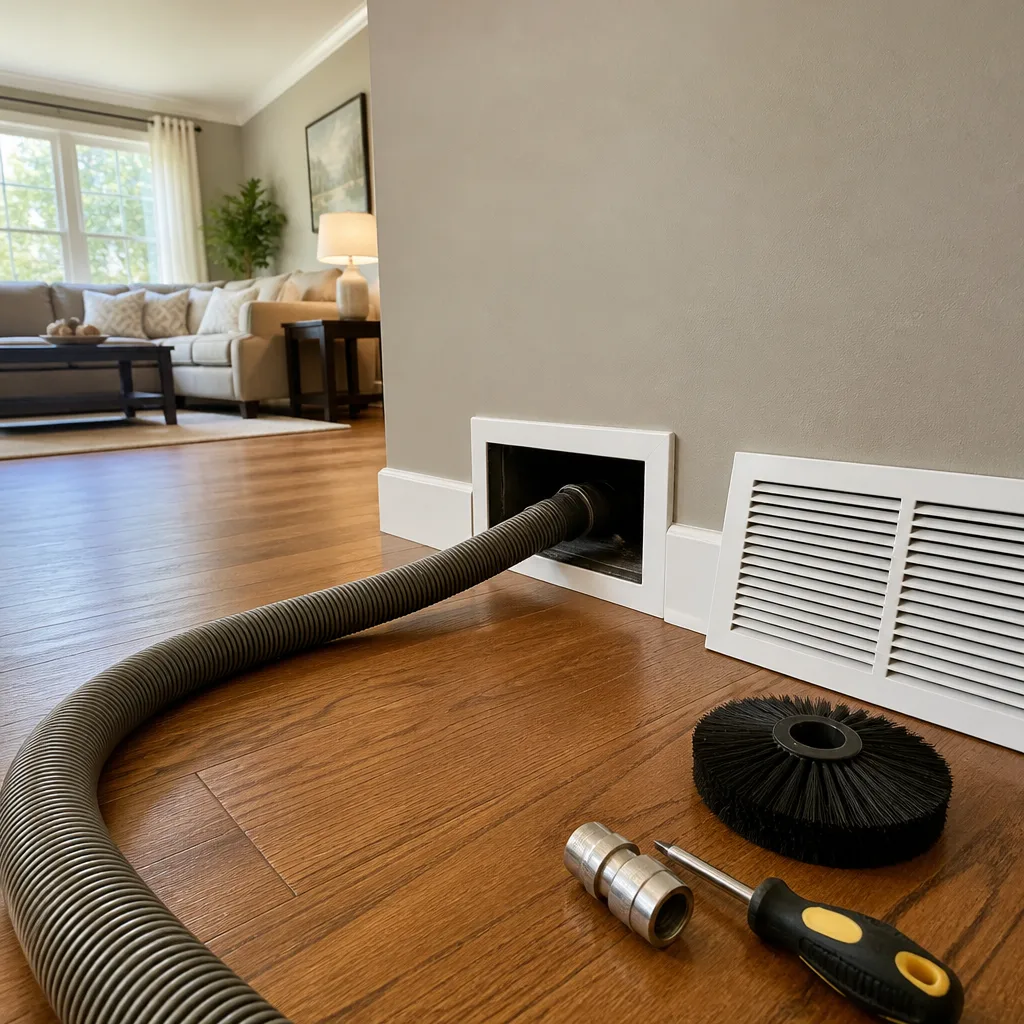 Whole-home duct cleaning
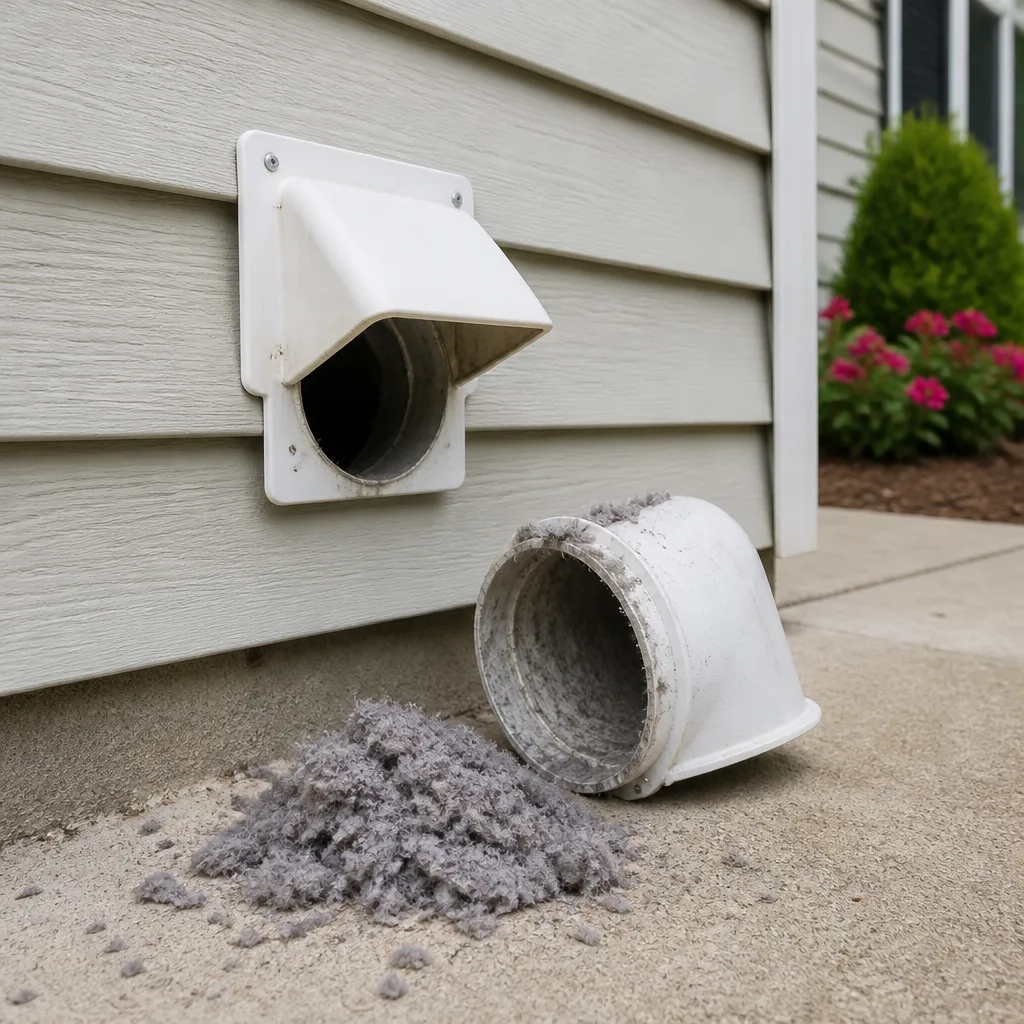 Dryer vent cleaning
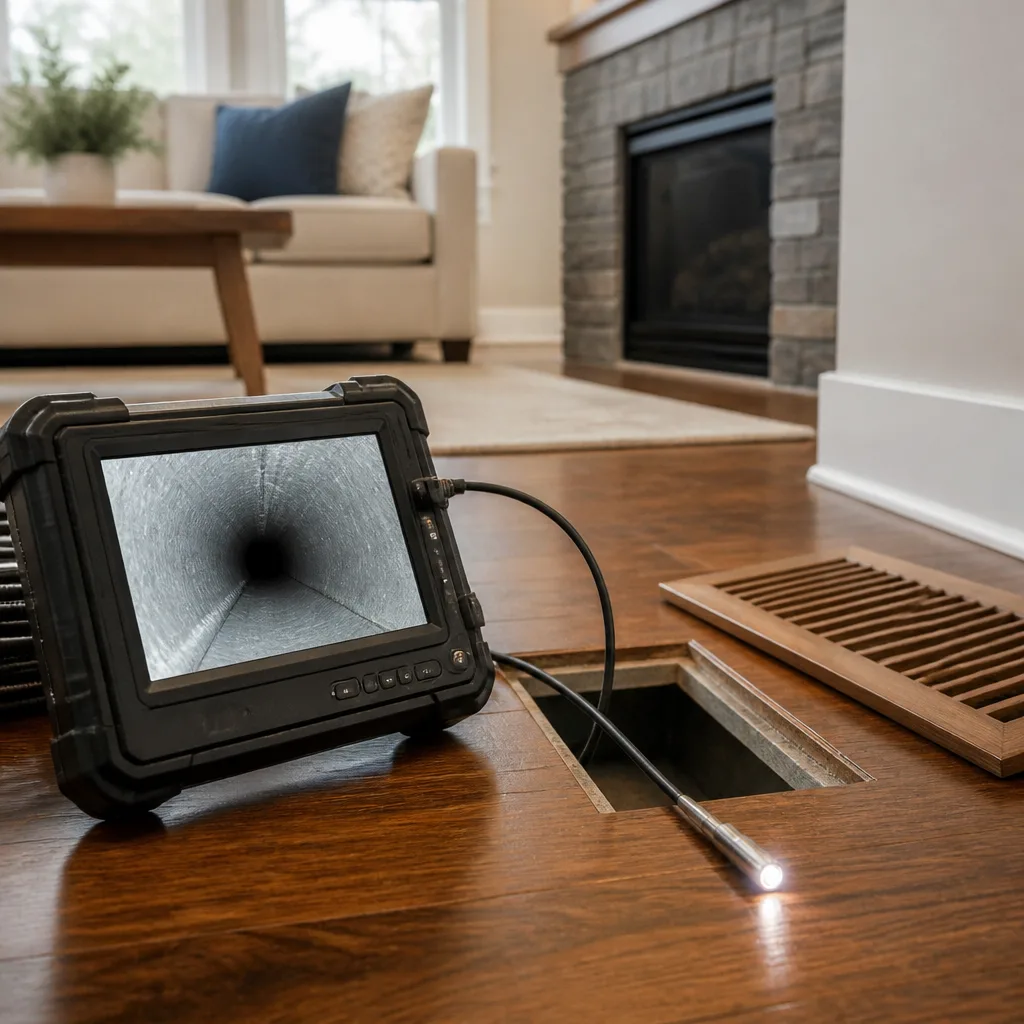 Camera inspection
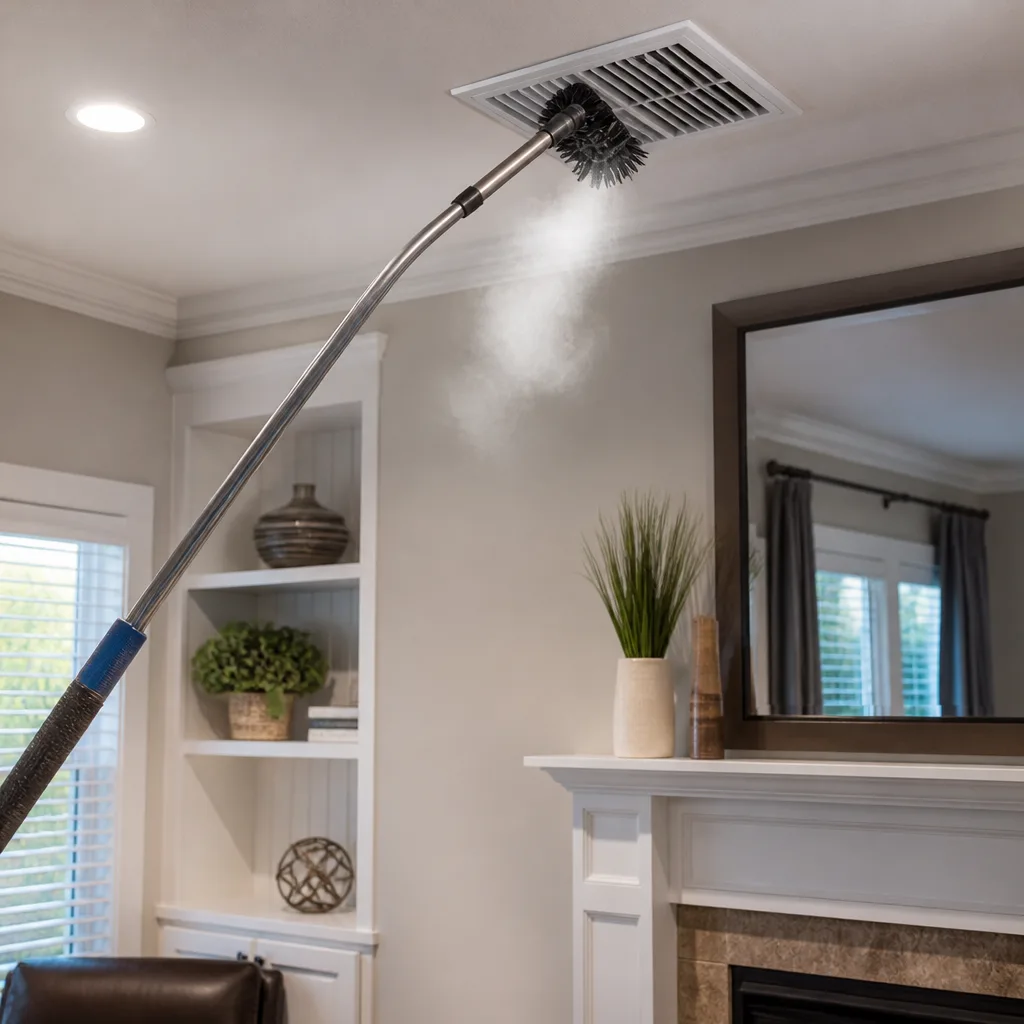 Sanitizing & deodorizing
Whole-system duct and dryer vent check with before-and-after photos - you see exactly what came out of your vents
That "$99 whole-house special" is a bait ad - the real number appears once they are in your hallway, or the "clean" is a shop-vac at the register. We photograph the inside of your ducts before and after instead.
Air Duct Cleaning Emergency Preparedness Guide for Salt Lake City Homes
Most duct problems in Salt Lake City don’t announce themselves. A wildfire smoke event, an earthquake, or a fast snowmelt flood can compromise a duct system in ways you won’t see, hear, or smell until weeks later. The common misconception is that ducts are a closed, sturdy loop that either works or doesn’t. In reality, a duct run is a chain of joints, flex connections, taped seams, and hangers, and each of those is a failure point when the ground shakes or water rises. This guide lays out a response framework for each scenario Salt Lake City homes actually face, so you’re not improvising during the event. You’ll learn what to shut down, what to inspect, how to document it, and when filtration alone is enough versus when the system needs a professional flush.
Quick Answer
Emergency duct preparedness in Salt Lake City means knowing three things before an event happens: how to shut down your HVAC to stop pulling contaminated air inside, which duct components fail first after seismic movement or water exposure, and how to document damage for insurance. For wildfire smoke, upgraded filtration (MERV-13 or higher) plus a temporary shutdown is often enough; for earthquake separation or flood saturation, professional inspection and cleaning are required. A one-page home duct map of layout, materials, and access points makes every one of these responses faster.
Styles & brands we work with
- Whole-home duct cleaning
- Dryer vent cleaning
- Camera inspection
- Sanitizing & deodorizing
Table of Contents
- Wildfire Smoke Infiltration: The Shutdown Protocol
- When Filtration Alone Is Enough and When It Isn’t
- Post-Earthquake Duct Inspection for Salt Lake City Homes
- Snowmelt Flood Events: Basement and Crawl Space Ducts
- Documenting Duct Damage for Insurance Claims
- The One-Page Home Duct Map
- Common Mistakes to Avoid
- When to Call a Professional
Wildfire Smoke Infiltration: The Shutdown Protocol
Wildfire smoke from the Wasatch Front and surrounding ranges doesn’t just foul the outdoor air. It gets drawn inside the house through the return side of the HVAC system, and once fine smoke particles settle on the inside walls of ductwork, they stay there long after the sky clears. The single most important thing you can do during a smoke event is stop the system from actively pulling that air in through a dirty filter.
Here’s the numbered response sequence we recommend for Salt Lake City homes when smoke rolls in:
- Shut down the HVAC system if the outdoor air quality index has spiked or you can see visible smoke. Every minute the fan runs, it’s moving contaminated outside air through the house.
- Close windows, exterior doors, and any fresh-air intake dampers. An energy recovery ventilator or fresh-air damper left open pulls smoke directly into the return.
- Replace the filter before you restart the system. A dirty filter full of smoke ash will simply re-release it into the supply air.
- Upgrade to at least MERV-13 for the duration of the event and immediately afterward.
- Run the fan continuously on low speed once the filter is upgraded and outdoor air has improved, so the system can scrub particulate through the filter.
- Inspect and clean the return and supply grilles after the event to remove any ash film that collected on the surface.
That last step matters in Salt Lake City because the valley traps smoke against the mountains. Smoke events here can last for days, and each one deposits a fresh layer of fine particulates. After repeated events, we’ve seen duct interiors that look visibly gray even though the home was clean before the fire season started.
Professional duct flushing is different from surface grille cleaning. Our crews use Rotobrush rotary-brush systems to agitate the duct walls and loosen the smoke ash, then capture the dislodged debris with Nikro HEPA-rated vacuums that hold particles down to 0.3 microns. That containment is the whole point: without it, you’re just moving dust around. This is a scheduled air duct cleaning protocol that follows fire season, not a quick visit during the event itself.
When Filtration Alone Is Enough and When It Isn’t
Not every smoke event requires a professional visit. In our experience, honest rules of thumb matter more than sales pressure here. The decision comes down to how long the exposure lasted, whether your system was running at the time, and how tight your ductwork already was.
Filtration alone is usually enough when:
- The smoke event lasted under a few days and you shut the HVAC down early.
- You have no visible film on return grilles and no smoky odor coming from supply vents.
- Your duct joints and taped seams were in good condition before the event.
- Nobody in the home has reported new allergy or breathing symptoms since the event.
Professional duct flushing is warranted when:
- Smoke lingered for more than several days and the system ran through it.
- You can smell smoke from supply registers after a filter change.
- Anyone in the home has new asthma, allergy, or sinus symptoms that appeared during or after the event.
- You live in an area with older, loosely sealed ductwork where infiltration is likely.
- There’s visible ash or discoloration on the inside face of any accessible duct run.
Filtration upgrades are only as good as the system. If you want to go deeper than swapping a filter, our HVAC cleaning protocol addresses the coil, drain pan, and blower cabinet alongside the ducts, since those are where smoke ash accumulates alongside dust. Integrating Honeywell and Aprilaire IAQ components works too, but only once the ducts themselves are clean. A high-end filtration system pulling through contaminated ductwork is like running premium fuel through a dirty engine.
One more filtration note: MERV-13 isn’t universally compatible with every residential blower. Some older systems can’t handle the pressure drop of a high-MERV filter. If your system runs noticeably harder or shorts through the filter after upgrading, step down to MERV-11 rather than strain the equipment.
Post-Earthquake Duct Inspection for Salt Lake City Homes
Salt Lake City sits on the Wasatch fault, and seismic duct damage is quiet. A duct joint can separate an eighth of an inch and still look normal from the outside. What’s happened is that conditioned air is now dumping into a wall cavity or attic chase instead of the room, and the only sign might be a higher energy bill a couple of months later. That’s the class of failure that surprises homeowners most.
Here’s the inspection sequence to run after any felt earthquake:
- Check the air handler cabinet’s mounting. Straps and platform fasteners are the first thing to fail.
- Walk every accessible duct run and look for disconnected flex-to-metal connections. Flex collar clamps loosen first at joints where the flex transitions to rigid trunk line.
- Inspect hangers and supports. Look specifically for sagging runs, broken plumber’s tape straps, and stretched nylon webbing.
- Test every supply register for airflow. A room that suddenly pulls noticeably weaker air usually means an upstream separation.
- Look at the accessible joint tape. Taped seams that show gaps, lifting edges, or splits are a sign of movement.
- Sniff for dust smell at supply vents. A dusty odor coming from vents after an event often means the supply side is pulling air from an attic or wall cavity.
The most vulnerable joints in Salt Lake City homes are the ones we see most often: flex duct collar connections at the plenum, sheet-metal trunk joints held together with screws and tape, and any run longer than about 15 feet without an intermediate hanger. The heavier the run, the more the sway amplifies movement at the joints.
Identifying separation in inaccessible runs without pulling drywall takes equipment. Our technicians use Abatement Technologies air-scrubbing equipment and camera inspection to see into chases where you can’t reach. If a joint has separated, the fix is duct repair and sealing, not just a cleaning. Cleaning a separated run without sealing it just means you’ll be cleaning contaminated air again in a few months. Our technicians have up to 11 years of experience with this kind of diagnostic work, and we clear it, seal it, and sanitize it in a single visit.
Snowmelt Flood Events: Basement and Crawl Space Ducts
Spring snowmelt in the Wasatch Mountains can overwhelm foundation drainage fast, and finished basements and crawl spaces are where it usually shows up first. When water reaches a duct run – even a small amount – the risk is mold colonization inside the duct within 24 to 48 hours of continued moisture. Duct liner, fiberglass insulation jackets, and porous flex material all hold water and support mold growth.
A timeline of what to do after flood exposure:
- Hours 1-8: Shut off HVAC. Cut power to the air handler if the cabinet is wet. Remove any standing water and start drying the space with fans and dehumidifiers.
- Hours 8-24: Photograph everything before you move or discard it. Open access panels if you can do so safely. Keep the HVAC off.
- Hours 24-48: This is the decision window. Duct that has sat wet inside a humid space is at serious risk of mold colonization. Have the system professionally inspected before you restart it.
- After 48 hours: Assume contamination until proven otherwise. Restarting a wet HVAC system spreads mold spores and moisture through every supply register in the house.
Professional decontamination goes further than drying. True post-flood duct work involves removing and discarding any wet flex runs and insulation that can’t be dried, mechanical agitation of metal duct interiors with Rotobrush equipment, HEPA extraction with Nikro vacuums, and antimicrobial sanitizing of the cleaned surfaces. Abatement Technologies air scrubbers run continuously during the process to keep airborne spores contained. This is the same equipment used in professional remediation work, which is why we rely on it.
One clarification worth stating plainly: we don’t handle mold remediation or general water damage restoration. What we do is clean, sanitize, and repair the duct system once the water source is controlled and the space is dried. If there’s active mold growth in walls or framing, that’s a restoration contractor’s scope before duct work begins. In Salt Lake City’s older neighborhoods near the foothills, where basement finishes are common and snowmelt is heavy, we often recommend a pre-spring duct inspection so you know the condition of the system going into flood season rather than after.
Documenting Duct Damage for Insurance Claims
Adjusters process hundreds of claims, and they approve what’s documented, not what’s described. If smoke or water damaged your ducts, the difference between a covered cleaning and a denied claim usually comes down to the file you build in the first 48 hours.
What to capture, in order:
- Overview photos of the air handler and every accessible duct run before any cleanup begins. Wide-angle shots with a reference object for scale.
- Close-up photos of every joint, separation, wet spot, or visible contamination. Overlay date and time if your camera app supports it.
- Measurements. Duct length, diameter, and the square footage of affected conditioned space. Adjusters use these to price the claim.
- Equipment documentation. Photographs of any failed component (air handler, blower, filters) alongside the model plate.
- Third-party IAQ assessment if the claim is large. Many adjusters want an independent air quality report showing particulate counts before and after remediation, especially for wildfire smoke claims.
- Proof of the event. For smoke: air quality index screenshots or news coverage from the event dates. For water: photos of the water line and depth in crawl spaces.
Before-and-after photos from the cleaning crew are equally important. We document every job with photos of the ducts before and after, which is one of the pieces adjusters ask for most often. Our technicians also photograph the equipment in use so the file shows professional-grade machinery (Rotobrush, Nikro, Abatement Technologies) rather than a shop vac. It’s worth confirming with your adjuster whether they want the assessment before or after the cleaning, because some carriers only pay for one of the two.
Documentation is most useful when it’s ready before you need it, which is the same logic behind the duct map below.
The One-Page Home Duct Map
The single most useful pre-disaster preparation for any Salt Lake City homeowner is a one-page document that lays out your duct system’s layout, materials, and access points. If a fire season smoke event, an earthquake, or a spring flood hits, an electrician, restoration contractor, or cleaning crew can work from your map instead of spending an hour cutting access holes.
Here’s what belongs on it:
- A simple sketch of the system layout. Air handler location, trunk line path, and branch runs ending at each room. It doesn’t need to be to scale.
- Duct material types by run. Rigid sheet metal, flex, duct board, or a mix. Mark any run with insulation jacket.
- Access point locations. Every register, return, plenum access panel, and any inspection hatch you can reach.
- Component model numbers. Air handler, coil, filter cabinet, and any IAQ equipment (Honeywell or Aprilaire models if you have them).
- Filter size and MERV rating currently in use. Note your system’s maximum acceptable MERV.
- Seismic bracing details. Photos of hangers and straps, with date stamps, so post-earthquake comparison is easy.
- A short contact list. HVAC, duct cleaning, insurance agent, and your restoration contractor.
The map takes about an hour to assemble with a phone camera and a notepad. Store one copy in the house, one in the cloud, and one with your insurance agent. Update it any time you change filters, replace equipment, or finish a basement. This is the same document a professional would build on-site during an inspection, and having it ready before an event is what separates a fast recovery from a slow, expensive one.
If you’d rather not build one blind, our team can walk your system and help you annotate it. Our five-service lineup (cleaning, dryer vent cleaning, HVAC cleaning, duct repair and sealing, and sanitizing) covers the whole system in one visit, so the map captures everything in a single pass rather than three. If you’d like a pro to walk through the system with you, that’s where our Salt Lake City Air Duct Cleaning Pros team can help.
Common Mistakes to Avoid
- Running the HVAC during a smoke event. This pulls smoke particles straight into the return and deposits them across every supply run. Shut the system off before you do anything else.
- Restarting a wet system after a flood. Wet duct and humid air are the recipe for mold colonization. Have it inspected before power comes back on.
- Skipping the seismic inspection because nothing “looked” wrong. Post-earthquake joint separations are usually invisible from the supply register. You find them by walking the runs, not by feeling for air in each room.
- Upgrading to MERV-13 without checking blower compatibility. Some Salt Lake City systems from the 1990s and 2000s can’t handle the pressure drop. Strain on the blower costs more than the filter upgrade saves.
- Calling a cleaning crew before calling the insurance company. Get the documentation photos first, keep receipts, and ask the adjuster what they need. Cleaning before documentation can void a claim.
- Treating surface grille cleaning as duct cleaning. Wiping down a return grille does nothing for the ash and debris sitting on the inside of the run. Real extraction requires proper equipment.
- Ignoring the dryer vent for months at a time. Dryer vents are a fire safety service, and a lint-clogged run doesn’t wait for a convenient week. In Salt Lake City’s dry climate with heavy seasonal lint loads, it’s worth scheduling proactively.
When to Call a Professional
Some situations call for a trained technician and proper equipment, not a homeowner with a shop vac and good intentions. Call a professional if you’ve experienced a wildfire smoke event that ran for more than a few days with your HVAC operating, if you’ve felt an earthquake and suspect joint separation, if water reached any part of the duct system during a snowmelt flood, if you smell musty or smoky air from supply vents after a filter change, or if anyone in your household has new respiratory symptoms that started after any of those events. Also call if your ductwork looks visibly dirty from any accessible register. Our team works across the Salt Lake City area and can inspect, seal, sanitize, and document the system in one visit. Salt Lake City Air Duct Cleaning Pros offers free estimates in Salt Lake City – call (866) 937-7589. We answer 24/7. Fast dispatch from 7am to 7pm, Sunday through Friday. Or use the guide above to prepare your home before the next event, which is the higher-value move.
See the difference
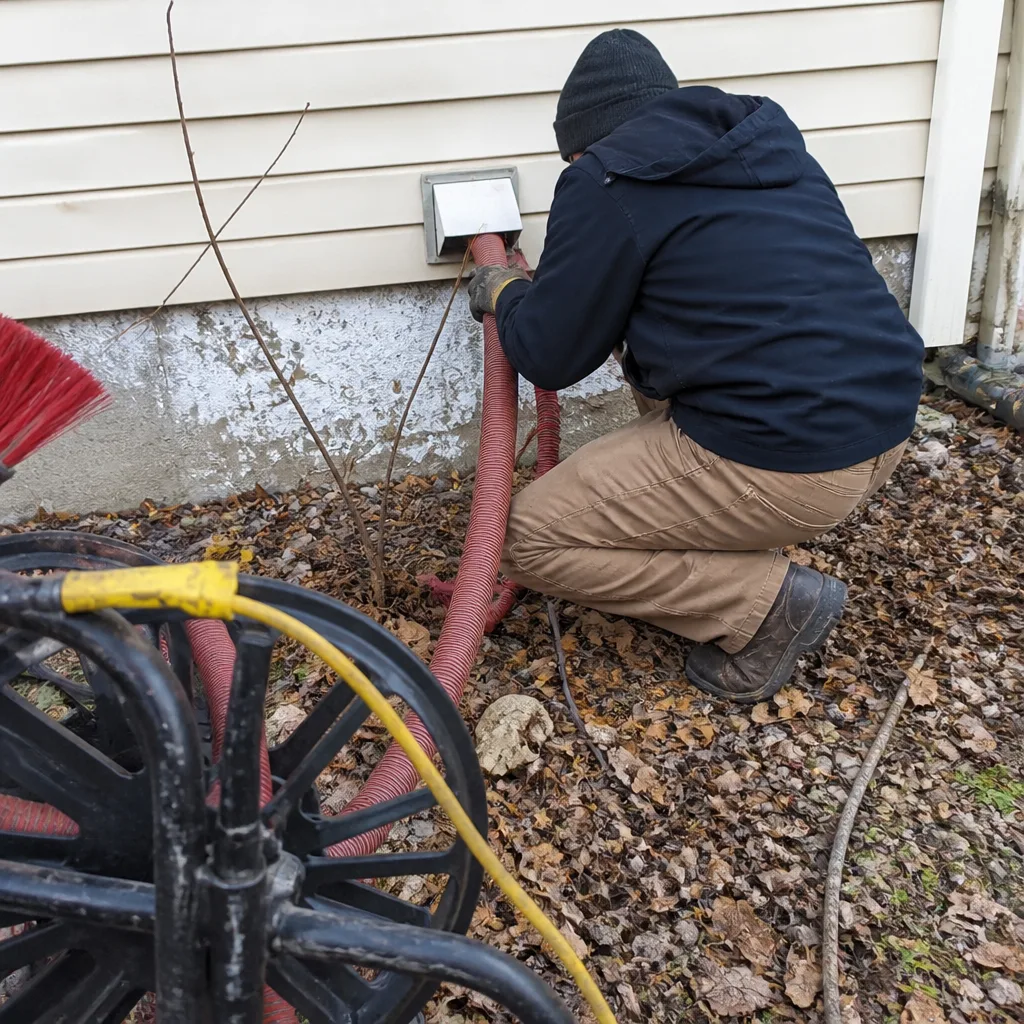 Before
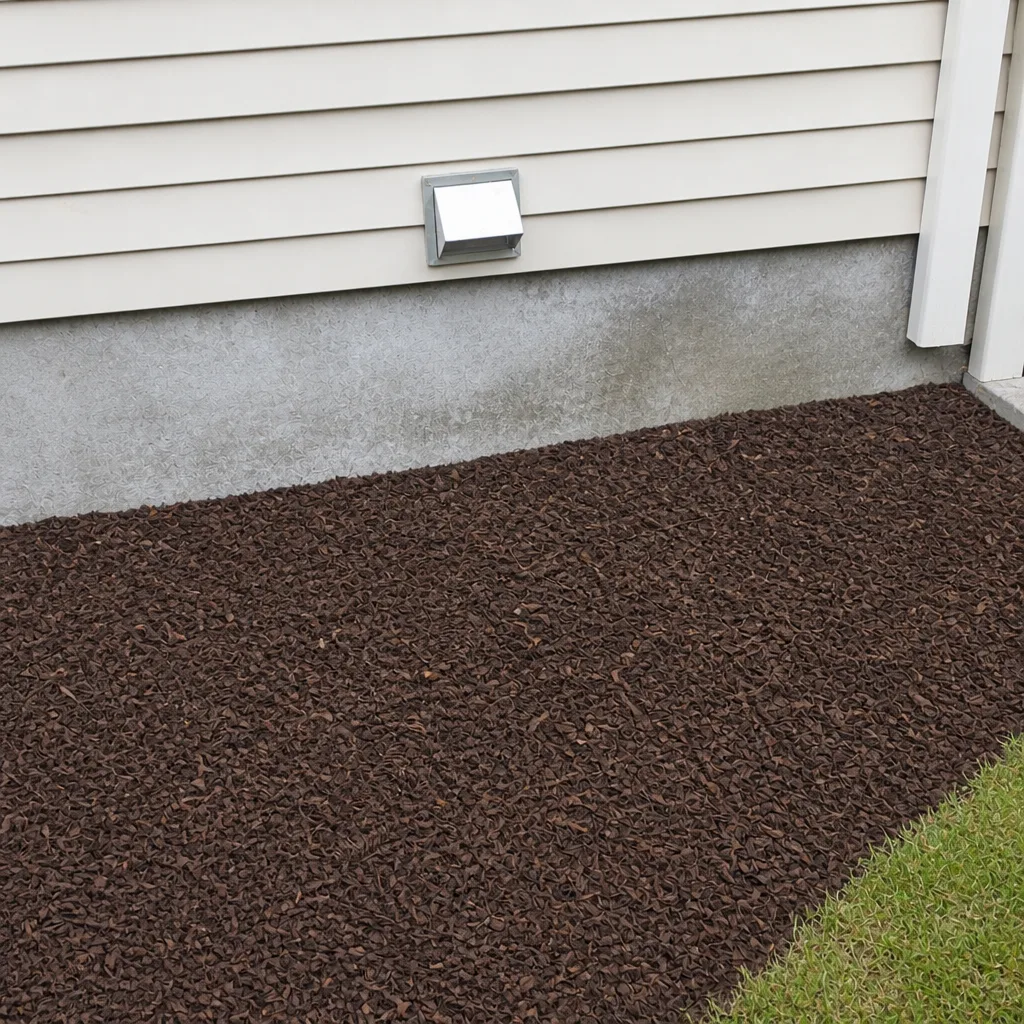 After
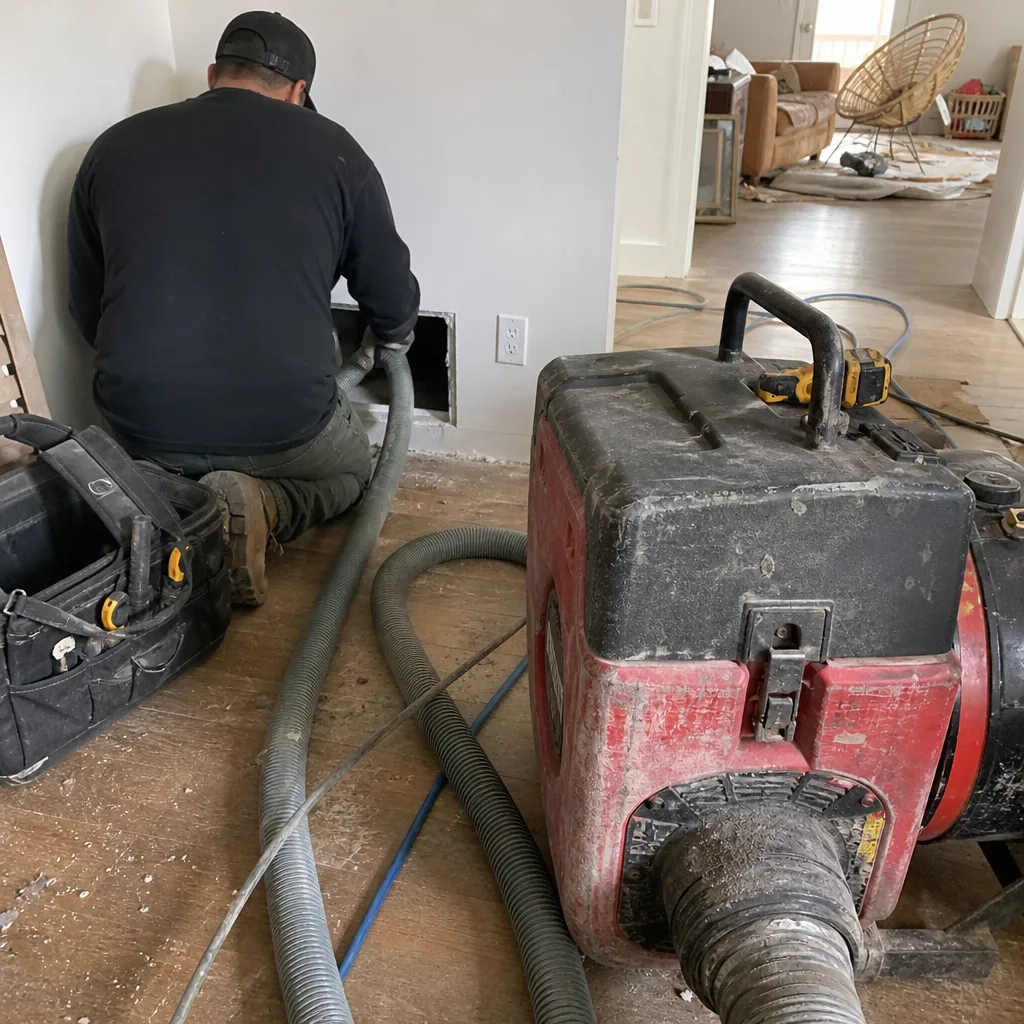 Before
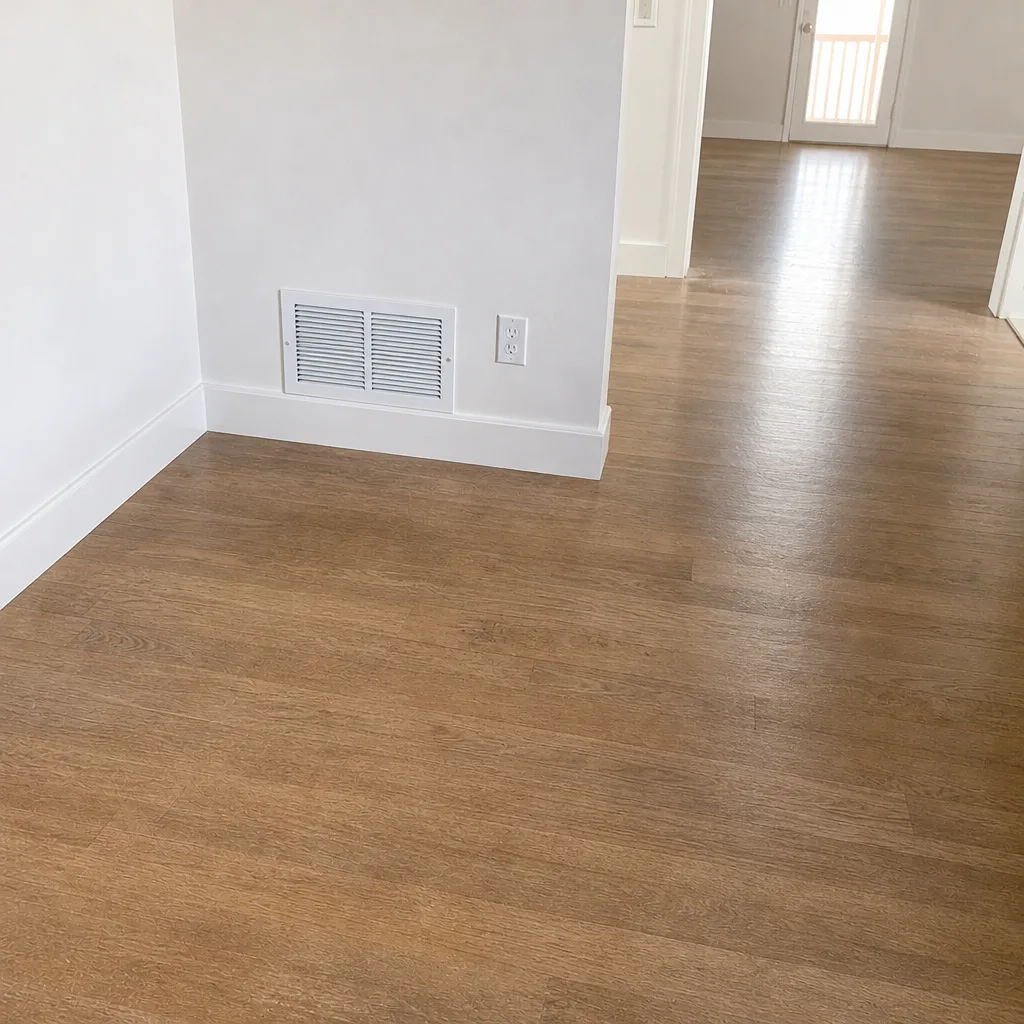 After
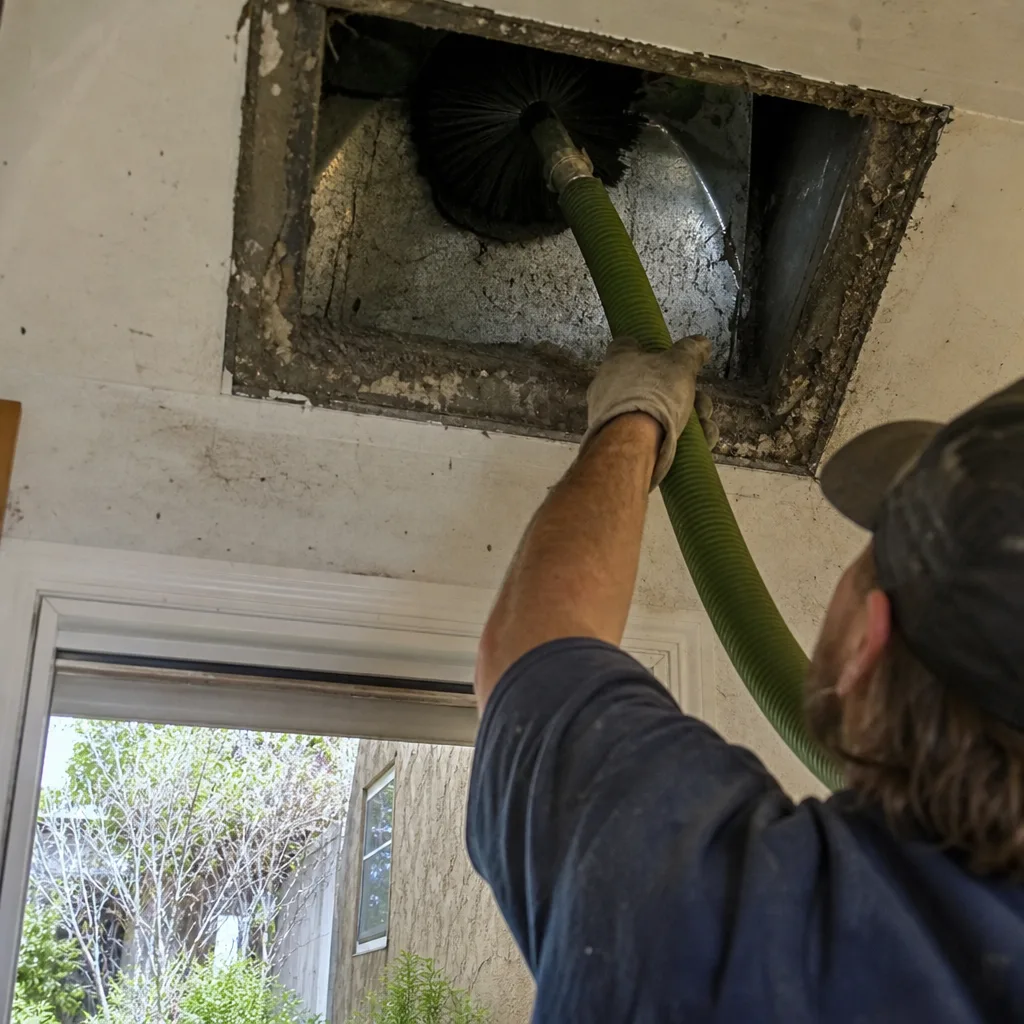 Before
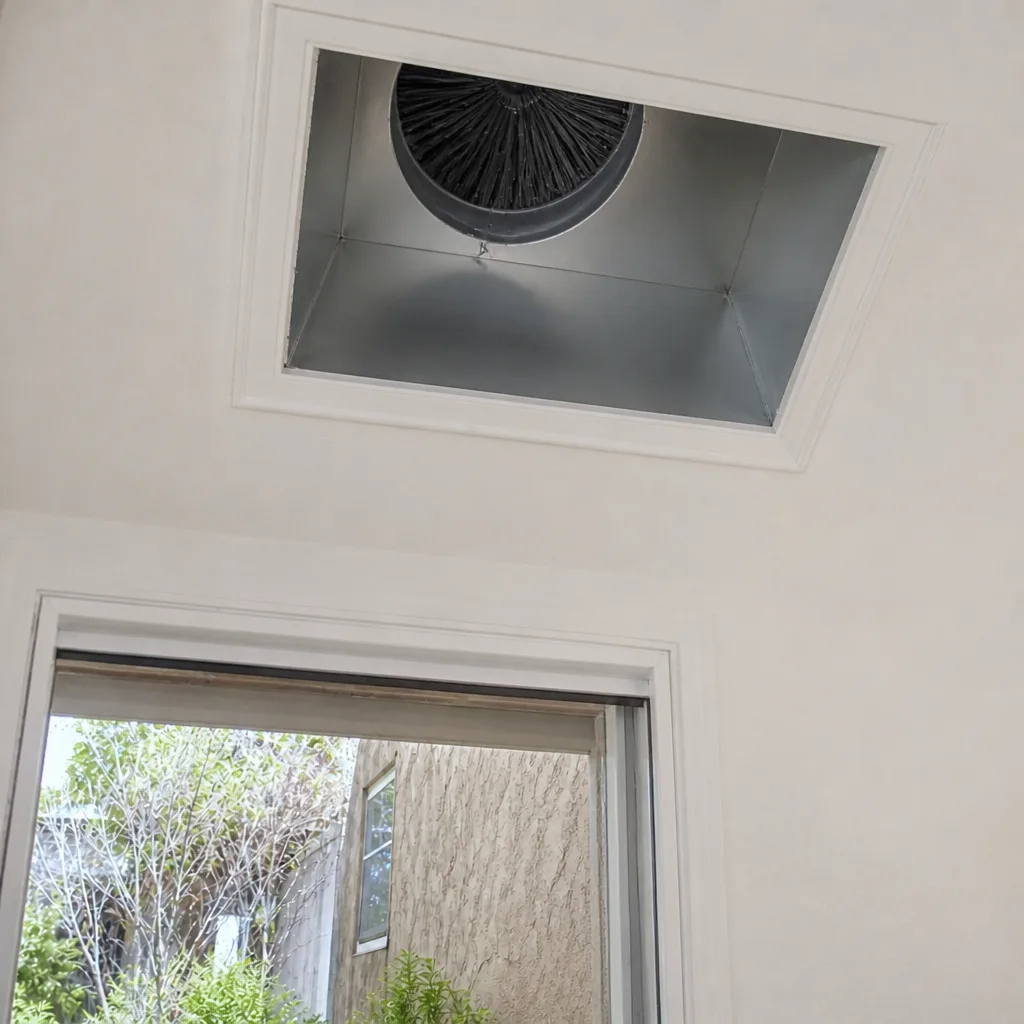 After
Frequently Asked Questions
Typical duct cleaning in Salt Lake City is priced per system by a written estimate, not per vent, and the final price depends on system size, duct condition, and whether repair or sanitizing is included. We don’t quote teaser prices over the phone. Call (866) 937-7589 for a free estimate – we set one flat price per system before work starts.
Low coupon prices usually reflect a per-vent charge that balloons once the technician is on site, or equipment that isn’t strong enough to actually extract debris from the ducts. We price per system, in writing, before work starts, and we use Rotobrush and Nikro equipment that holds particles down to 0.3 microns. Call (866) 937-7589 for a written estimate.
Ask for before-and-after photos of your own ducts, which our team documents on every job, and for photos of the equipment actually in use. If a crew can’t show you containment equipment (HEPA-rated vacuums, air scrubbers) at work in your home, the “cleaning” was likely surface agitation. Call (866) 937-7589 to schedule a documented visit.
Most homes need it every few years, but Salt Lake City homeowners should also schedule a cleaning after any of the specific events in this guide: a prolonged wildfire smoke event, an earthquake, or a snowmelt flood that affected the basement or crawl space. Event-driven cleaning replaces the regular schedule rather than doubling up on it. Call (866) 937-7589 for guidance on timing.
Often yes, if the cause of loss is covered and the damage is documented. Photograph the system before cleanup, keep receipts, and request a written cleaning scope and any third-party IAQ assessment. Confirm coverage specifics with your adjuster. Call (866) 937-7589 to have the system assessed and documented professionally.
No. Most post-earthquake duct separations are interior joint failures that can’t be seen from a register, and the only early sign is often an energy bill spike two months later. A professional inspection with camera equipment finds these before they become energy loss. Call (866) 937-7589 to schedule one.
The Bottom Line
Emergencies affecting your ducts in Salt Lake City fall into three predictable categories: wildfire smoke, seismic activity, and snowmelt flooding. Each has a specific response window, and the reason to plan before an event is that the useful actions happen in the first hours and days, not weeks later. Shut the system down first, document what you can see and measure, and then call a professional for anything beyond a filter upgrade. A one-page duct map, a spare MERV-13 filter, and a number to call are the entire emergency kit. The rest is just knowing the sequence. Call (866) 937-7589 when you’re ready for a free estimate or a pre-season inspection – we answer 24/7. Fast dispatch from 7am to 7pm, Sunday through Friday.
Written by the team at Salt Lake City Air Duct Cleaning Pros.