
Last updated November 24, 2026
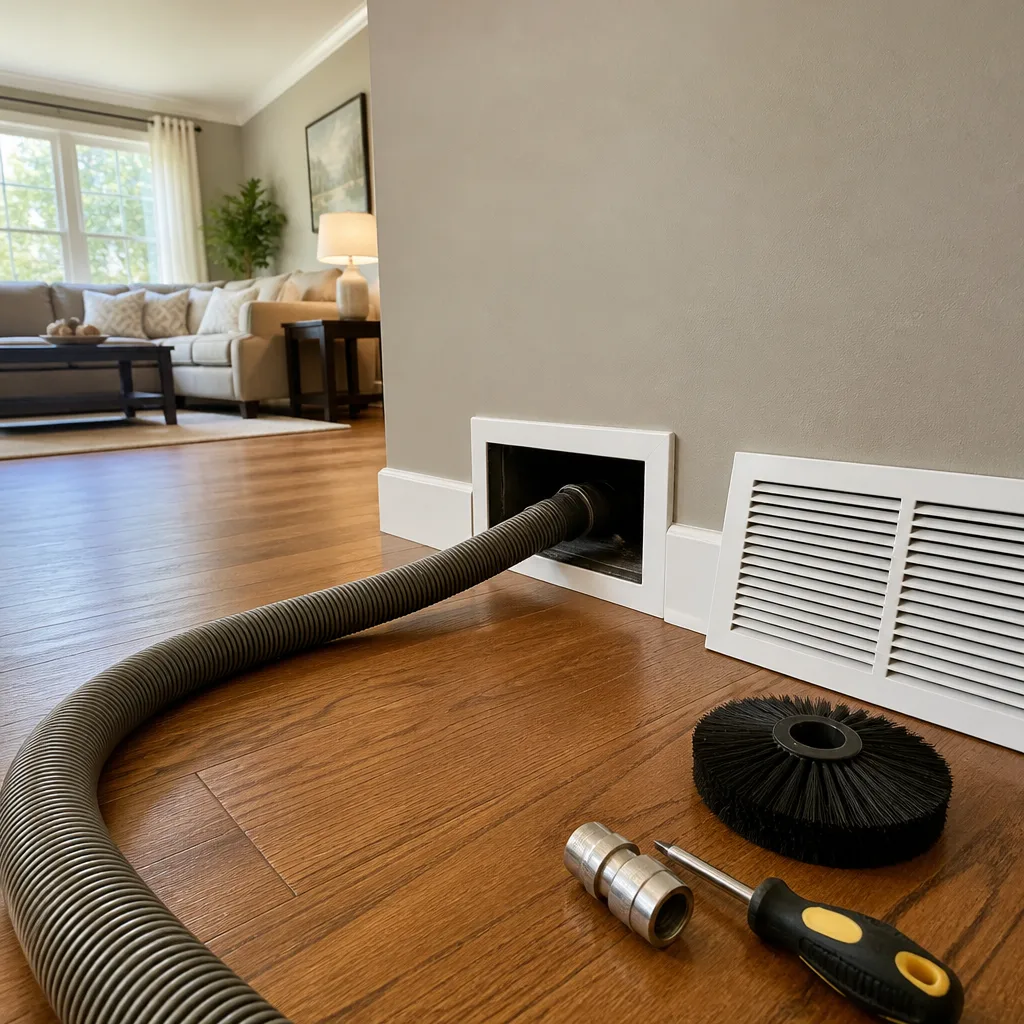 Whole-home duct cleaning
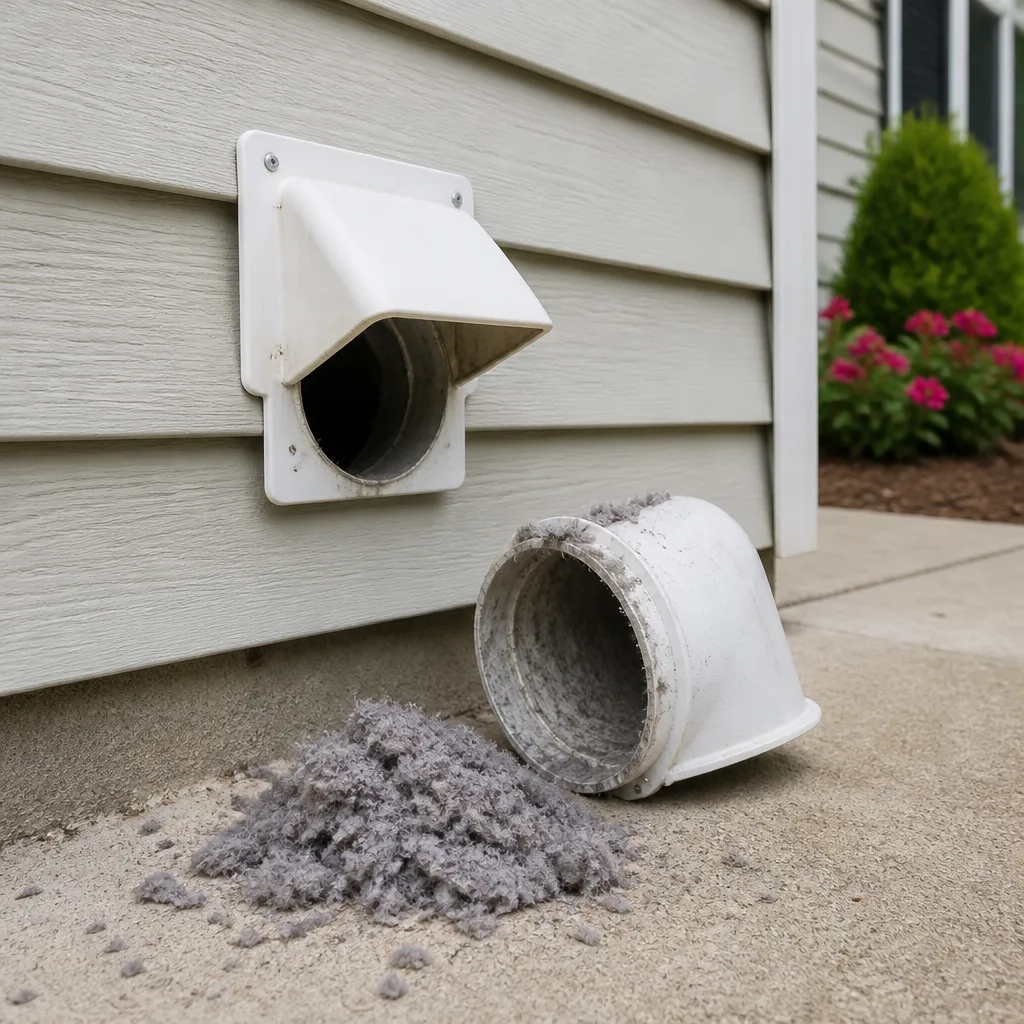 Dryer vent cleaning
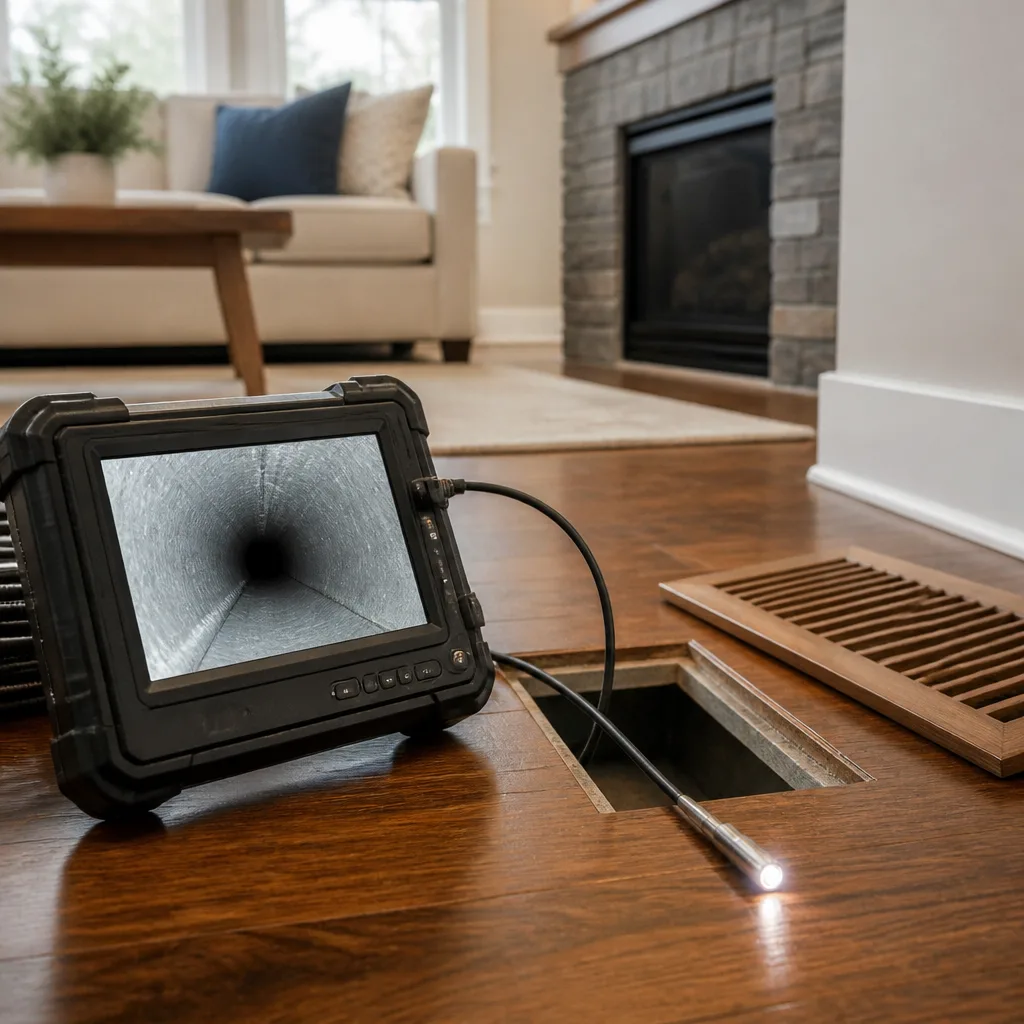 Camera inspection
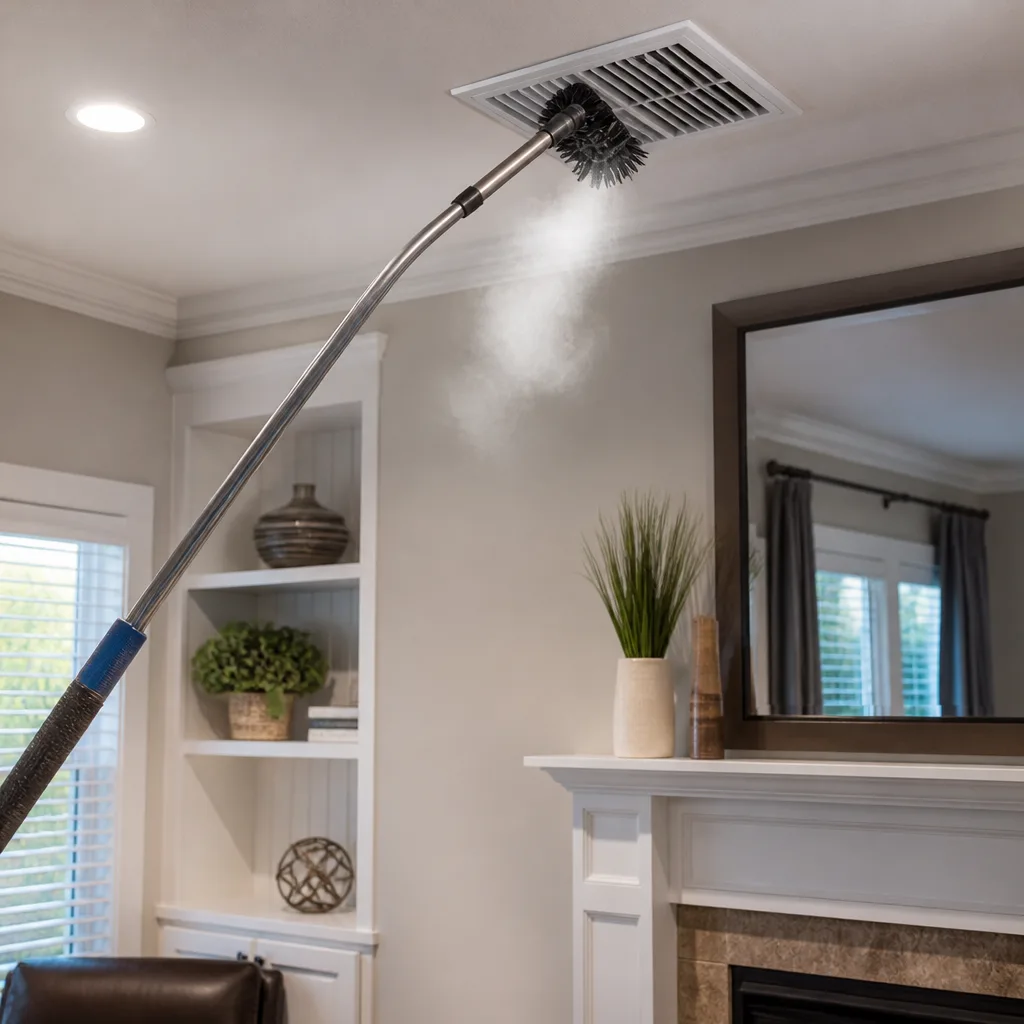 Sanitizing & deodorizing
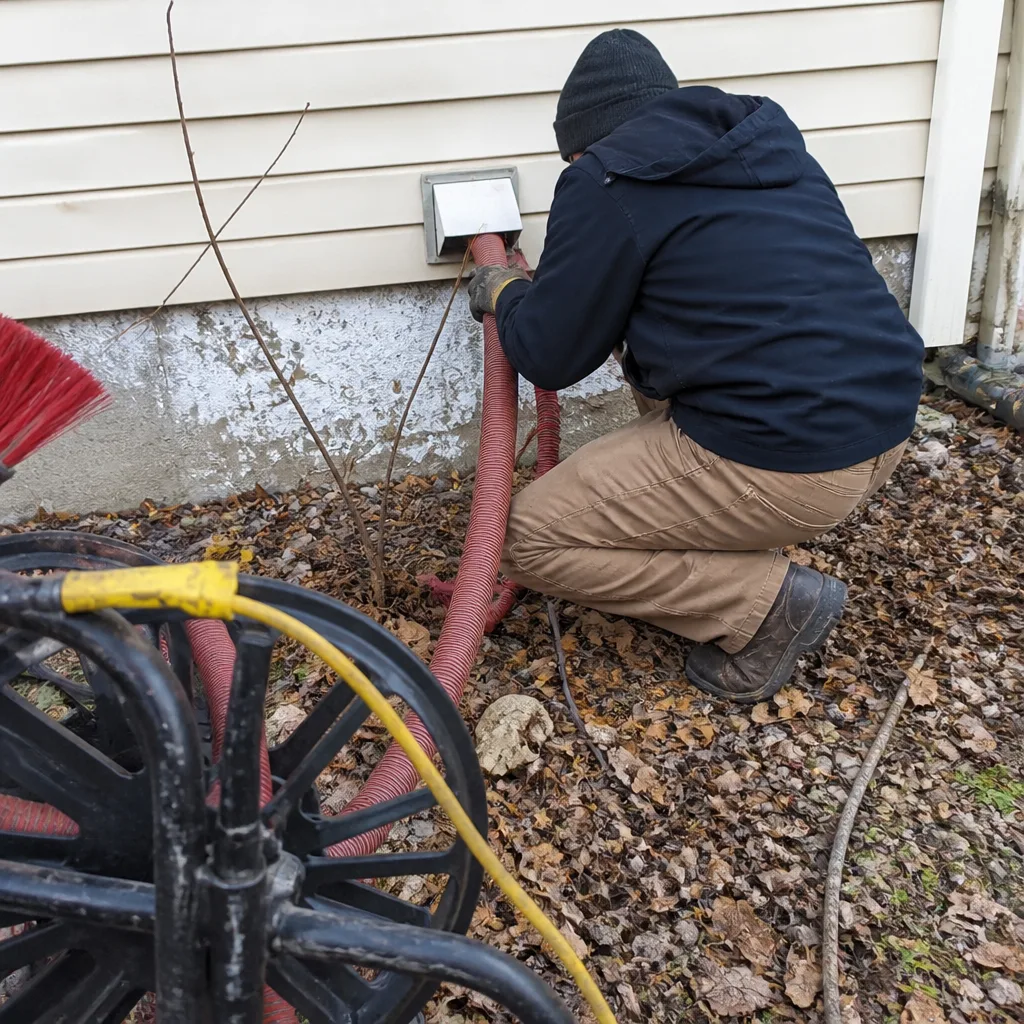
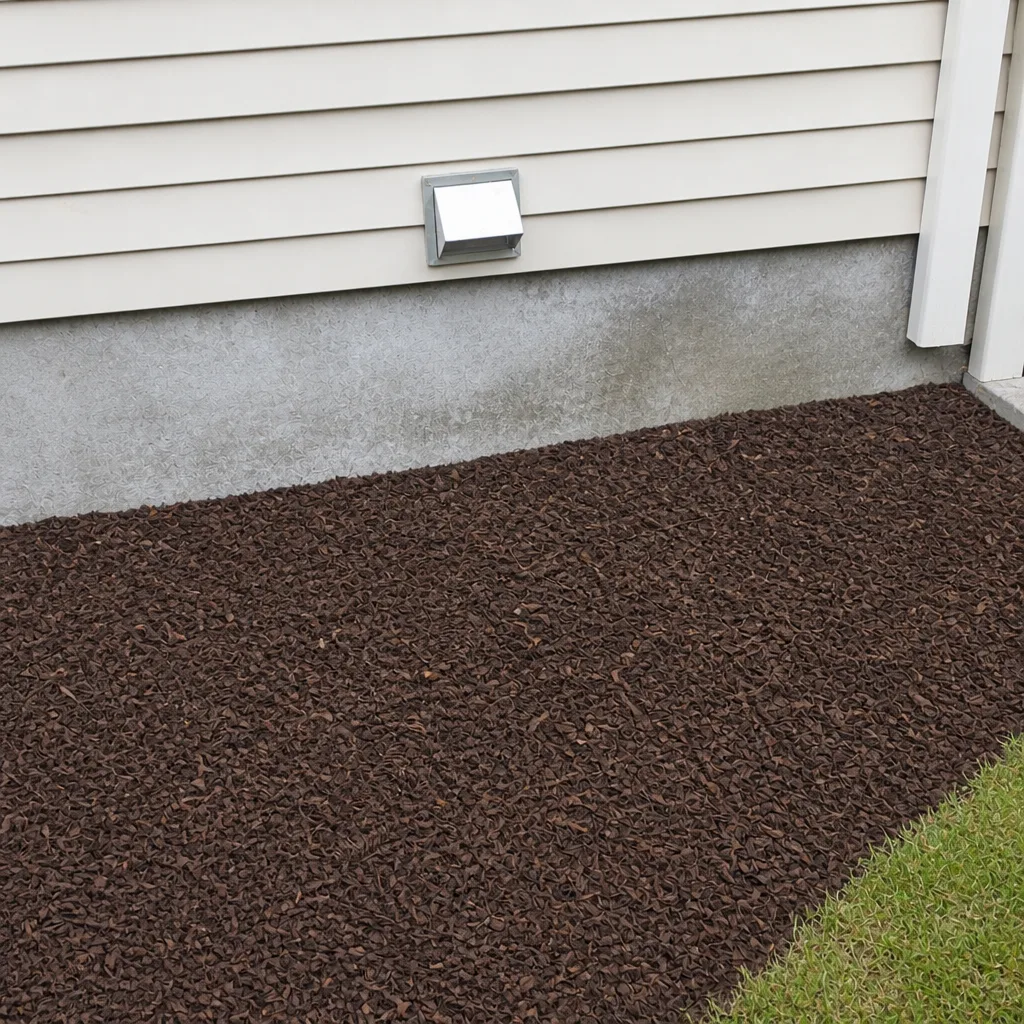
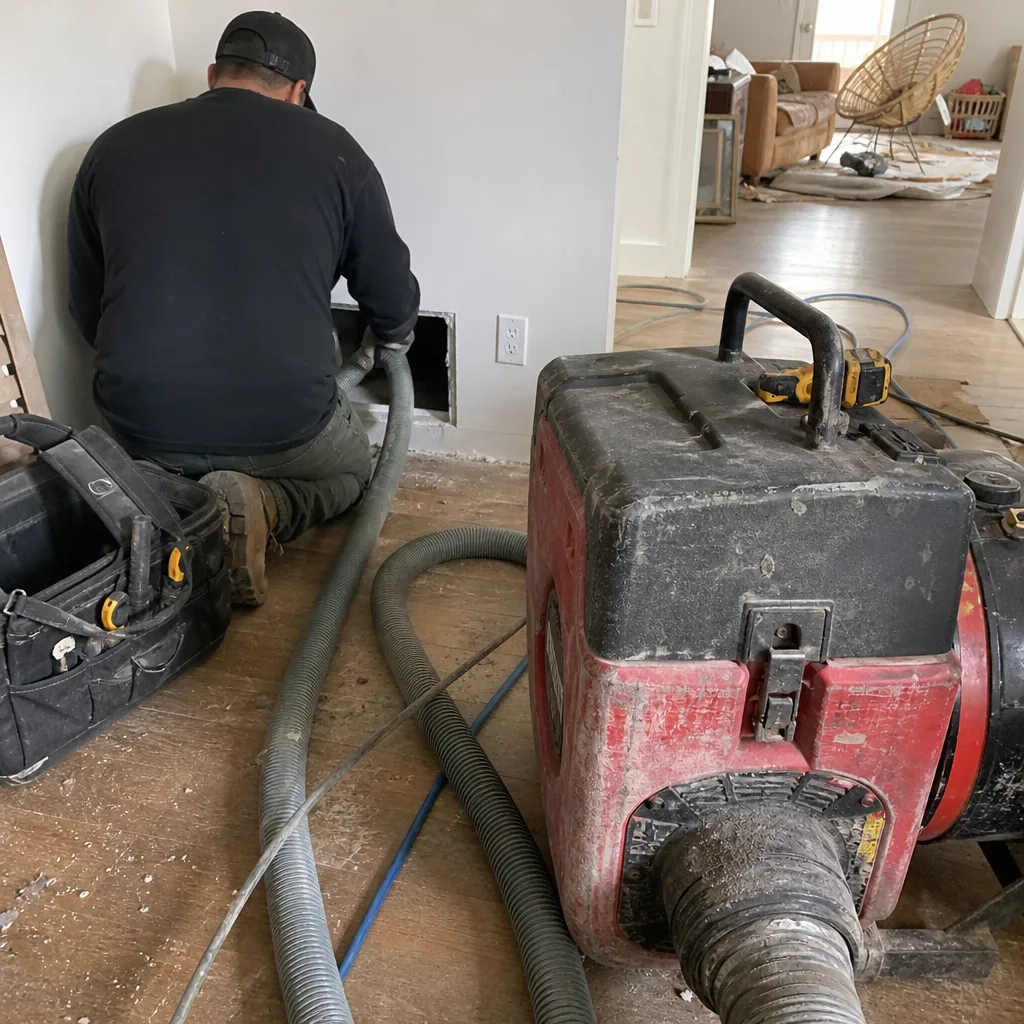
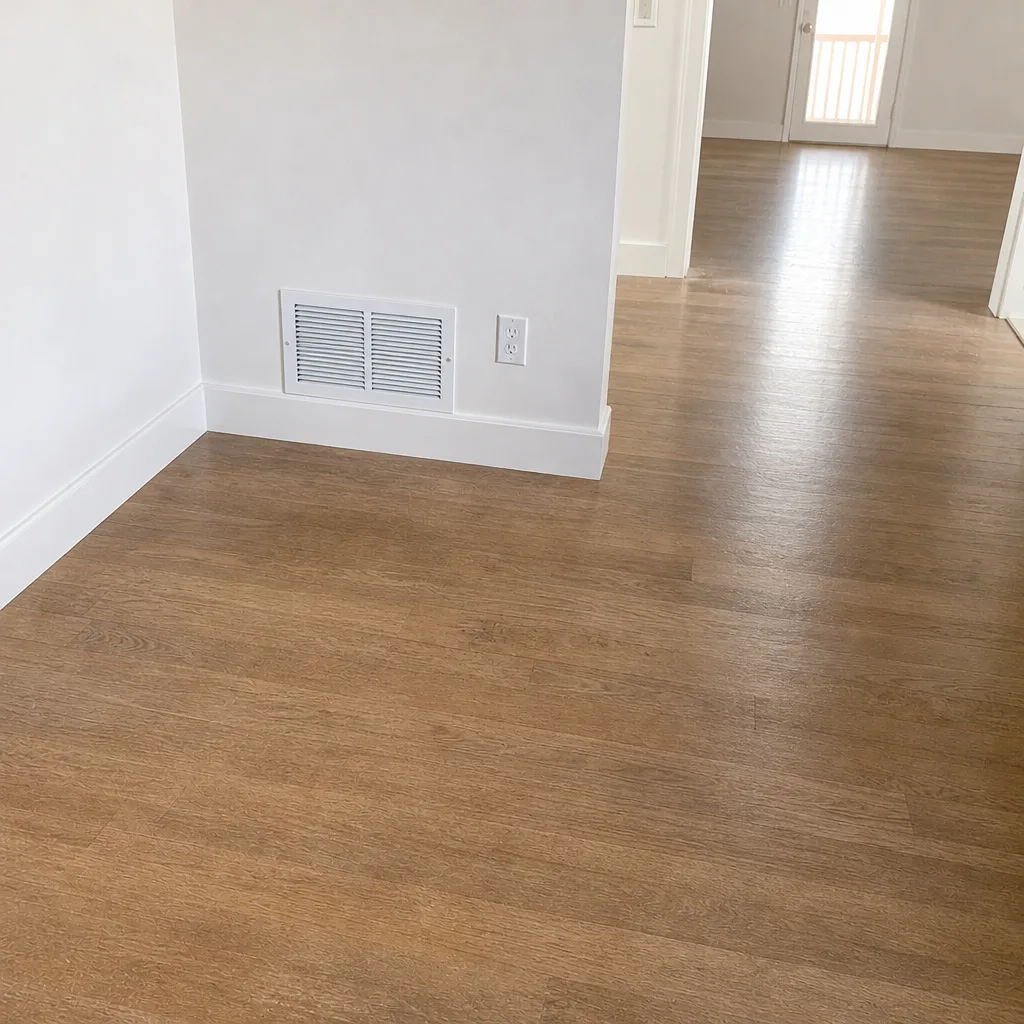
Whole-system duct and dryer vent check with before-and-after photos - you see exactly what came out of your vents
That "$99 whole-house special" is a bait ad - the real number appears once they are in your hallway, or the "clean" is a shop-vac at the register. We photograph the inside of your ducts before and after instead.
Air Duct Cleaning Cost Breakdown: The Salt Lake City Homeowner’s Reference for 2026
A $99 whole-home duct cleaning quote and a $650 quote for the same house are not negotiating positions. They describe two fundamentally different services, and one of them won’t meaningfully change your air quality. That gap is the single biggest source of confusion in this trade, and it’s the reason so many Salt Lake City homeowners feel burned after a cheap cleaning that changed nothing. This guide breaks down what each cost tier actually buys, what legitimate add-ons cost and why, and how to read a quote so you’re comparing equivalent work instead of a number that means nothing once you look past the sticker. We’ll show you the line items, the labor differences, and the checklist that evens the playing field.
Quick Answer
Professional whole-system air duct cleaning in Salt Lake City typically costs $350 to $700 for an average home, with larger or multi-system houses running $700 to $1,200 or more. The price depends on square footage, duct material, accessibility, and how many HVAC systems the home has. A quote far below that range usually means a commodity blow-out that skips mechanical agitation and containment, while a quote far above it should come with a written scope explaining exactly what extra work you’re paying for.
Styles & brands we work with
- Whole-home duct cleaning
- Dryer vent cleaning
- Camera inspection
- Sanitizing & deodorizing
Table of Contents
- Why duct cleaning quotes vary so widely in Salt Lake City
- What actually drives cost in a Salt Lake City home
- Line-item breakdown: what professional-grade work costs
- Per-vent pricing versus whole-system pricing
- What NADCA’s ACR standard specifies and why it costs more
- Equipment grade: the hidden variable in every quote
- How to compare quotes with a scope-normalized checklist
- When duct cleaning actually makes sense for your home
Why Do Air Duct Cleaning Quotes Vary So Widely in Salt Lake City?
The spread comes from scope, not from haggling room. Two companies can quote the same Salt Lake City house and be describing entirely different jobs. One is running a vacuum hose over the registers and calling it a day. The other is mechanically agitating every branch line, pulling debris into a HEPA-rated containment unit, inspecting the coil, and verifying particle counts afterward. Those are not the same service, and they shouldn’t cost the same.
When we walk a home, the differences that matter most are the ones a homeowner can’t see from the front door: how the trunk line is configured, whether the ducts are flex or sheet metal, how many branch runs feed each room, and how much of the system is boxed in behind drywall or buried in a crawlspace. A house in the Avenues with a partially finished basement and a mix of duct materials takes more labor than a newer build in Daybreak with clean, accessible flex runs. Same city, different job.
There’s also a real market factor here. Salt Lake City sits in a valley, and that geography shapes what ends up in your ducts. Winter inversions trap fine particulate near the ground, and spring pollen from the surrounding canyons and foothills rides the same air currents into return grilles. Homes here accumulate a different debris profile than a coastal city, and a company that understands that profile plans its cleaning around it rather than showing up with a shop vac and a coupon.
In our experience, the honest way to read the range is this: the low end is a surface pass, the middle is proper mechanical cleaning with containment, and the top is full-system work that includes repair, sealing, or IAQ integration. Your job is to know which one your home actually needs before you call.
What Drives Legitimate Cost Variation in a Salt Lake City Home?
Five factors account for nearly all of the variation between quotes for the same square footage. None of them are negotiable and none are invented to pad an invoice. Asking about each one tells you whether a quote is built on real scope or dressed-up guesswork.
- Square footage and system count. A single-system home under 2,000 square feet is one price band. Two systems or anything over 3,000 square feet pushes into a higher band because there’s more trunk line, more branch runs, and often a second air handler to inspect.
- Duct material. Sheet metal cleans and reseals predictably. Duct board is softer, so debris clings to the porous interior and the labor to agitate it costs more. Flex duct is the most forgiving to reach but the easiest to damage if a technician isn’t careful with brush speed.
- Accessibility. Registers under furniture, returns behind finished walls, and crawlspace runs that require a technician to work on their hands and knees all add time. A house is priced partly by how much of the system you can actually reach safely.
- Debris load. A home that just finished a remodel, dealt with a pest issue, or saw moisture intrusion will take longer per run than a house on a routine schedule. Construction dust and biological debris are heavier and slower to extract.
- Condition of the system. Loose joints, disconnected runs, crushed flex, or a dirty evaporator coil turn a cleaning into a cleaning plus repair. That’s legitimate cost, and it’s often the thing a cheap quote never addresses.
The pattern holds across the city. A milled-home interior in Sugar House and a larger property in Cottonwood Heights share the same city climate but not the same duct layout, and that difference shows up directly in labor hours rather than in a mysterious line item on the invoice.
What Does Each Part of the Job Actually Cost?
Thinking in line items is the fastest way to see where a quote’s money goes. The ranges below are typical for a Salt Lake City home and represent whole-system pricing rather than per-vent charges. Your written estimate sets the final price once the technician sees the actual layout.
- Mechanical duct cleaning (whole system): $350 to $700 for a typical single-system home; $700 to $1,200 or more for larger or multi-system houses. This includes rotary-brush agitation through the trunk and branch lines, HEPA-rated vacuum extraction, and register removal and reinstallation.
- HVAC equipment and coil inspection: often bundled into a full HVAC cleaning scope rather than sold separately. Inspecting the evaporator coil is where real air-quality problems usually surface, because a dirty coil feeds debris back into the supply.
- Sanitizing treatment: a modest add-on after cleaning, priced per system by estimate. It follows the cleaning, never replaces it. A company that sells sanitizing as a shortcut around mechanical cleaning is selling you fog, not clean ducts.
- Dryer vent cleaning: typically a smaller separate add-on, priced per job by estimate. It’s a fire-safety service, and many duct-only companies don’t offer it at all. If you’re already booking air duct cleaning, adding the dryer vent makes sense because the equipment is already on site.
- Duct repair and sealing: quoted by scope, not square footage. Sealing leaky joints stops the energy loss and contamination that cleaning alone can’t fix. This is the line item cheap quotes leave out entirely.
- Post-clean particle verification: bundled into professional-grade work. It’s how a homeowner confirms the job did what it claimed.
The table below summarizes the whole-system bands as a quick reference. Treat these as typical estimates, not as a locked quote; the written estimate after inspection is the number that counts.
- Single-system home, under 2,000 sq ft: $350 to $700
- Larger or multi-system home: $700 to $1,200 or more
- Sanitizing treatment: add-on, priced per system
- Dryer vent cleaning: separate add-on, priced per job
- Duct repair and sealing: quoted by scope after inspection
Per-Vent Pricing Versus Whole-System Pricing: Which Should You Choose?
Whole-system pricing is the fairer model, and it’s the one that rewards thoroughness. Per-vent pricing charges by the number of registers, which sounds transparent but quietly rewards speed. The faster a crew moves from vent to vent, the more houses they complete in a day, and the less time each run gets. You end up paying per opening while the job is measured in minutes.
Whole-system pricing works the opposite way. The price is set by the size and condition of the system, so the technician’s incentive is to do the work completely rather than rush to the next vent. Here’s how the two models compare in practice:
- Per-vent: the invoice multiplies a rate by the number of registers. Fast jobs get rewarded, branch lines and trunk interiors can be skipped, and the homeowner has no way to confirm each run was actually cleaned.
- Whole-system: the invoice reflects total system scope. Every branch line and the trunk are in scope by default, and the equipment run time is built into the price.
- What to ask either way: “Does this price include agitation of the trunk line and every branch, or only the registers?” The answer tells you which model you’re really getting.
There’s a second reason we prefer whole-system quotes in Salt Lake City. Homes here often have uneven duct layouts, with a long trunk serving the front of the house and short branch runs serving the back. Per-vent pricing can make a small-vent-count house look cheap while the actual trunk work stays the same. Whole-system pricing captures the real job.
What Does NADCA’s ACR Standard Actually Specify?
NADCA’s Assessment, Cleaning, and Restoration standard is the industry benchmark for what a legitimate duct cleaning job involves, and it’s the reason properly done work costs more than a commodity cleaning. The standard calls for four phases: assessing the system, controlling containment, cleaning mechanically, and restoring the system to its pre-cleaning condition. Each phase takes time and equipment, and each one can be skipped by a crew that wants to move fast.
Assessment means inspecting the system before cleaning starts, including the coil and any visible moisture or debris problems. Containment means capturing dislodged debris so it doesn’t recirculate into the home, which is where remediation-grade air-scrubbing equipment matters. Mechanical cleaning means agitating the duct surfaces, typically with a rotary brush, so debris can be extracted rather than merely loosened. Restoration means resealing access points and confirming the system is back to its correct condition when the work is done.
A company running a hose-and-vacuum pass over the registers is doing none of these four phases. That’s the practical reason a quote built to the ACR standard runs higher than a coupon cleaning: it includes inspection time, containment equipment, mechanical agitation, and a verification step. When you request an estimate, ask directly whether the job will be performed to the ACR standard, and whether the company can explain each phase. The answer separates a real scope from a sales pitch.
Why Does Equipment Grade Change the Price?
Equipment is the invisible half of every quote. Two crews can visit the same Salt Lake City house and reach very different results based on what they brought. Consumer-level vacuums and shop vacs pull debris off surfaces but don’t contain the fine particles that carry the actual air-quality problem. Professional systems do.
The equipment we use is a fair example of what a professional-grade setup looks like. Rotobrush rotary-brush extraction is the same platform specified by NADCA-aligned contractors nationwide, and it’s designed specifically for duct interiors rather than general cleaning. Nikro HEPA-rated vacuum systems capture particles down to 0.3 microns, which means dislodged debris goes into containment instead of back into your rooms. On jobs that need it, Abatement Technologies air-scrubbing equipment brings remediation-grade containment, the same class of technology used in professional restoration work.
This matters most in homes with allergies, young children, or recent renovation, pest, or moisture issues. Those households are already circulating more debris than a clean home, and the wrong equipment can actually worsen the air for a day or two by turning settled dust into airborne dust. Professional-grade extraction and containment prevent that. When you compare quotes, ask what vacuum and agitation systems the company uses by name. A vague answer is a signal.
The equipment also connects to the bigger picture. Clean ducts are only half the solution, which is why the same visit can fold in dryer vent cleaning and a coil inspection, and why we’re authorized to supply and integrate Honeywell and Aprilaire whole-home IAQ products. When the equipment is right, the range of problems a single visit can solve grows considerably.
How Do You Compare Quotes with a Scope-Normalized Checklist?
The only way to compare quotes fairly is to compare the work, not the numbers. A scope-normalized checklist forces every company to answer the same questions, and it exposes the gaps that a coupon price hides. Use this when you price out duct cleaning in Salt Lake City, and grade each quote against the same list.
- Does the quote cover the full system? Trunk line plus every branch, not just the registers you can see.
- Is mechanical agitation included? Brush or whip agitation, not just vacuum suction.
- What extraction equipment is named? A professional rotary-brush platform and a HEPA-rated vacuum, described by brand or model.
- Is containment part of the plan? How will dislodged debris be captured rather than recirculated?
- Is the coil inspected? A dirty evaporator coil is a root cause, not a detail.
- Is sanitizing offered after cleaning, not instead of it? Fog applied over a surface job changes nothing.
- Are repair and sealing addressed if leaks are found? Disconnected joints and crushed flex take more work than cleaning.
- Is post-clean verification included? Photos or particle checks that confirm the job was actually done.
- Is the price per system? Not multiplied by the number of vents, and locked in a written estimate before work begins.
Run each quote through that list. The cheapest quote will fail several items, and the most expensive will either pass all of them or explain why your particular home needs extra work. Either way, you’re now comparing equivalent scope instead of two numbers that happen to share a currency symbol.
When Does Duct Cleaning Actually Make Sense for Your Home?
Not every home needs its ducts cleaned on a schedule. The honest answer is that duct cleaning is situational, and the situations that justify it are specific. In Salt Lake City, the most common ones are recent renovation or construction dust, a pest or moisture issue that put debris into the system, visible dust blowing from registers, and allergy symptoms that get worse when the furnace or air conditioner runs.
If none of those apply, you probably don’t need a full cleaning yet. Routine maintenance is a reasonable idea every few years, but a company that insists you need annual cleaning regardless of conditions is selling a subscription, not a service. We’ve seen more homes that needed repair and sealing than homes that needed another cleaning pass.
Adult, here’s the useful takeaway: ask what problem is being solved. If the answer is dust and debris in the system, cleaning applies. If the answer is contamination coming back, repair and sealing is the actual fix. If the answer is persistent allergies despite clean ducts, IAQ integration with a whole-home filtration product may be the next step. One call covers your ducts, dryer vent, and air quality, so the right company can address all three at once rather than leaving you to piece together a solution over multiple visits.
We answer 24/7. Fast dispatch from 7am to 7pm, Sunday through Friday. If you’re not sure which of those situations applies, a free estimate sorts it out before you commit to anything.
Common Mistakes to Avoid
- Booking on the lowest price alone. A quote far below the typical whole-system range describes a surface pass, not mechanical cleaning. Ask what’s included before you compare dollars.
- Accepting a per-vent quote without asking about the trunk line. Per-vent pricing can leave the main trunk untouched while charging for each register. Confirm trunk and branch cleaning are both in scope.
- Buying sanitizing instead of cleaning. Fog applied over an uncleaned system doesn’t remove debris; it coats it. Sanitizing belongs after mechanical cleaning, never in place of it.
- Skipping the coil inspection. A dirty evaporator coil keeps feeding contamination into the supply no matter how clean the ducts are. Insist the coil is checked.
- Not asking about containment. If dislodged debris isn’t captured, it recirculates. Ask which equipment captures particles during the job.
- Ignoring duct leaks and disconnected runs. Cleaning a leaky system leaves the contamination source in place. Ask whether repair and sealing will be addressed if leaks are found.
- Skipping the dryer vent. A clogged dryer vent is a fire-safety concern, and many duct-only companies never look at it. Fold it into the same visit if your house has one.
See the difference
 Before
 After
 Before
 After
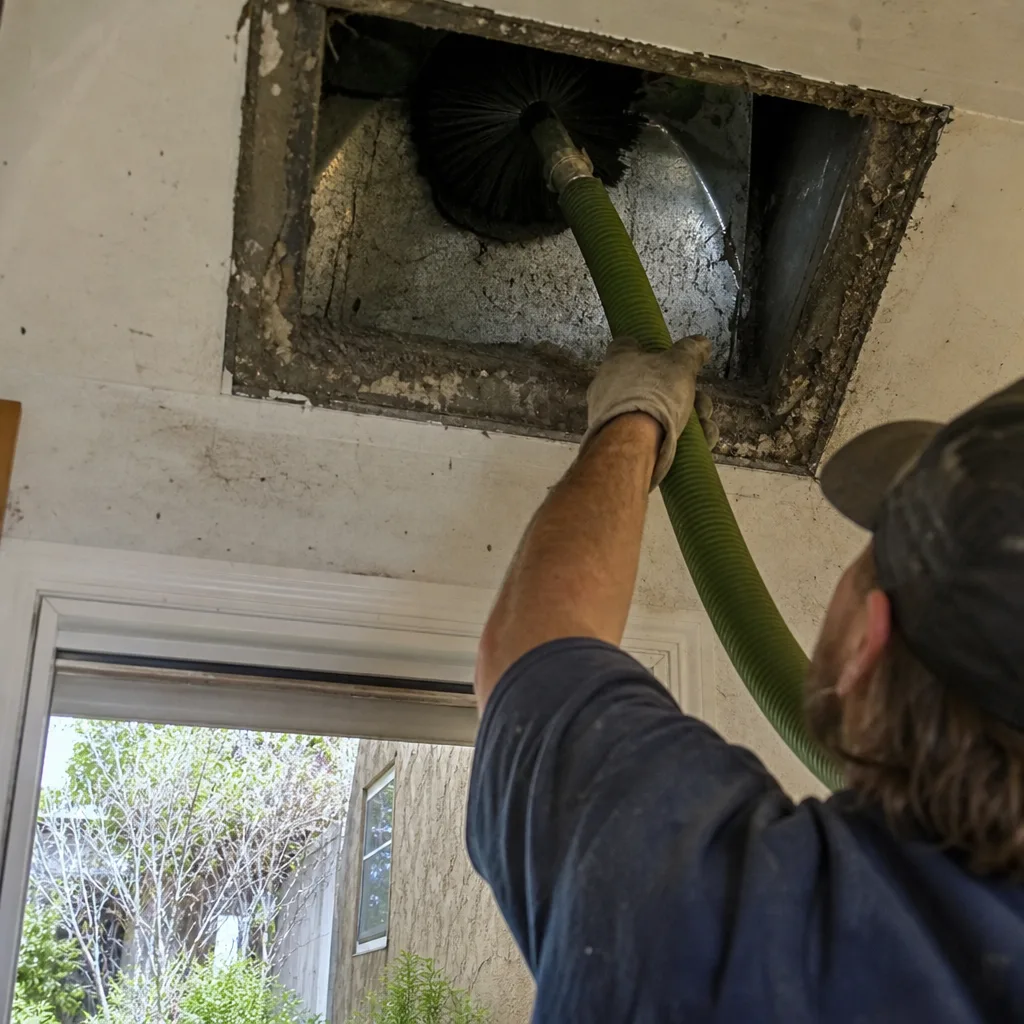 Before
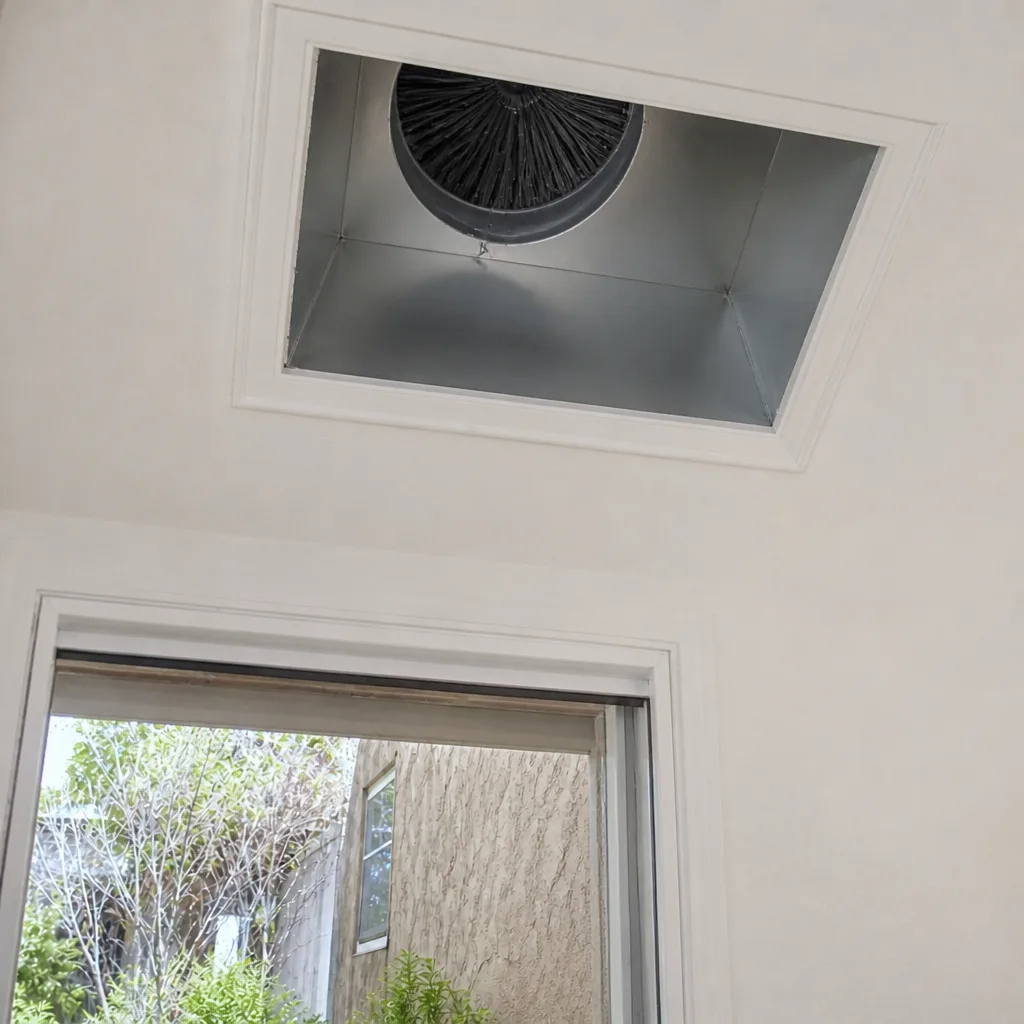 After
When to Call a Professional
Call a professional when debris is visible at the registers, when someone in the house has allergy symptoms that flare when the HVAC runs, or after a renovation, pest issue, or moisture event has put material into the system. Call when your ducts feel like a partial system with disconnected or crushed runs, because that’s a repair-and-sealing problem a cleaning alone won’t solve. Call if your dryer takes longer than it used to or the vent line looks congested, since that’s a safety issue rather than a convenience one. And call when you want a straight answer about what your home actually needs before you spend anything. Salt Lake City Air Duct Cleaning Pros offers free estimates in Salt Lake City, and the estimate is set per job in writing before any work starts. Call (866) 937-7589. We answer 24/7. Fast dispatch from 7am to 7pm, Sunday through Friday.
Frequently Asked Questions
Professional whole-system air duct cleaning in Salt Lake City typically runs $350 to $700 for an average single-system home, and $700 to $1,200 or more for larger or multi-system houses. That range covers mechanical agitation of every branch line, HEPA-rated extraction, register removal and reinstallation, and coil inspection. Your written estimate sets the final price once the technician sees the actual layout. Call (866) 937-7589 for an exact quote; estimates are free.
Because they’re describing less work. A quote far below the typical range usually means a hose-and-vacuum pass over the registers without mechanical agitation, without a named HEPA-rated extraction system, and without a coil inspection. It’s not a discount on the same job; it’s a different, smaller job wearing the same label. Compare the scope using the checklist above before you compare the number. Call (866) 937-7589 and we’ll walk you through what a full-system quote includes.
Ask for post-clean verification before you book. That means photographs of the duct interiors before and after, and a particle check confirming that debris was captured rather than recirculated. Professional extraction equipment makes this easy to document because the results are visible. A company that can’t show you evidence of the cleaning is asking you to take it on faith. Call (866) 937-7589 for a free estimate and ask what proof the crew provides.
There’s no fixed interval that applies to every home. Cleaning makes sense after renovation, pest, or moisture issues, and when visible debris or allergy symptoms show up during heating and cooling season. A house with none of those conditions doesn’t need a cleaning on a timer. Ask what problem is being solved before you schedule. Call (866) 937-7589 to talk through your situation; estimates are free.
Yes, when an inspection finds leaks. Cleaning removes debris, but disconnected joints, crushed flex, and loose seams let contamination and conditioned air escape back into the system afterward. Sealing those points is what keeps the ducts clean and stops the energy loss, and it’s the repair step cheap quotes skip. The written estimate will spell out what repair is needed. Call (866) 937-7589 to schedule an assessment.
Sanitizing is worth considering after a proper mechanical cleaning, particularly if the home has had moisture or pest issues, because the surface is clean and the treatment stays effective. It isn’t a substitute for cleaning. Applied over an uncleaned system, it coats debris without removing it. Ask whether the sanitizing step follows a full mechanical cleaning in the quote. Call (866) 937-7589 for a free estimate.
The Bottom Line
The duct cleaning price you see in Salt Lake City reflects scope, equipment, and inclusion far more than it reflects a company’s overhead or willingness to negotiate. The low quote is a surface pass, the middle quote is proper mechanical cleaning with containment and coil inspection, and the top quote adds repair, sealing, or IAQ integration when your home needs it. Compare quotes on those terms and the numbers start making sense. Use the scope checklist, ask for the equipment names, and insist on a written estimate that locks one price per system before work begins. That’s how you get what you paid for.
We clear it, seal it, and sanitize it, and we do it with equipment you can name. If you want a straight, scoped estimate for your Salt Lake City home, call (866) 937-7589. We answer 24/7. Fast dispatch from 7am to 7pm, Sunday through Friday. Start with the Salt Lake City Air Duct Cleaning Pros and get a free estimate today.
Written by the team at Salt Lake City Air Duct Cleaning Pros.