
Last updated November 24, 2026
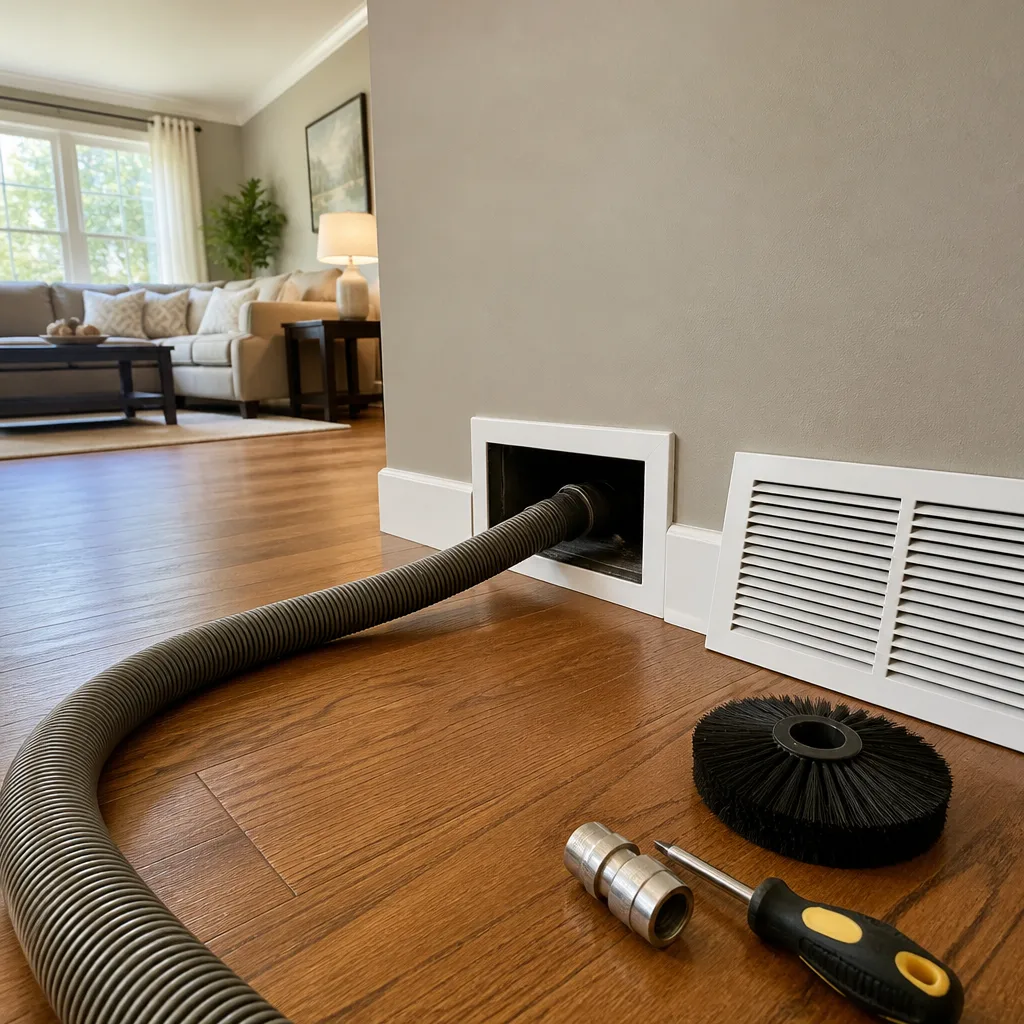 Whole-home duct cleaning
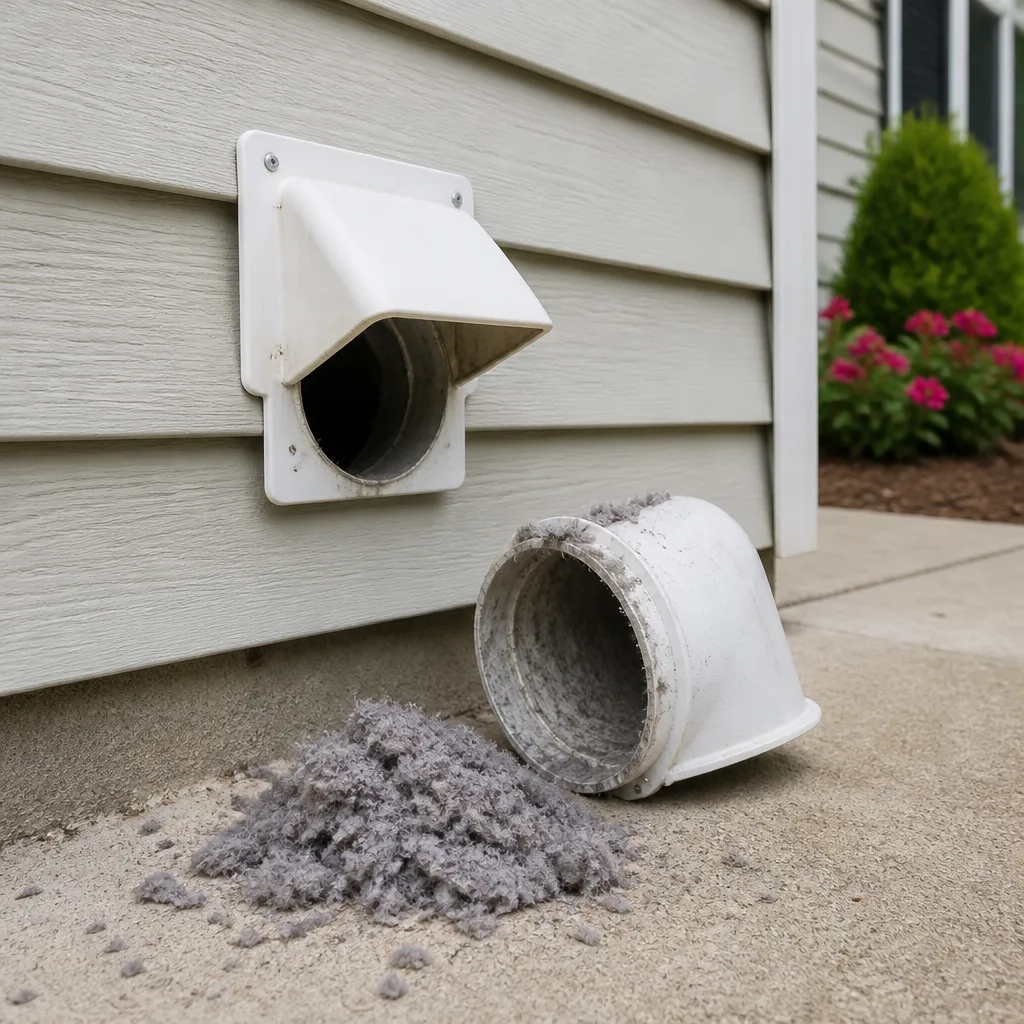 Dryer vent cleaning
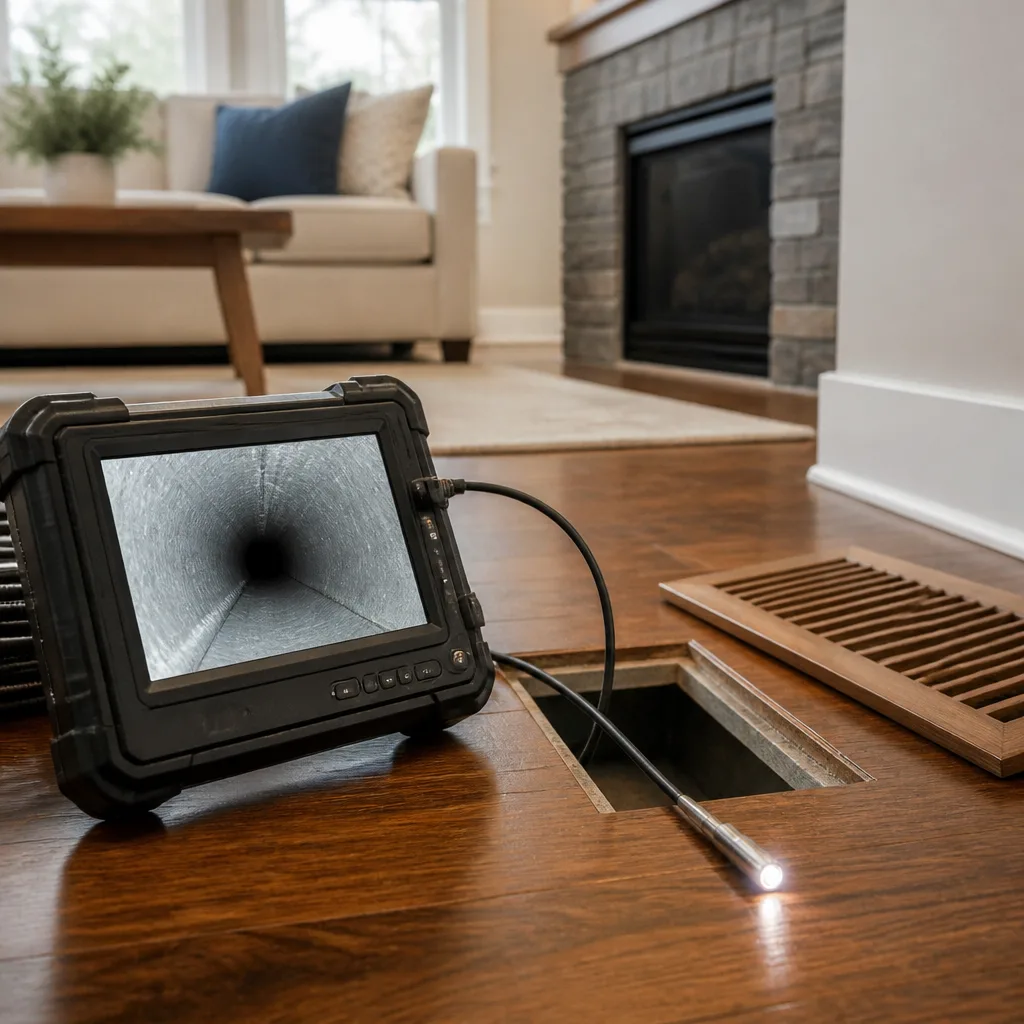 Camera inspection
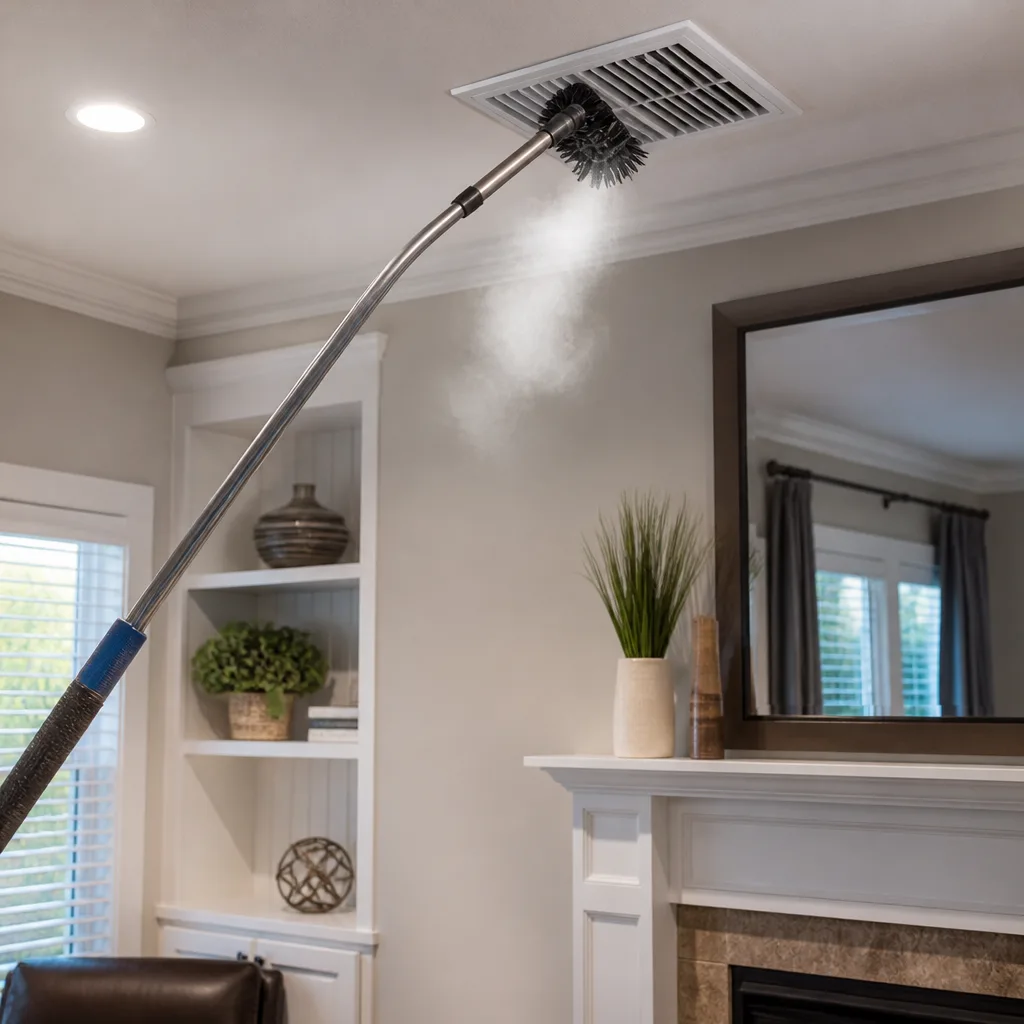 Sanitizing & deodorizing
Whole-system duct and dryer vent check with before-and-after photos - you see exactly what came out of your vents
That "$99 whole-house special" is a bait ad - the real number appears once they are in your hallway, or the "clean" is a shop-vac at the register. We photograph the inside of your ducts before and after instead.
Seasonal Air Duct Cleaning Care for Salt Lake City: Year-Round Homeowner’s Guide
The worst time to discover your ducts are circulating inversion-season particulates is February, after three months of running your furnace at full capacity through contaminated return air. By then the debris is already in the airstream and you’re breathing it. Most homeowners treat duct cleaning as a once-a-year checkbox, or something to think about only after a renovation or a move. In Salt Lake City, that approach misses the point. The valley’s four seasons change what’s entering your duct system, how hard your HVAC equipment works, and which contamination risks peak when. This guide maps specific duct care actions to each season, so you know what to clear, when to check, and what to fix before the problem starts.
Quick Answer
In Salt Lake City, the highest-value time to clean your ducts is late September through October, before inversion season traps fine particulates in the valley and your furnace starts pulling return air through whatever has settled over the summer. A second important window is early spring, before construction dust from peak building season gets drawn into the system. Between those two cleanings, filter changes and a mid-winter return plenum check do most of the protective work.
Styles & brands we work with
- Whole-home duct cleaning
- Dryer vent cleaning
- Camera inspection
- Sanitizing & deodorizing
Table of Contents
- Fall: The Pre-Heating-Season Protocol
- Winter: What Inversion Season Does to Return Air
- Spring: Construction Dust and Filter Strategy
- Summer: Moisture, Coils, and Microbial Risk
- Building a Rolling 12-Month Calendar for Your Home
- Why Cleaning Alone Doesn’t Fix a Leaky Duct System
- Common Mistakes to Avoid
- When to Call a Professional
Fall: The Pre-Heating-Season Protocol
October is the single highest-value cleaning window for a home in Salt Lake City. Here’s why: through the summer, your cooling system has been moving air slowly through ducts, and debris that settles during AC operation tends to stay put. Once the furnace fires up for the season, that settled material gets lifted back into circulation at higher velocity and pushed through every room. Cleaning before the first sustained cold snap means you remove the load before it becomes airborne.
Fall is also the last clear window before inversion season. When a valley inversion locks in, fine particulate matter (PM2.5) accumulates near the ground and outdoor air quality drops for days or weeks at a time. That’s the stretch when many households keep windows closed and lean on the furnace filter and duct system to carry the load. Starting that stretch with clean ducts and a fresh filter is the difference between your system acting as a filter and your system acting as a dust reservoir.
What to clear in the fall:
- Return plenums and return drops. These collect the heaviest debris because they carry air back to the furnace before filtration. If the plenum is coated, the filter upstream is working harder than it should.
- Supply trunk lines. Debris that accumulated through summer cooling gets pushed into rooms first thing in heating season.
- Register boots and grilles. Dust packed against the supply grille gets blown into the room at furnace velocity; clearing it takes minutes and matters.
- Dryer vent. Fall is the natural time to fold in dryer vent cleaning, because lint accumulation is a fire-safety issue independent of heating season and the vent run is accessible while we’re already on site.
If you run a humidifier tied into the duct system, fall is when the pad or canister should be inspected before it runs all winter. A neglected pad becomes a microbial surface sitting directly in the airstream. We can supply and integrate Aprilaire whole-home humidity components as part of the same visit, which keeps the moisture control and the duct cleaning coordinated rather than handled by two separate trades.
Winter: What Inversion Season Does to Return Air
Salt Lake City’s winter inversions are the reason duct maintenance here doesn’t follow a generic national schedule. During an inversion, cold air traps warmer air and pollutants near the valley floor. PM2.5 from wood smoke, vehicle exhaust, and industrial sources concentrates, and outdoor air quality can stay poor for extended stretches. Households close their windows and run the furnace continuously, which means the entire air exchange burden shifts to the return air system and the filter.
What does that look like inside the ducts? Inside a return plenum, the accumulation shows up as a fine grey-brown film on the sheet metal, often heaviest near the furnace connection where airflow slows. You’ll see it on the inside walls and along seams. When that film is thick enough to wipe off with a finger, the filter is no longer keeping up with the load and the plenum itself has become a secondary source of particulate.
When does it cross the threshold for mid-season intervention? Three signs suggest you shouldn’t wait for spring:
- The furnace filter loads up noticeably faster than usual (you’re changing it well ahead of your normal interval).
- Dust settles on horizontal surfaces in rooms even with the windows closed and the house sealed.
- Anyone in the household with asthma or seasonal allergies reports symptoms worsening during inversion days specifically, not just in general.
If any of those apply, a mid-winter return plenum check makes sense. It’s not a full cleaning; it’s a targeted inspection of the heaviest accumulation point. Our technicians use Nikro HEPA-rated vacuum equipment that captures particles down to 0.3 microns, which matters during a mid-winter visit because you don’t want dislodged debris recirculating into the house. The filter should be upgraded to the highest MERV rating your furnace blower can handle without restricting airflow; that’s a conversation to have with your HVAC technician, not a guess.
Spring: Construction Dust and Filter Strategy
Salt Lake City’s growth pattern makes spring unusual here. Construction activity ramps up in March through May, and airborne debris from framing, drywall, concrete work, and site grading travels with the wind. If you live near an active build or a lot being redeveloped, or if your home is within a few blocks of a major corridor with ongoing work, that dust finds its way into return air. This is not a theory; in our experience, spring filter loads in neighborhoods near construction are visibly heavier than in neighborhoods away from it.
The homes that get hit hardest are those with south- and west-facing return grilles, which catch debris on the prevailing wind, and homes with older, loosely sealed duct systems where dust enters through seams and joints rather than through the filter alone. That last point is why air duct cleaning in spring should pair with a sealing inspection; cleaning a leaky duct just recontaminates it.
Filter strategy for construction season:
- Check the filter monthly from March through May rather than on your normal 90-day interval.
- Step down a MERV rating only if your blower can’t move air. A higher MERV that starves airflow is worse than a lower MERV that works. Ask your HVAC technician before changing ratings.
- Seal return grilles near construction with a temporary filter media if you’re going to be living through a remodel or a build next door, and swap it out often.
- Close windows during peak grading and framing hours if you’re downwind.
If a house in Salt Lake City has just been through interior renovation, the dust load inside the ducts is often far higher than a pre-renovation cleaning would have found. Drywall dust is fine and travels deep into the system. Post-renovation cleaning is one of the highest-value visits a homeowner can schedule, and it’s worth booking before the renovation debris has a chance to set.
Summer: Moisture, Coils, and Microbial Risk
Summer is the highest-risk season for microbial growth inside Utah duct systems, and the reason is counterintuitive. Utah’s outdoor air is dry, but the inside of your duct system during AC operation is not. The evaporator coil condenses moisture out of the air as it cools, and that condensate sits in the coil pan and drains through a line that can clog without warning. Any moisture that escapes the drain, or any humidity that lingers in the return plenum when the system cycles off, creates a local microclimate that’s moister than the rest of the house and much moister than the outdoors.
Return plenums are the vulnerable point. They sit downstream of the filter and upstream of the coil, which means they’re on the wet side of the system and the cool side, and in summer they’re the surface where condensation forms if the plenum isn’t insulated or if the coil is running hard. A plenum with visible moisture or a musty smell is a sign that microbial growth has started. Cleaning it without fixing the moisture source does nothing; the growth returns.
What summer care involves:
- Inspect the evaporator coil and drain pan during any summer cleaning visit. A full HVAC cleaning includes the coil side of the system, not just the ducts.
- Check the drain line for blockage before the humid stretch of July and August, when the coil runs longest.
- Sanitize after cleaning, not instead of cleaning. Sanitizing a dirty duct doesn’t do much; sanitizing a mechanically cleaned duct addresses the surface that’s left.
- Address return plenum moisture with insulation or a dehumidification solution if the plenum is consistently damp. A Honeywell or Aprilaire whole-home dehumidifier integrated into the system is a durable fix; wiping the plenum down is not.
Homes with a humidifier tied into the ducts should have the humidifier shut down and inspected for standing water in spring. A neglected humidifier left wet through summer is one of the more common sources of a persistent musty smell in Salt Lake City homes. Abatement Technologies air-scrubbing equipment is standard on our cleaning rigs because it’s the same remediation-grade technology used in professional mold and contaminant abatement. When there’s moisture to address, that higher containment standard is what makes a real difference.
Building a Rolling 12-Month Calendar for Your Home
There is no universal duct maintenance calendar that fits every Salt Lake City home. Your home’s correct schedule depends on three variables: duct configuration (how many returns, how much of the run is in unconditioned space, how well sealed), HVAC runtime patterns (how many hours per day the system actually runs in heating versus cooling season), and household occupancy (pets, kids, allergy sufferers, recent renovation). A two-story home with a single central return and a south-facing bedroom over a garage runs a different load profile than a single-level home with multiple returns.
Here’s the framework we use to build a 12-month calendar. Adjust to your home:
- September-October: Full system cleaning before heating season. Dryer vent cleaning. Filter replacement with a fresh winter filter. Humidifier inspection.
- November-December: Monthly filter check. If inversion season has started, watch for the mid-winter signs above.
- January-February: Mid-season return plenum inspection if you notice symptoms. Filter changes as needed; inversion season loads them faster.
- March-May: Spring filter check monthly if you’re near construction. Full cleaning in late spring if the home ran heavy dust loads, or post-renovation cleaning if renovation occurred. Dryer vent cleaning if not done in fall.
- June-August: HVAC cleaning and evaporator coil inspection before peak cooling. Drain line check. Sanitizing if moisture was present.
- Ongoing: Track filter change dates in your phone; note the date, the MERV rating, and how loaded the filter was when you swapped it. That data tells you more about your system’s actual load than any general schedule.
Two homes on the same street in Salt Lake City can be on different schedules for good reasons. The point isn’t to match a schedule to a calendar; it’s to match a schedule to how your specific system is actually working.
Why Cleaning Alone Doesn’t Fix a Leaky Duct System
Clean ducts are only half the solution. If the duct system leaks, the cleaning cycle starts over as soon as the system runs. Leaky joints in supply and return runs allow air to escape into walls and attics, and they allow dust, insulation fibers, and outdoor particulate to get pulled into the airstream. In older Salt Lake City homes, particularly those with duct runs in attics and crawlspaces, leakage is often the larger problem and cleaning alone can’t address it.
Duct repair and sealing is a named part of the work we do because it addresses the structural cause of contamination and energy loss, not the symptom. During a cleaning visit, the crew can identify disconnected runs, crushed flex duct, torn insulation, and unsealed joints. Sealing those points keeps the system closed so the cleaning holds. It also reduces the amount of conditioned air that escapes to the outside, which shows up on your utility bill as much as on your indoor air quality.
What the work involves, in general terms: the crew identifies leak points across the accessible system, seals accessible joints and connections, replaces failed sections of flex duct where the damage is structural, and confirms airflow after. If the sealed system needs balance correction, that’s a conversation with your HVAC technician. Full scope on every job is cleaning, repair, sealing, and sanitizing, performed by the same crew in a single visit, so you’re not coordinating three separate trades. Our technicians use Rotobrush rotary-brush extraction systems, the same platform specified by NADCA-aligned contractors nationwide, and carry Abatement Technologies air-scrubbing equipment; our technicians have up to 11 years of experience with this equipment on residential and commercial systems.
Common Mistakes to Avoid
- Scheduling a single fall cleaning and considering the year handled. Fall cleaning is the highest-value visit, but it doesn’t eliminate spring construction dust or summer moisture risk. Two seasonal touchpoints (fall and late spring) plus filter discipline fit most Salt Lake City homes.
- Buying the cheapest coupon offer that shows up in search. The coupon price typically covers only the trunk lines and the roughest pass. Every lateral, return plenum, and register boot is an add-on, and the final invoice looks nothing like the coupon. A whole-system flat price quoted before work starts is the honest version.
- Assuming a negative-pressure vacuum that isn’t HEPA is adequate. Any vacuum that doesn’t capture fine particulate sends dislodged debris back into the room. Nikro HEPA-rated equipment captures down to 0.3 microns; consumer-grade or modified shop-vac setups do not.
- Wiping the return plenum instead of cleaning it mechanically. A wiped plenum removes surface dust and leaves the film in the seams. Mechanical cleaning with rotary brush extraction is what actually removes the accumulation.
- Sanitizing a dirty system. Sanitizing on top of dirty ducts doesn’t help much; the growth returns once the organic material remains. Clean first, sanitize after.
- Ignoring the dryer vent because it isn’t part of the HVAC system. Lint accumulation in the vent is a fire risk regardless of heating season. Duct-only competitors skip it because it’s not their core service; it should be on the list.
- Skipping the sealing inspection. Cleaning a leaky duct system in Salt Lake City recontaminates it within a heating season. Seal before cleaning, or seal and clean in the same visit.
See the difference
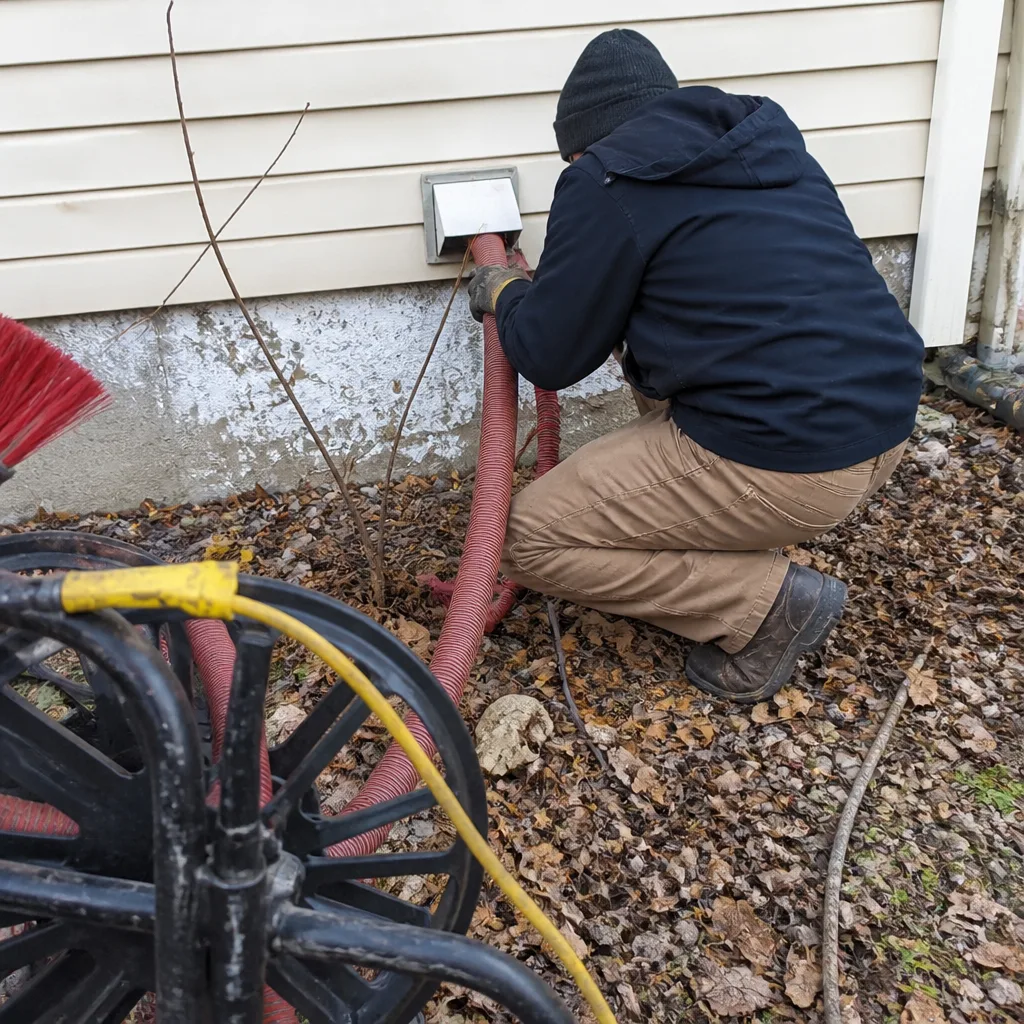 Before
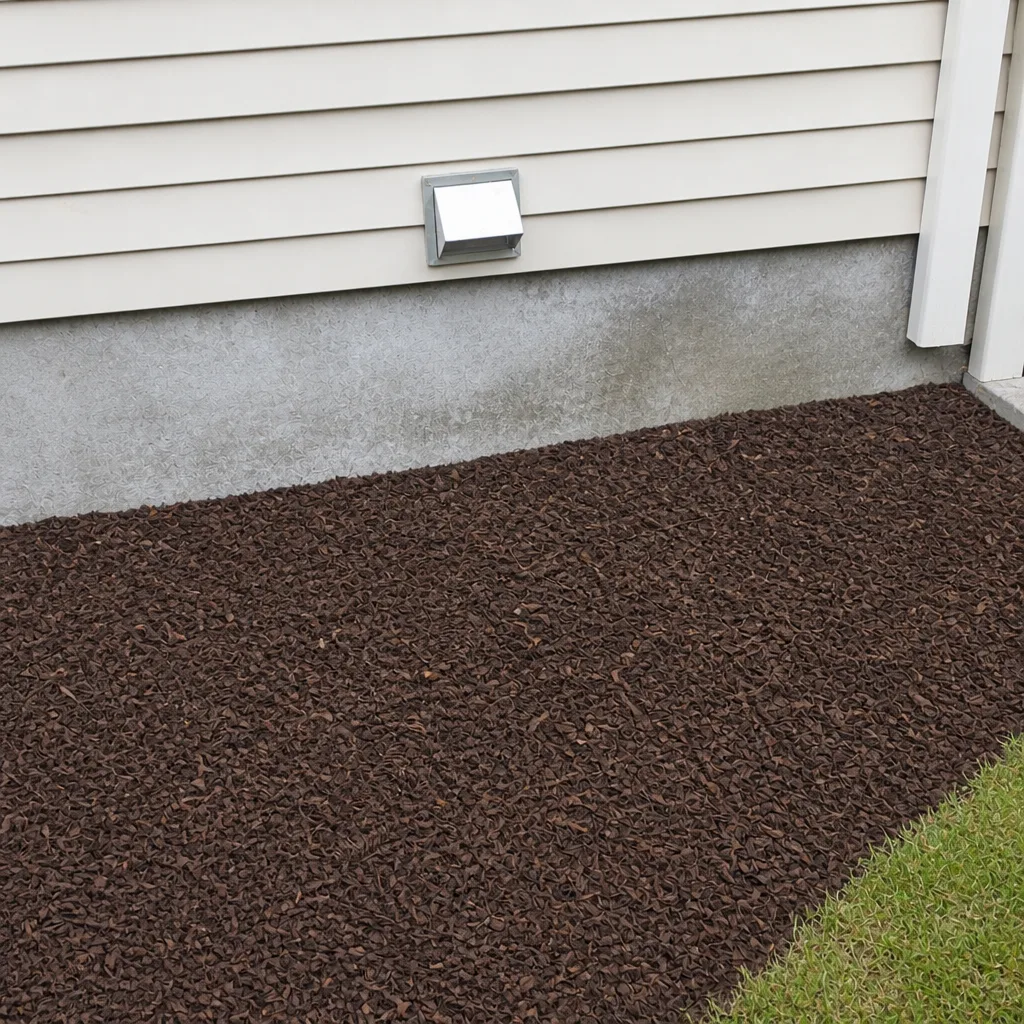 After
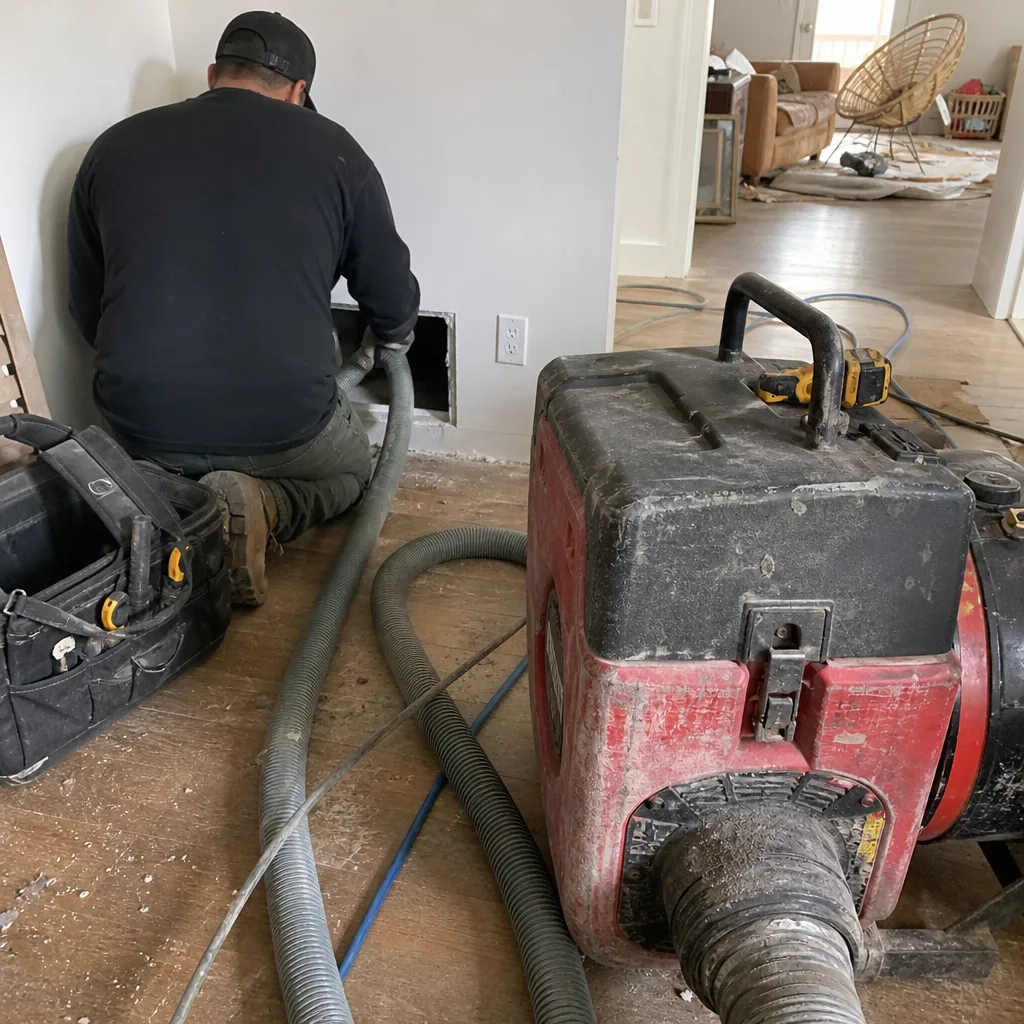 Before
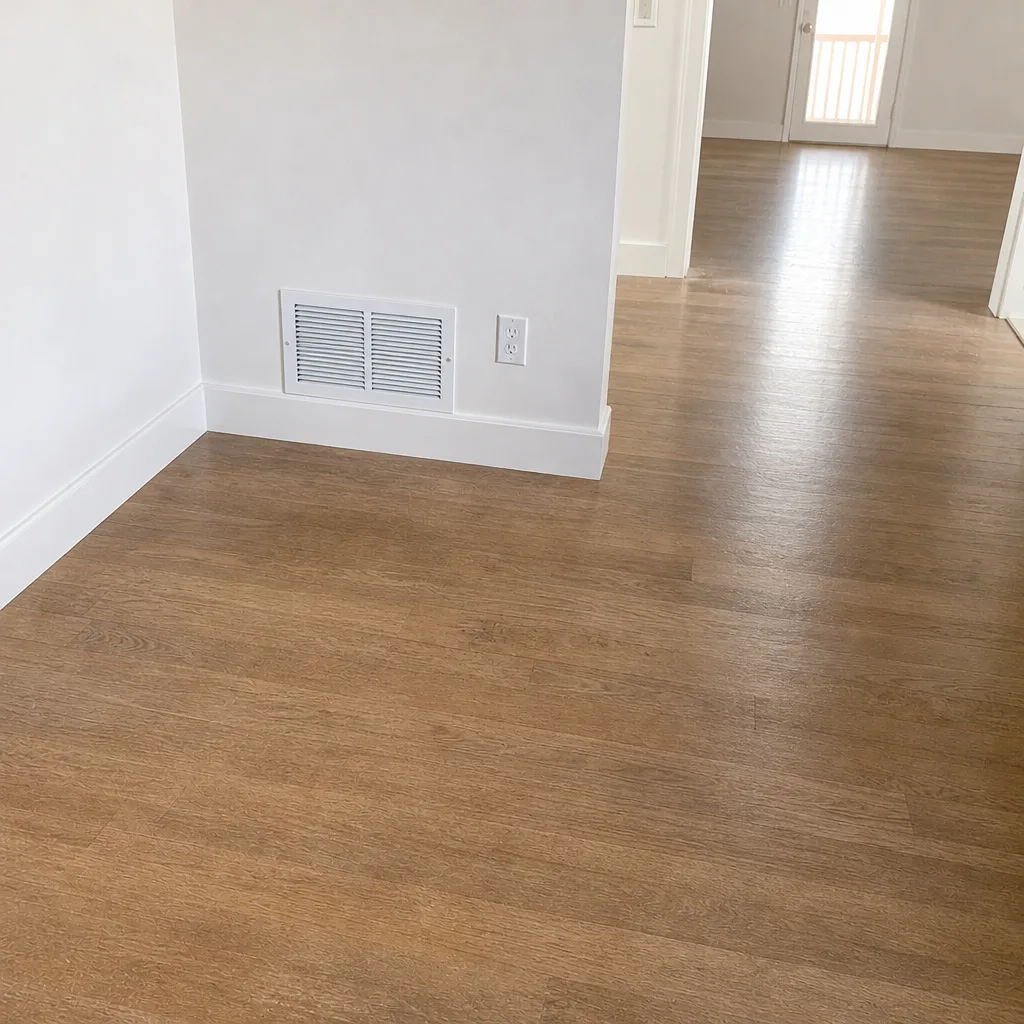 After
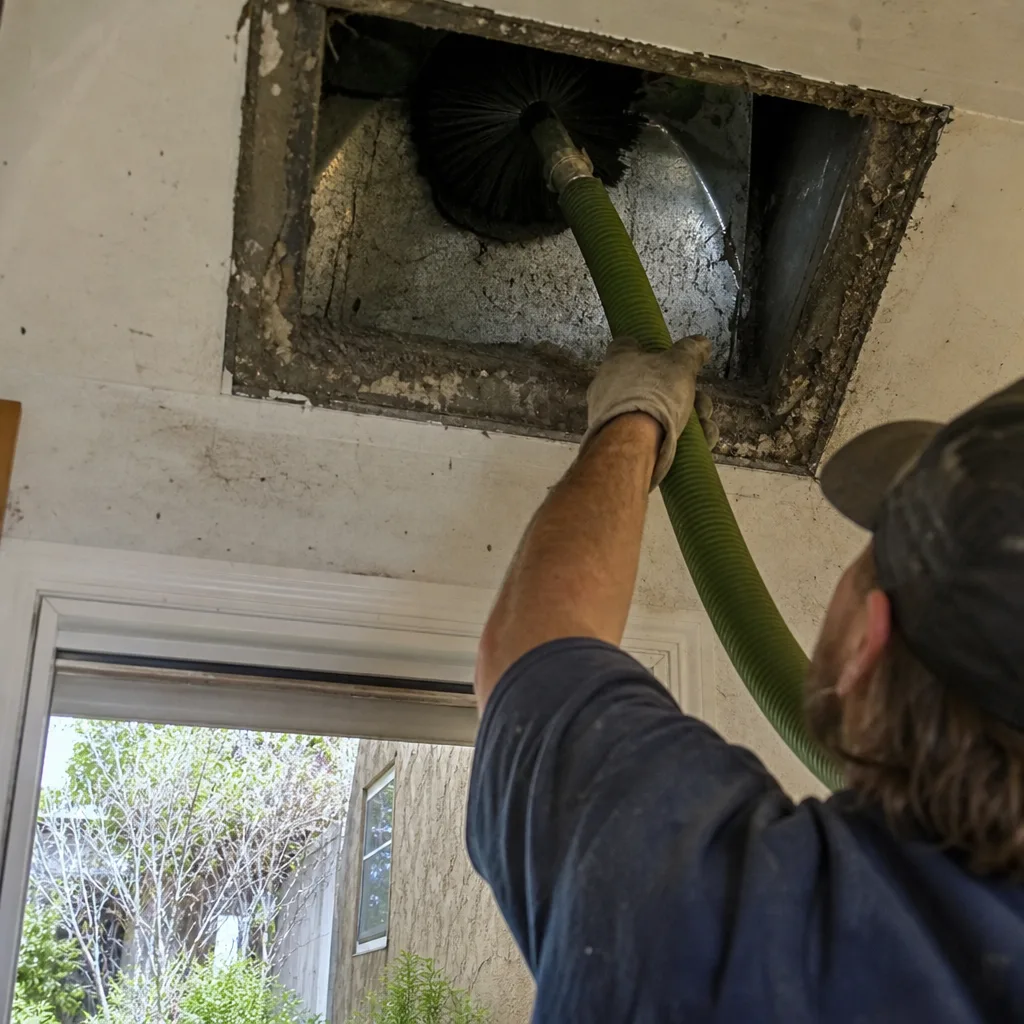 Before
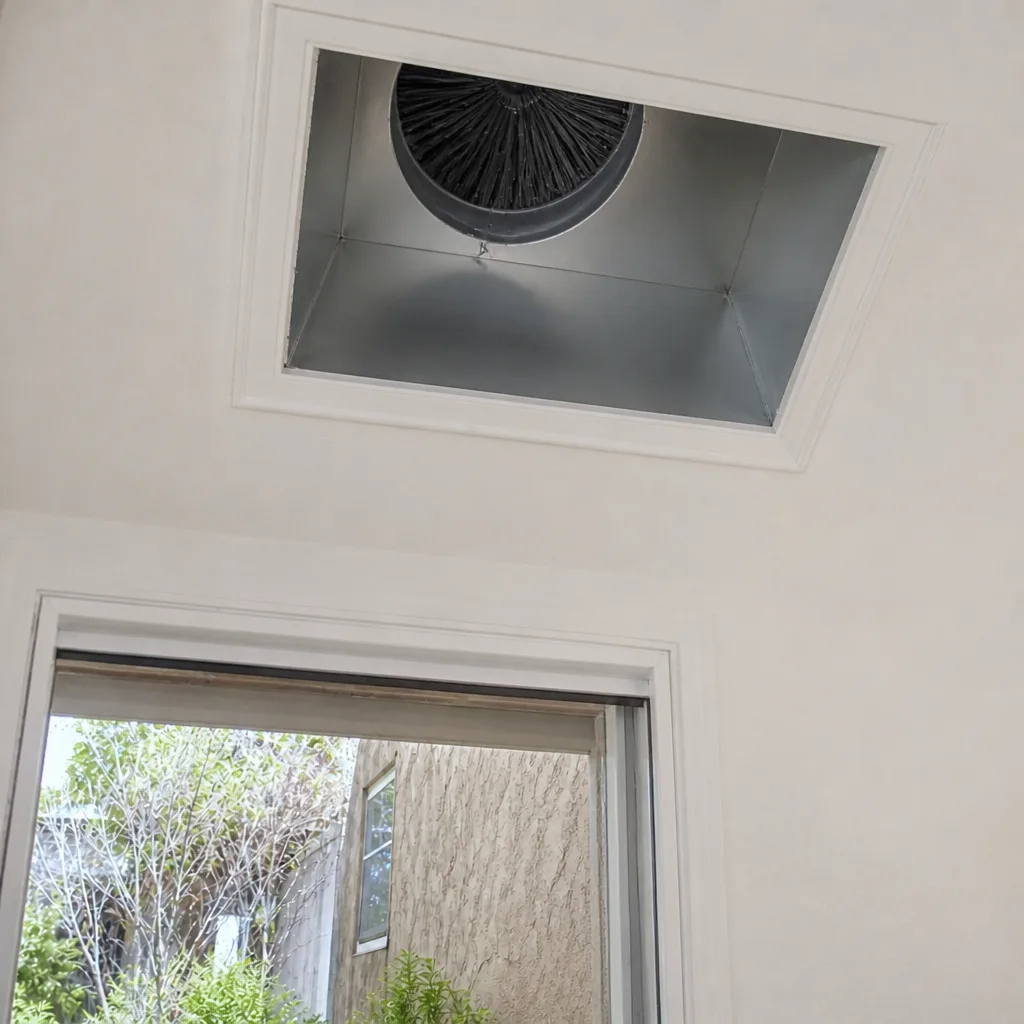 After
When to Call a Professional
Some duct care is DIY; most isn’t. Call a professional if any of the following apply. You’ve just completed a renovation, pest remediation, or water intrusion event; the dust and debris load inside the system will outlast your filter’s ability to manage it. You’ve lived in the home for several years without a cleaning and don’t know the prior history. You see visible dust streaks at the supply registers or a film on the return grille. Someone in the household has new or worsening allergy symptoms that track with heating or cooling season. The dryer has started taking longer than usual to dry clothes. Or you can see disconnected or crushed flex duct in an accessible attic or crawlspace.
The scope here is five core services: residential and commercial air duct cleaning, dryer vent cleaning, full HVAC cleaning, duct repair and sealing, and air quality sanitizing. If a problem falls outside that scope, like mold remediation or general HVAC installation, we’ll tell you so rather than try to be everything. Salt Lake City Air Duct Cleaning Pros offers free estimates in Salt Lake City and the surrounding area. Call (866) 937-7589. We answer 24/7. Fast dispatch from 7am to 7pm, Sunday through Friday; we’re closed on Saturday.
Frequently Asked Questions
Most Salt Lake City homes should have a full duct cleaning every 12 to 24 months, with a fall cleaning before heating season as the highest-value visit. Homes with pets, allergy sufferers, recent renovation, or proximity to active construction should lean toward the 12-month side and add a late-spring check. Homes with no pets, no recent renovation, and no allergy concerns can usually stretch to 24 months without losing much. Call (866) 937-7589 for an exact quote; estimates are free.
Yes. During inversion season, outdoor PM2.5 concentrations rise and closed windows push the air exchange burden onto the return system, so the filter loads faster and the plenum accumulates more film. Inversion-season homes typically benefit from a filter upgrade and a mid-winter return plenum check, on top of the fall cleaning. If you notice dust settling indoors during inversion days, that’s a sign the system needs attention mid-season. Call (866) 937-7589 for an exact quote; estimates are free.
Late September through October is the best window for most Salt Lake City homes, because it removes the summer accumulation before the furnace starts lifting it into circulation and before inversion season closes in. Early spring is the second-best window, ahead of peak construction dust. Exact scheduling varies by duct configuration and HVAC runtime; a home with heavy year-round load may need both. Call (866) 937-7589 for an exact quote; estimates are free.
Low quotes usually cover only the trunk lines and a quick pass, then add-on for every lateral, return, and register boot once the crew is on site; the final invoice is far higher than the advertised number. Professional cleaning with rotary brush extraction and HEPA-rated vacuum equipment costs more to perform and is quoted as one flat price for the whole system, agreed before work starts. Ask for the flat whole-system number in writing. Call (866) 937-7589 for an exact quote; estimates are free.
Ask for before-and-after photos of your own ducts during the job. A crew using professional equipment has no trouble documenting the return plenum and a representative lateral before and after extraction. Photos of someone else’s ducts or stock images don’t count. If a company can’t produce photos of your specific system, that’s a signal. Call (866) 937-7589 for an exact quote; estimates are free.
It depends on the company. Full-service duct work includes cleaning, repair, sealing, and sanitizing by the same crew in one visit, plus dryer vent cleaning and HVAC coil-side cleaning as part of the standard scope. Duct-only operators typically stop at the supply and return runs. One call covering ducts, dryer vent, and air quality is the practical version. Call (866) 937-7589 for an exact quote; estimates are free.
The Bottom Line
Salt Lake City’s seasons change what’s entering your duct system, and a one-size schedule doesn’t fit all four. Fall cleaning before inversion season and before the furnace runs wide open is the highest-value visit. Spring filter discipline handles construction dust. Summer HVAC and coil inspection addresses the moisture that makes Utah homes the surprising high-risk season for microbial growth. A leaky duct system cancels the benefit of cleaning, so seal and clean in the same visit. Track your filter changes, note the diffs, and adjust. One call covering ducts, dryer vent, and air quality beats three separate trades every time. Call (866) 937-7589. We answer 24/7. Fast dispatch from 7am to 7pm, Sunday through Friday; we’re closed on Saturday.
Ready for a free estimate on seasonal duct care for your Salt Lake City home? Call (866) 937-7589. We answer 24/7. Fast dispatch from 7am to 7pm, Sunday through Friday; closed Saturday. Our technicians have up to 11 years of experience with professional-grade rotation and HEPA-rated equipment from Rotobrush, Nikro, and Abatement Technologies, and we can supply and integrate Honeywell and Aprilaire IAQ products as part of the same service scope. The licensed and insured local pro we connect you with is vetted to state requirements, and every job is quoted at one flat price per system, agreed in writing before work starts, with before-and-after photos of your own ducts.
Written by the team at Salt Lake City Air Duct Cleaning Pros.