
Last updated November 24, 2026
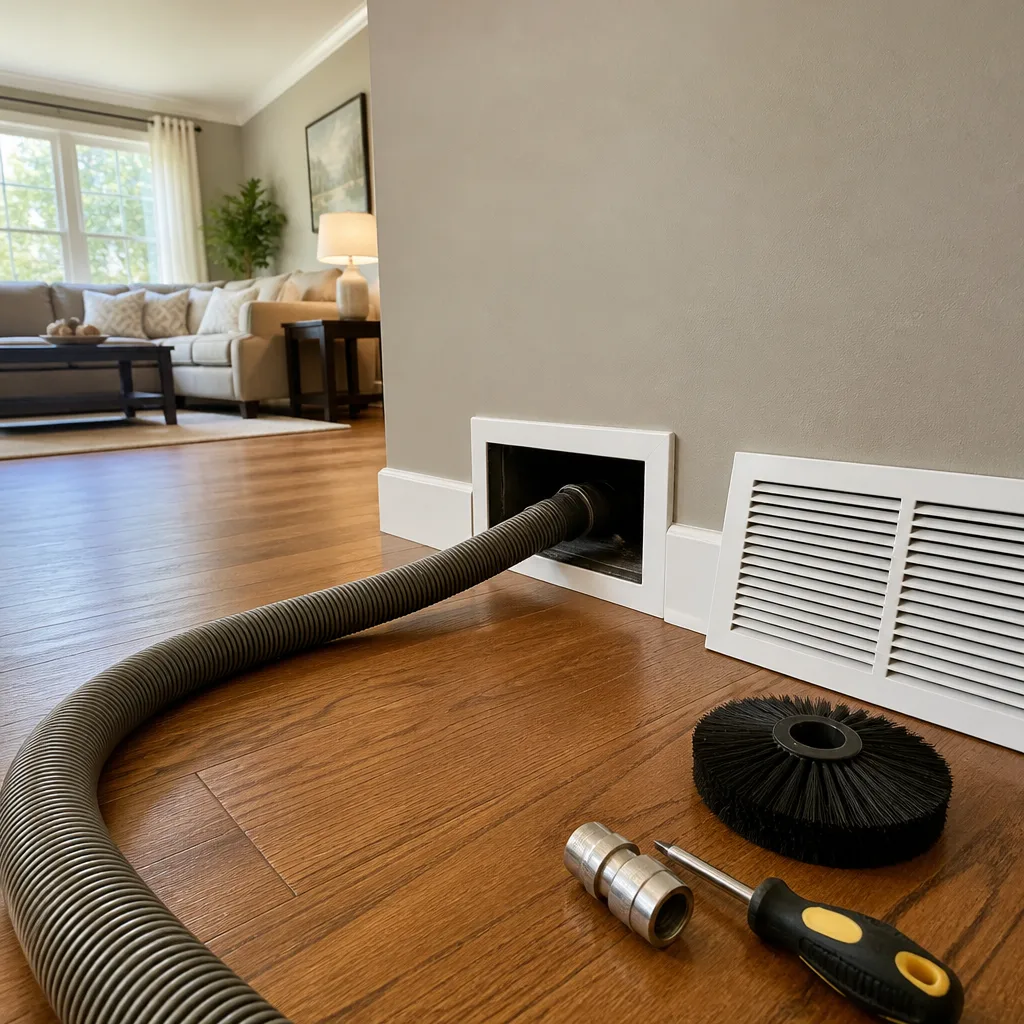 Whole-home duct cleaning
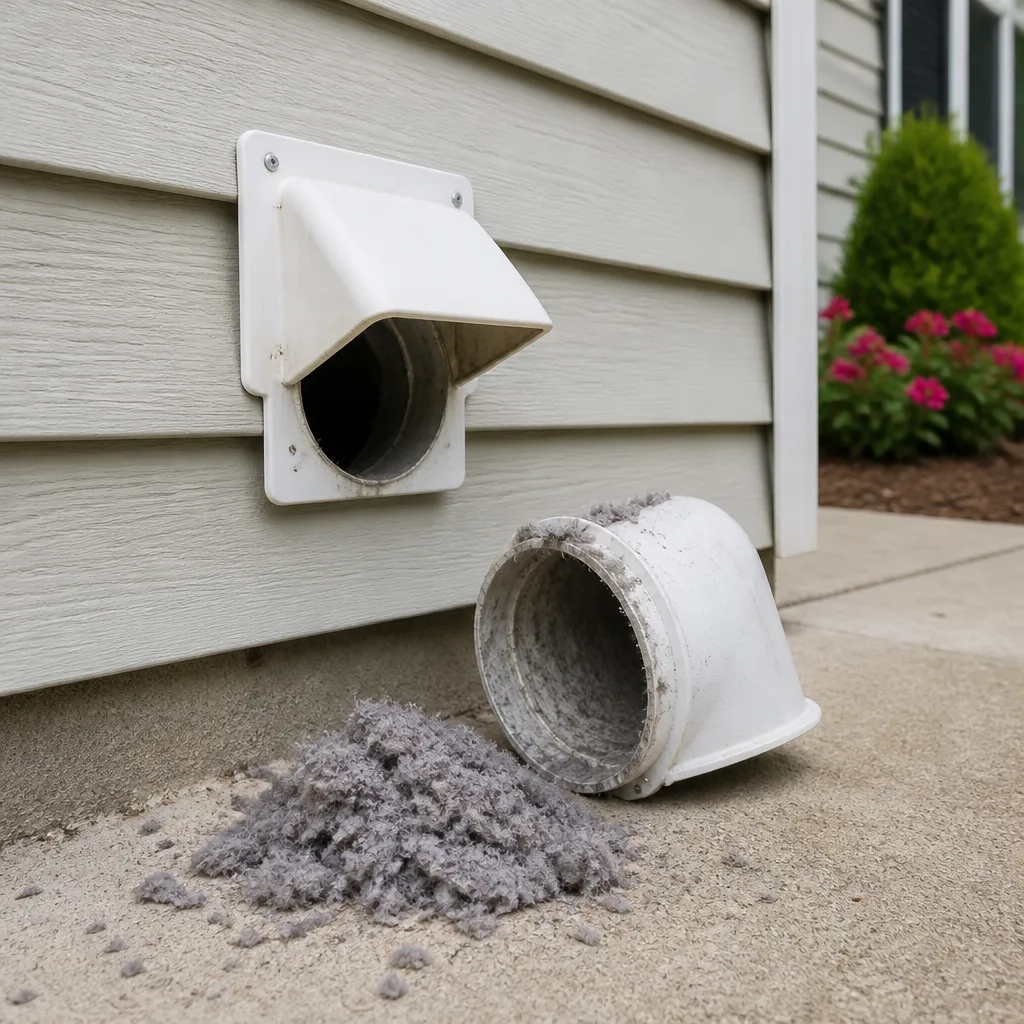 Dryer vent cleaning
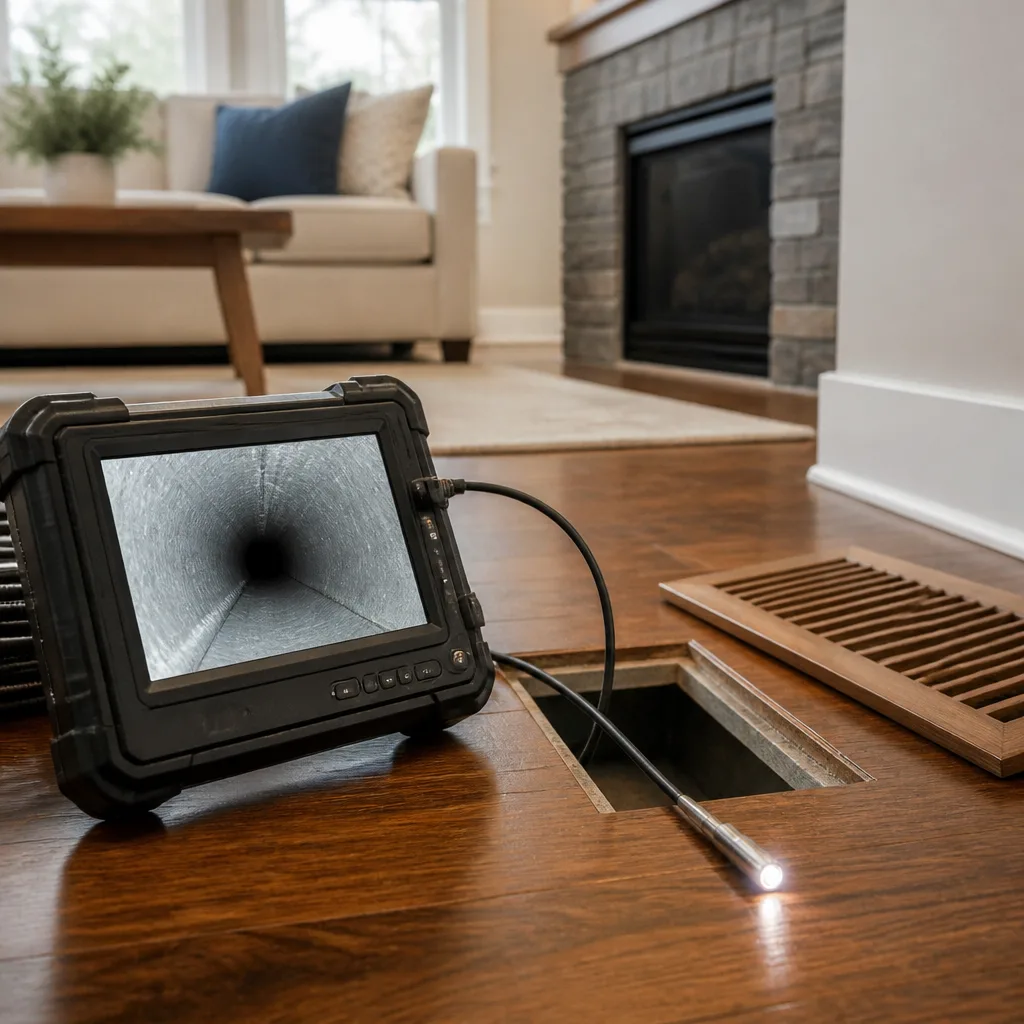 Camera inspection
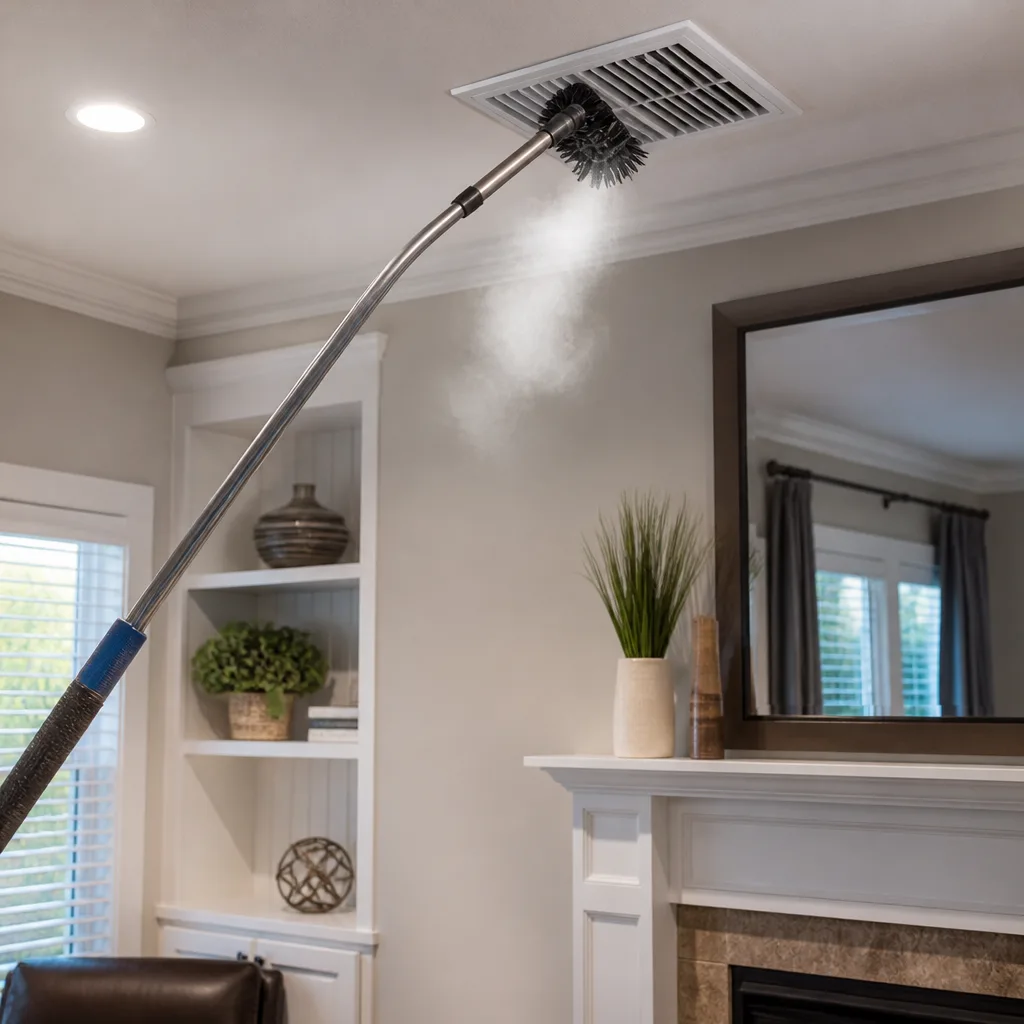 Sanitizing & deodorizing
Whole-system duct and dryer vent check with before-and-after photos - you see exactly what came out of your vents
That "$99 whole-house special" is a bait ad - the real number appears once they are in your hallway, or the "clean" is a shop-vac at the register. We photograph the inside of your ducts before and after instead.
DIY vs Professional Air Duct Cleaning: The Salt Lake City Homeowner’s Decision Guide
Most homeowners who ask whether they can clean their own ducts already know how to hold a brush. The real question isn’t skill. It’s suction. A shop-vac pulls roughly 60 CFM of air. Professional duct cleaning equipment operates in the thousands of CFM, and that gap decides whether you’re actually removing debris or just loosening it so it settles back into the rooms you live in. This guide is written for Salt Lake City homeowners who want to understand the physics before they decide, not a sales pitch dressed up as advice. We’ll cover where DIY genuinely works, where it quietly fails, and how to build a hybrid approach that keeps your air clean between professional visits.
Quick Answer
DIY air duct cleaning is worth doing for surface tasks like register wiping, return grille cleaning, and dryer vent lint removal. It is not effective for cleaning the interior of a duct system, because consumer vacuums cannot generate the negative pressure needed to dislodge and capture debris from a whole-house layout. For real duct interiors, a professional cleaning with Rotary brush and HEPA extraction equipment is the only method that gets the job done properly, especially in older Salt Lake City homes with long runs and tight returns.
Styles & brands we work with
- Whole-home duct cleaning
- Dryer vent cleaning
- Camera inspection
- Sanitizing & deodorizing
Table of Contents
- The Physics Nobody Explains: Why CFM and Static Pressure Decide the Outcome
- What DIY Legitimately Accomplishes (And How to Do It Right)
- Salt Lake City Home Scenarios Where DIY Is Especially Risky
- Equipment Comparison: Rotobrush and Nikro vs. a Hardware-Store Brush Kit
- Building a Hybrid Approach: DIY Maintenance Between Professional Cleanings
- Warning Signs Your Ducts Need More Than a Surface Cleaning
- What Professional Air Duct Cleaning Costs in Salt Lake City
- How to Choose a Duct Cleaning Provider in Salt Lake City
The Physics Nobody Explains: Why CFM and Static Pressure Decide the Outcome
Duct cleaning is a negative-pressure problem before it’s a brushing problem. Debris sitting on the bottom of a duct doesn’t lift because someone scrubbed it; it lifts because air is being pulled through the system fast enough to overcome the friction holding particles in place. That’s what CFM (cubic feet per minute) measures: how much air volume the equipment can move. Static pressure tells you how hard the system can pull against resistance inside the ductwork. Both numbers matter, and both are far outside what a consumer vacuum can deliver.
A typical shop-vac pulls around 60 CFM and generates very modest static pressure. It moves air, but not with enough force to dislodge compacted dust, construction debris, or lint from a 20-foot run of flex duct, let alone the far end of a trunk line in a Salt Lake City basement. Professional equipment runs an order of magnitude higher, and that’s the whole ballgame. When suction is too low, three things go wrong at once:
- Debris that does come loose doesn’t travel to the vacuum. It settles back down inside the duct or drifts out of the nearest register into the room.
- Dislodged particles become airborne inside the living space, raising PM2.5 levels during the very task meant to reduce them.
- The homeowner finishes the job believing the ducts are clean, when the interior surface is largely untouched. That false sense of completion is the real cost of DIY.
Professional systems pair high-CFM extraction with a mechanical agitator at the end of the hose, so debris is scrubbed loose and captured in the same pass. We run Rotobrush rotary-brush systems for this reason, and back them with Nikro HEPA-rated vacuums rated to capture particles down to 0.3 microns. The brushes disturb the layer, the vacuum captures it, and the containment keeps it from circulating into the house. If you want a plain-English walkthrough of the whole process, see our page on air duct cleaning.
What DIY Legitimately Accomplishes (And How to Do It Right)
We’re not going to tell you DIY is worthless, because it isn’t. There are real maintenance tasks a homeowner can do well with a few standard tools, and doing them correctly extends the time between professional cleanings. The trick is knowing which tasks fall in that bucket. Register work, grille cleaning, and dryer vent lint removal are the three big ones. Interior duct cleaning is not.
- Wipe and vacuum every register cover. Pop the cover off, wash it in the sink with dish soap, dry it fully, and use a crevice tool to clear dust from the boot behind it. This is the dust most people see and think is the problem.
- Clean return grilles properly. Returns pull in the most airborne debris of any part of the system. Vacuum the face with a brush attachment, then run a damp microfiber cloth along the slats. Once a season is plenty.
- Clear the dryer vent. Disconnect the dryer from the wall, pull the lint trap housing, vacuum the flex duct, and check the outdoor flap for lint buildup. Do this a few times a year, and always check the outdoor vent cover for nesting debris.
- Change filters on schedule. A clogged filter starves the system and pushes more dust into the ducts. Check monthly during heating and cooling seasons and replace when the filter looks gray.
What DIY cannot do is reach past the register boot into the trunk line, the branch runs, or the plenum above the air handler. Those are the areas where most of the debris accumulates, and they’re the areas that matter most for air quality. Dryer vent cleaning between the dryer and the wall is genuinely useful DIY; clearing the full vent run through a wall or roof is a different task, and one worth handing off. More detail on the professional side lives on our dryer vent cleaning page.
Salt Lake City Home Scenarios Where DIY Is Especially Risky
Not every home carries the same risk profile, and Salt Lake City has a few housing types where DIY duct cleaning goes from “ineffective” to “actively harmful.” The city’s older neighborhoods, its mix of duct materials, and its dry, high-desert climate each add a wrinkle you won’t find in a generic cleaning guide.
Older Avenues homes with original sheet metal
Houses in the Avenues and similar older Salt Lake City neighborhoods often still run on the original galvanized sheet metal ductwork. Over decades, those seams loosen, joints separate, and the metal develops pinholes. Brushing those runs with a consumer-grade tool can hit a rusted seam and tear it open, and once a seam is torn, air leaks directly into a crawlspace or wall cavity. That’s an energy loss and a dust-intrusion problem that didn’t exist before the cleaning started. Professional crews inspect the run first and use a brush head matched to the duct’s condition.
Duct board systems and delamination
Some Salt Lake City homes built in the 1970s and 1980s use duct board: rigid fiberglass panels with a foil facing glued to the outside. The foil facing is the entire structural barrier. A stiff brush dragged through a duct board run scrapes that facing loose, a problem called delamination. Once delaminated, fiberglass insulation sits exposed inside the airstream and starts shedding fibers into the supply air. Professional technicians use soft-bristle heads on duct board, or skip the brush entirely and rely on air-whip agitation.
Homes with moisture or mold-positive duct sections
Salt Lake City’s climate is dry, but moisture problems still find their way into ductwork: a swamp cooler that’s been leaking, a humidifier running too high, a bathroom vent that exhausted into an attic for years. If a duct section has visible mold growth or musty smell, DIY cleaning is a bad idea. Brushing releases spores into the airstream with no HEPA capture at the other end. This is where professional-grade containment earns its keep, and it’s why we run Abatement Technologies air-scrubbing equipment on jobs that need it. If a duct section shows mold, the structural cause usually needs fixing too, which is a duct repair and sealing conversation, not just a cleaning one.
Equipment Comparison: Rotobrush and Nikro vs. a Hardware-Store Brush Kit
Most homeowners shopping for a DIY duct cleaning kit end up with the same product: a flexible rod with a brush on the end and a shop-vac adapter. It works on a register. It does not work on a 30-foot trunk run, and the reason is mechanical, not a matter of technique. Here’s what the professional systems actually do differently.
- Rotobrush rotary-brush systems use a spinning brush head on a flexible hose that whips the interior surface with controlled agitation. The brush is matched to the duct material, and the system is designed so the agitation and the vacuum work together. Rotobrush is the platform specified by NADCA-aligned contractors nationwide, which is one reason we use it.
- Nikro HEPA-rated vacuums capture particles down to 0.3 microns and hold them in a sealed container. A shop-vac’s filter lets fine particulate pass straight through, which means you clean the duct and pollute the room.
- Abatement Technologies air scrubbers run continuously during the job to filter the ambient air. This is remediation-grade equipment, the same class used in mold and contaminant abatement, and it’s what keeps containment tight on jobs where the dust load is heavy.
- Rotary agitation vs. static brush is the biggest difference. A hardware-store brush scrapes; a rotary head lifts and captures. The capture half of that equation is what most DIY kits don’t have at all.
One more gap: a duct cleaning kit doesn’t isolate the supply system from the return system. Professional equipment lets technicians seal off sections and pull full negative pressure on one run at a time, so debris moves toward the vacuum instead of toward the living room. That isolation step is the one most homeowners miss, and it’s why DIY cleaning on a whole-house system so often makes air quality worse before it makes it better.
Building a Hybrid Approach: DIY Maintenance Between Professional Cleanings
The practical answer for most Salt Lake City homeowners sits between the two extremes. Do the surface maintenance tasks yourself on a schedule, and bring in professional equipment for the interior cleaning every few years, or whenever a trigger event calls for it. This keeps total cost down without letting the system drift.
- Monthly: check and replace the air filter when it looks gray. Vacuum the return grille face with a brush attachment.
- Seasonally: wipe down and wash every supply and return register. Run a vacuum crevice tool around the boot of each one.
- Two to three times a year: clean the dryer vent from the dryer to the wall, and check the outdoor flap. If the dryer takes more than one cycle to dry a load, that’s the signal to look harder.
- Every three to five years, or after any trigger event: schedule a professional cleaning. Trigger events include a renovation, pest activity, water intrusion, or a move-in to a home whose duct history is unknown.
Between cleanings, the highest-impact homeowner habit is filter discipline and humidity control. Filter changes cost little and matter more than almost anything else. If you’re running a whole-house humidifier, keep it at a level that doesn’t put moisture into the ducts. If you’re running a swamp cooler, make sure the duct connection is sealed. We handle the interior cleaning on our HVAC cleaning page, which covers the air handler, coil, and full system rather than just the ductwork.
Warning Signs Your Ducts Need More Than a Surface Cleaning
Plenty of homeowners call us after a DIY attempt didn’t fix the problem, and the reason is usually that the symptom was never a surface-dust problem to begin with. Certain signs indicate the ducts themselves have a structural issue, moisture problem, or debris load that no amount of DIY maintenance will solve. Here’s what to watch for.
- Visible debris blowing out of registers when the system first turns on. That’s contamination beyond the register boot, not dust on the cover.
- A persistent musty or stale smell when the heat or AC runs. Could be mold, could be moisture trapped in a duct section, could be a return pulling from a damp crawlspace.
- Uneven heating or cooling between rooms in a Salt Lake City home, especially one with long runs or a finished basement. That often signals disconnected or leaking duct joints rather than dirty ducts.
- Higher dust buildup than the household can account for. If you’re wiping surfaces weekly and still seeing dust, the source is likely ductwork or a leaking return.
- Recent renovation, pest, or moisture event. Drywall dust, rodent activity, or a slow leak in a duct chase leaves debris that surface cleaning can’t remove.
- Rattling or whistling when the system runs. That’s a sign of a loose joint, a collapsed flex run, or a damper that has failed.
When two or more of these signs show up together, the right move is an inspection by someone who can look at the interior of the system. That’s a different service from cleaning, and it’s why duct repair and sealing is one of the five core services we offer. Cleaning a problem duct without fixing the underlying issue just puts the debris back in play.
What Professional Air Duct Cleaning Costs in Salt Lake City
Pricing for professional duct cleaning in Salt Lake City is quoted per job, based on the size and layout of the system, not a per-vent rate. Most providers price the whole-system cleaning as a single flat number agreed before work starts, and that’s the model we use. It’s a fairer structure than the coupon-driven per-vent pricing some competitors advertise, which often looks low until the final invoice arrives.
What drives the estimate up or down in Salt Lake City:
- Number of runs and system size. A small bungalow with a few short runs is faster than a multi-level home with long trunk lines.
- Duct material. Sheet metal is quicker to clean than duct board, which requires softer agitation and slower passes.
- Access. Ducts that run through finished walls or tight crawlspaces take longer to reach and seal.
- Condition. A system with heavy contamination, loose joints, or evidence of moisture damage needs more of everything: time, containment, and possibly repair.
- Add-ons. Dryer vent cleaning and HVAC cleaning can be bundled into a single visit, which usually works out cheaper than scheduling them separately.
Call for a written estimate and ask for it in writing before the tech starts. The written estimate sets the final price.
How to Choose a Duct Cleaning Provider in Salt Lake City
The duct cleaning industry has a well-earned reputation problem, and the right way to protect yourself is to ask specific questions before booking. The answers tell you more than any review count. Here’s what to look for when comparing providers in Salt Lake City.
- Ask what equipment they use, by name. A provider who says “state-of-the-art” without naming a system is telling you nothing. Ask specifically about the vacuum (Rotobrush, Nikro, or comparable professional-grade) and the agitation method. If they can’t name the equipment, they’re probably running a hardware-store rig.
- Ask whether the price is per system or per vent. Per-vent pricing is the classic bait-and-switch structure. Per-system is the honest one.
- Ask for before-and-after photos of your own ducts. A provider who cleans your system should be able to show you the interior before and after, not stock photos.
- Ask about HEPA filtration and containment. If they clean without HEPA capture or ambient air scrubbing, dust ends up in your living room, not in a container.
- Ask what they do about repair and sealing. Cleaning alone won’t fix a duct with a disconnected joint. A provider who only cleans is going to leave that problem in place.
- Ask about dryer vent and HVAC scope. One provider covering ducts, dryer vent, HVAC, and repair saves you from comparing quotes and coordinating multiple visits.
The provider we’d want you to hire is the one that answers these questions directly, with named equipment and a written flat price. If you want to compare us on those criteria, start with the Salt Lake City Air Duct Cleaning Pros home page and give us a call.
Common Mistakes to Avoid
- Buying a $40 brush kit and assuming the ducts are now clean. The brush scrapes; it doesn’t capture. Without HEPA-class extraction, most of the loosened debris ends up back in the living space.
- Cleaning the duct board with a stiff brush. Duct board in Salt Lake City’s older ranches and split-levels is easy to delaminate. Once the foil facing is gone, fiberglass fibers enter the airstream.
- Running a shop-vac with a clogged filter. Once the filter loads, the vacuum stops moving air, which turns a cleaning attempt into a dust redistribution event.
- Ignoring a musty smell and just wiping the registers. Musty odor usually points to moisture or mold in a duct section, not on the register cover. That needs professional attention, not a cloth.
- Cleaning ducts after a renovation without closing off the supply vents first. Drywall dust and construction debris settle everywhere and get pulled into the system the first time the furnace runs.
- Skipping the dryer vent. Lint is a fire risk, and most homeowners never think about the outdoor flap until it fails.
- Booking the cheapest coupon price without asking what’s included. Per-vent teaser pricing frequently balloons once the technician is on site. And no, they can’t clean a full system in twenty minutes with a shop vac.
See the difference
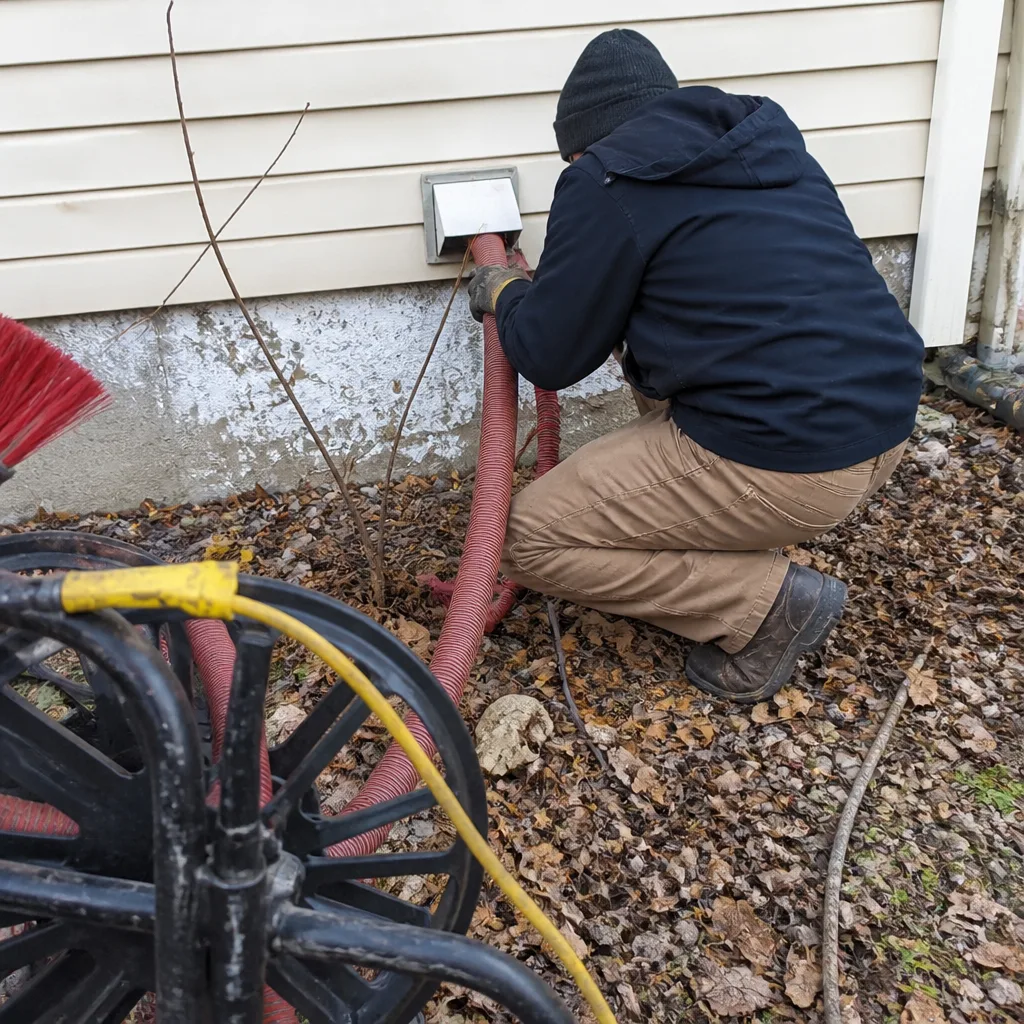 Before
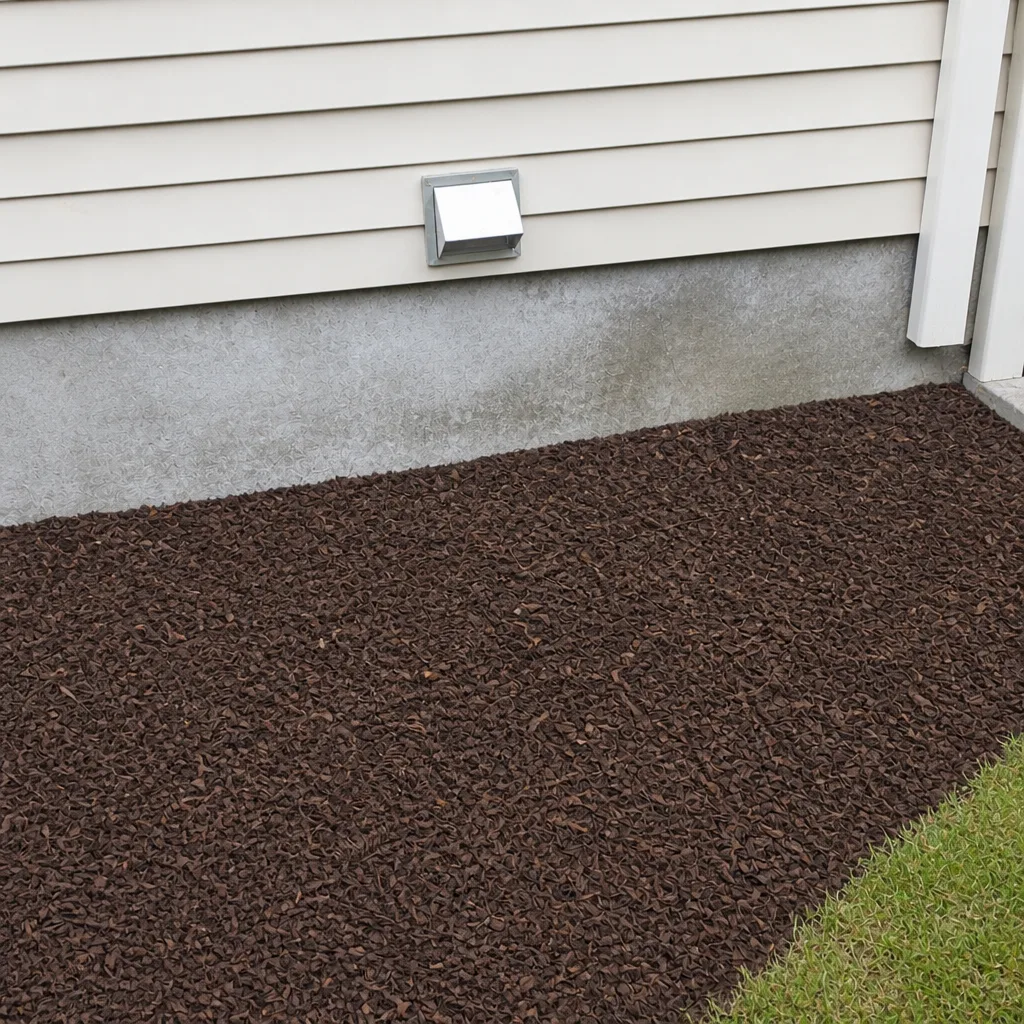 After
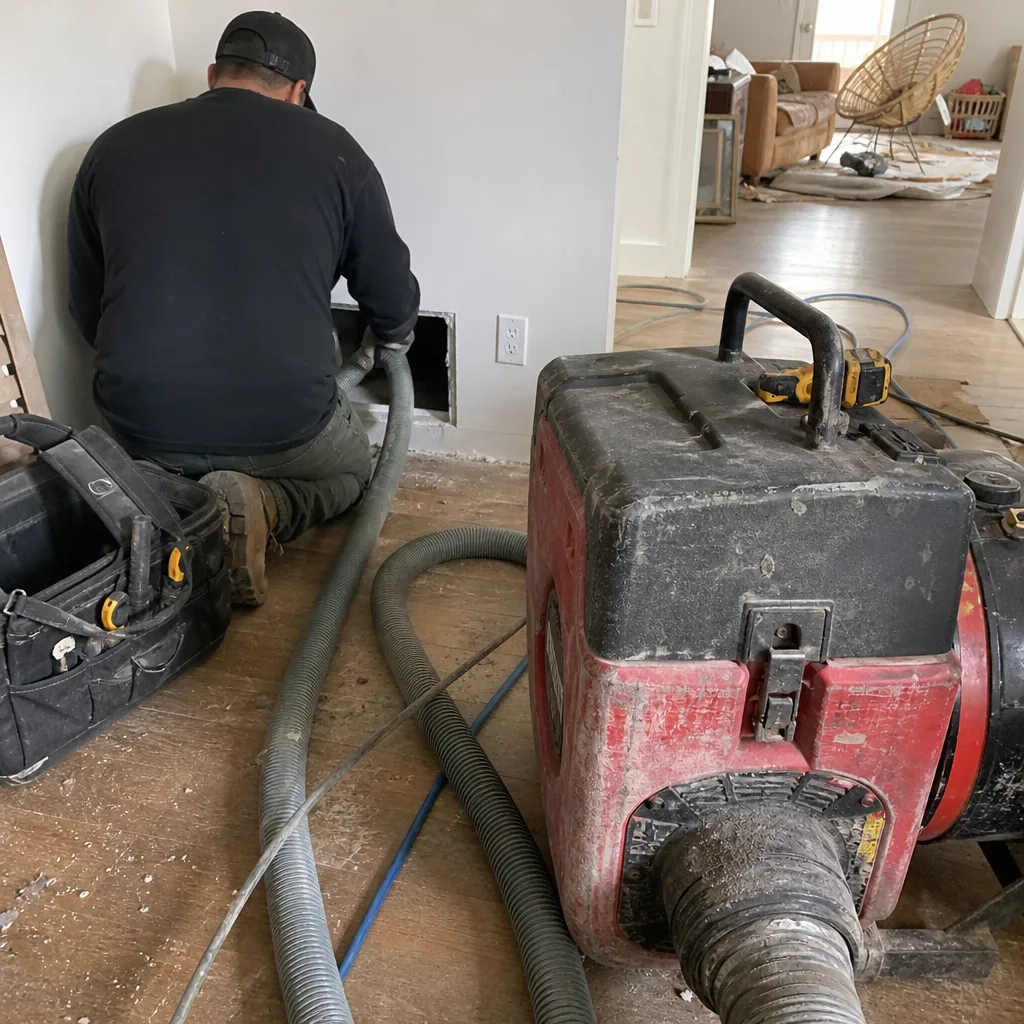 Before
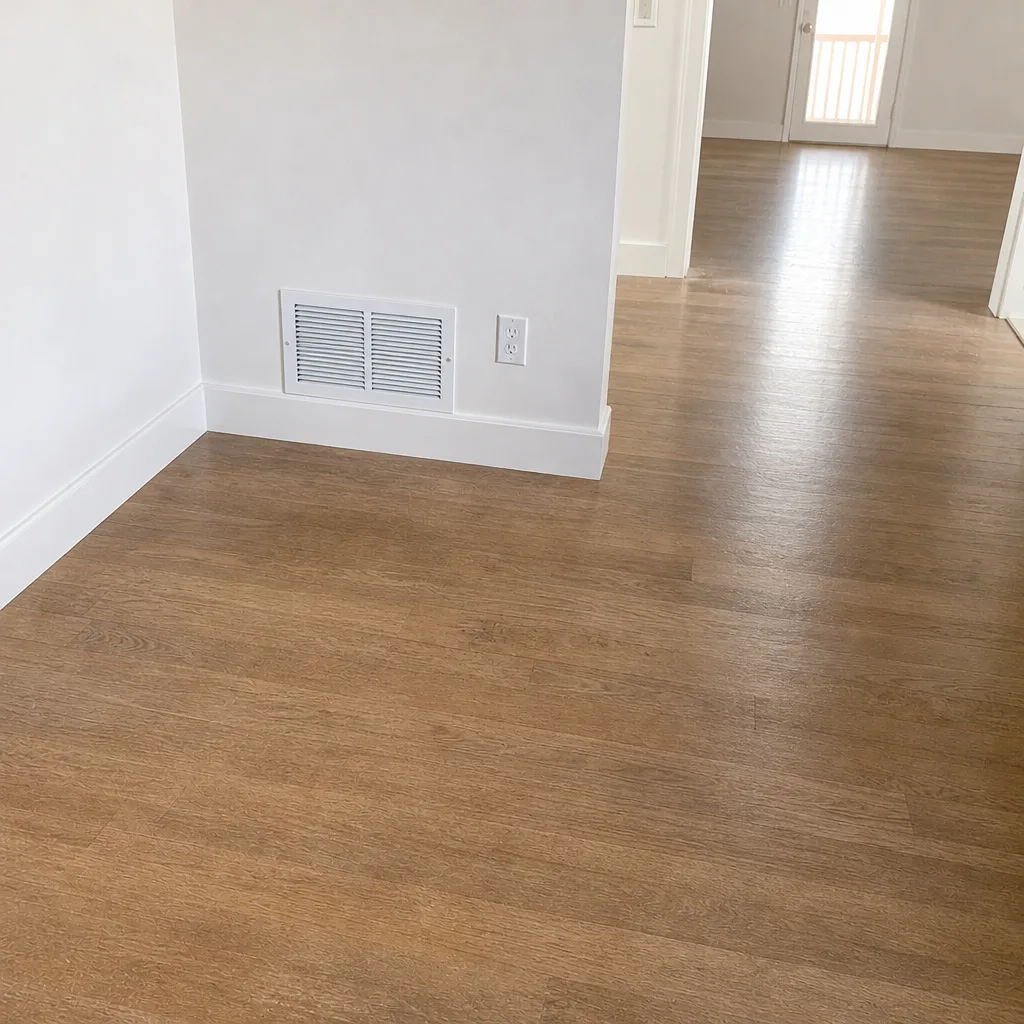 After
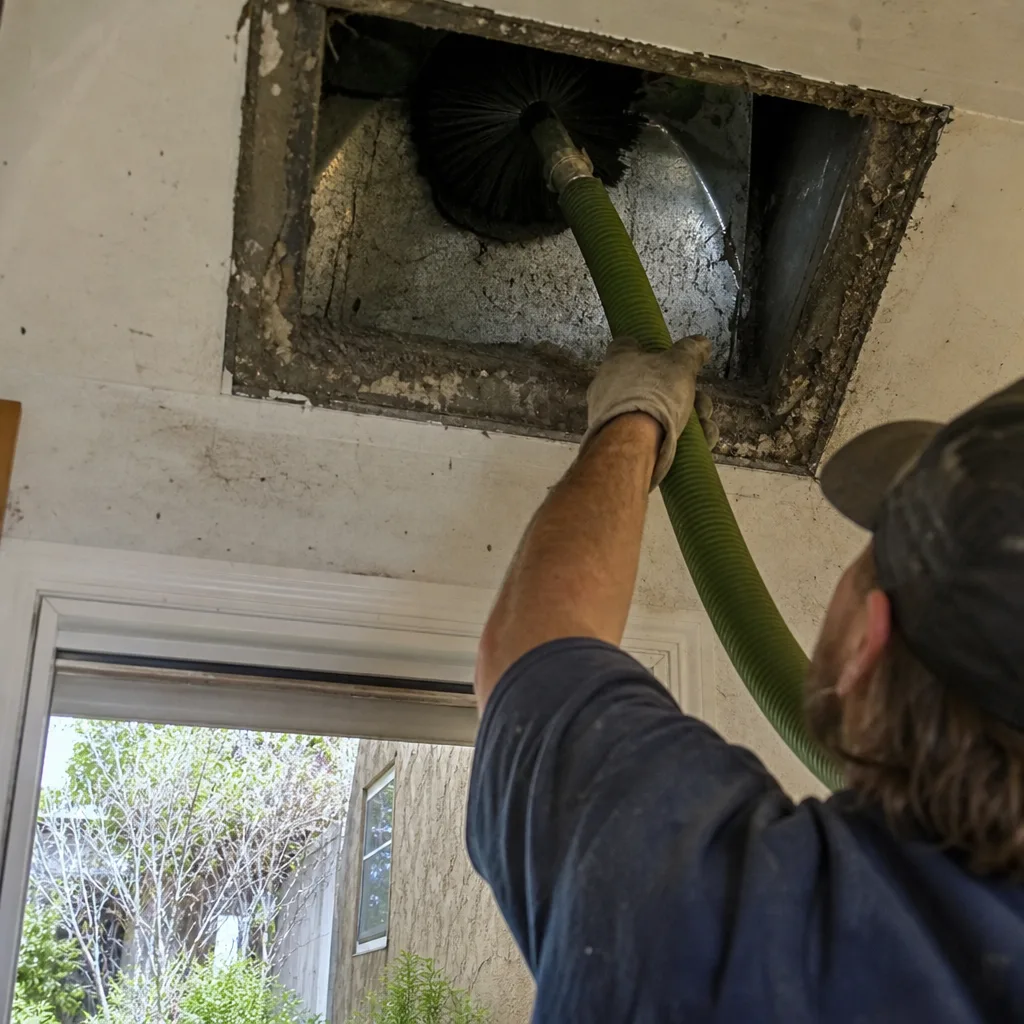 Before
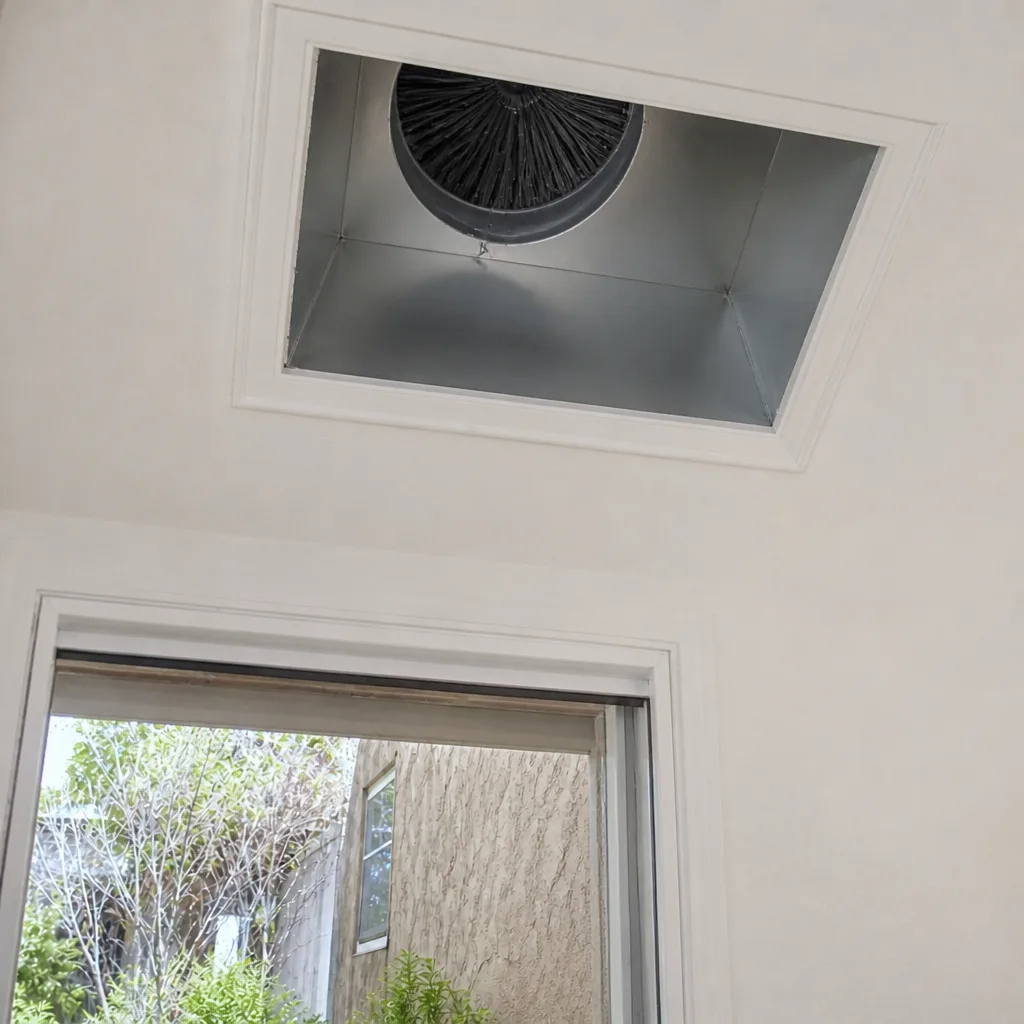 After
When to Call a Professional
If your ducts show any of the warning signs above, if your home has been through a renovation, pest event, or water intrusion, or if you have a family member with asthma or allergies and the interior of your system hasn’t been cleaned, it’s worth booking a professional visit. Consumer equipment cannot generate the negative pressure needed to clean interior duct surfaces, and older Salt Lake City homes with sheet-metal or duct board systems carry real risk of damage from amateur brushing. If you’re a property manager or you own a rental in Salt Lake City, professional duct cleaning also gives you a documented cleaning record for tenants and future buyers.
Salt Lake City Air Duct Cleaning Pros offers free estimates in Salt Lake City. Call (866) 937-7589. We answer 24/7. Fast dispatch from 7am to 7pm, Sunday through Friday. Our technicians have up to 11 years of experience, and every job is quoted as a flat price per system before work starts.
Frequently Asked Questions
You can clean register covers, return grilles, and the boot immediately behind a register with a shop-vac, but you cannot clean the interior of a duct system. A shop-vac moves about 60 CFM of air, and a full duct run requires thousands of CFM with proper containment to actually capture debris. Call (866) 937-7589 for an exact quote on professional cleaning – estimates are free.
Air duct cleaning in Salt Lake City is quoted per system, not per vent, and the price depends on system size, duct material, access, and condition. Ask for a written flat price before booking, and treat any per-vent coupon price with suspicion. Call (866) 937-7589 for an exact quote. Estimates are free.
Cheap quotes usually come from one of three places: per-vent pricing that balloons once the tech is on site, equipment that can’t generate real negative pressure, or a crew that runs a brush through the nearest register and calls it done. Professional equipment costs money to operate, and a flat per-system price reflects real cleaning. Call (866) 937-7589 for an exact quote. Estimates are free.
Ask for before-and-after photos of the interior of your own ducts, not stock photos. A provider with proper equipment should also be able to show you what was extracted, and a written cleaning record on request. Call (866) 937-7589 for an exact quote. Estimates are free.
Every three to five years for most households, and sooner if you’ve had a renovation, pest event, water intrusion, or a household member with respiratory concerns. Salt Lake City’s dry climate keeps indoor moisture low, which helps, but the region’s dust load and older housing stock still make periodic cleaning worthwhile. Call (866) 937-7589 for an exact quote. Estimates are free.
Cleaning removes debris from inside the system. Sealing closes the leaks and gaps that let debris in and conditioned air out. A home with leaking joints or disconnected runs needs both, not just one. If your energy bills or comfort have drifted, ask about duct repair and sealing in the same visit as the cleaning. Call (866) 937-7589 for an exact quote. Estimates are free.
The Bottom Line
DIY duct cleaning works for the tasks a shop-vac and a cloth can handle: register covers, return grilles, and dryer vent lint. It doesn’t work for the interior of a duct system, because consumer equipment cannot generate the negative pressure needed to dislodge and capture debris from a whole-house layout. In Salt Lake City’s older housing stock, DIY also carries real risk of damaging duct board or tearing loose seams in original sheet metal. The most practical approach is a hybrid one: handle the surface maintenance on a schedule, and bring in professional cleaning with Rotary brush and HEPA extraction equipment every few years or after any trigger event. That’s the difference between cleaning your ducts and just moving dust around.
Contact
If you’re in Salt Lake City and want a straight answer about your ducts, call (866) 937-7589 for a free estimate. We answer 24/7. Fast dispatch from 7am to 7pm, Sunday through Friday. Every job is quoted as a flat price per system in writing before work starts, and every cleaning includes professional-grade equipment, HEPA capture, and before-and-after photos of your own system. Whether you’re a homeowner thinking through your first cleaning or a property manager maintaining a portfolio, one call covers your ducts, dryer vent, and indoor air quality.
Written by the team at Salt Lake City Air Duct Cleaning Pros.